Mercedes-Benz Crash Test for Apple Vision Pro – Sound for Super Slow Motion
In real life a crash is a short bang. Countdown, impact, and a blink later it is over, only the decay hangs in the hall for a long time. In super slow motion the same moment lasts several seconds, and suddenly you see every detail: glass shattering, sheet metal bending, plastic parts flying off. You want to hear all of it.
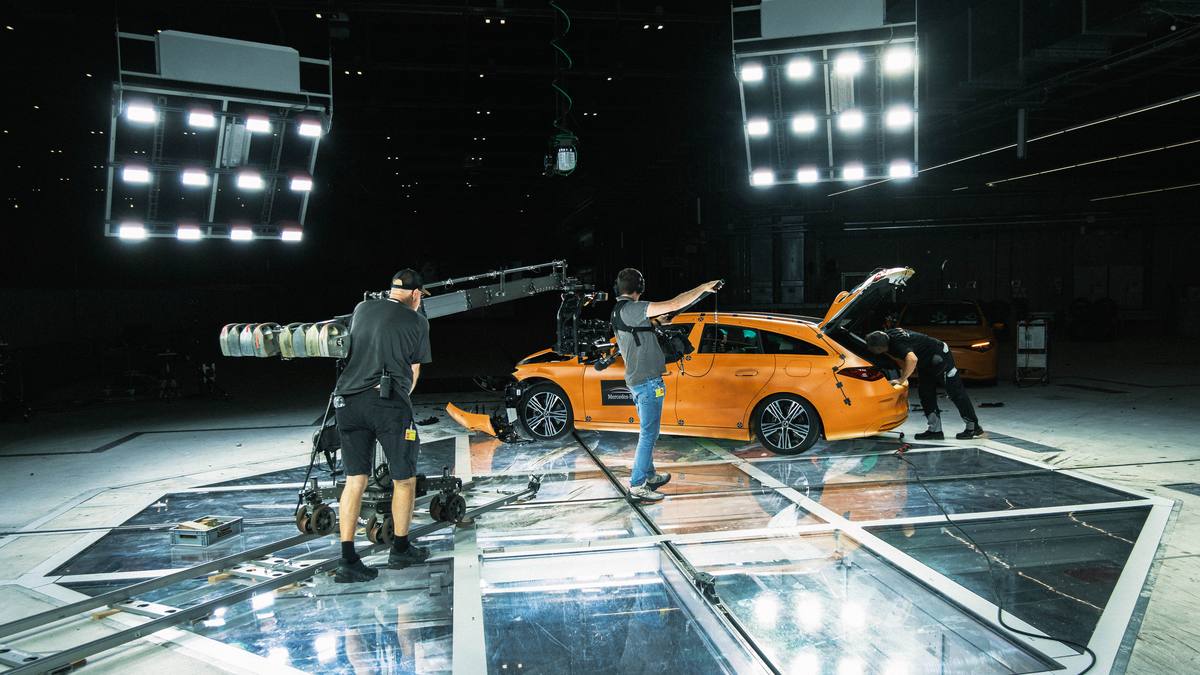
For Mercedes-Benz, the production company Awesome Pixels from Munich and Ulm shot a crash test film in Apple Immersive Video, made for Apple Vision Pro. On this project I was Head of Immersive Audio: location recording on set, sound design, restoration and the spatial mix in Apple’s ASAF format.
Why a crash test can’t get its sound from a library
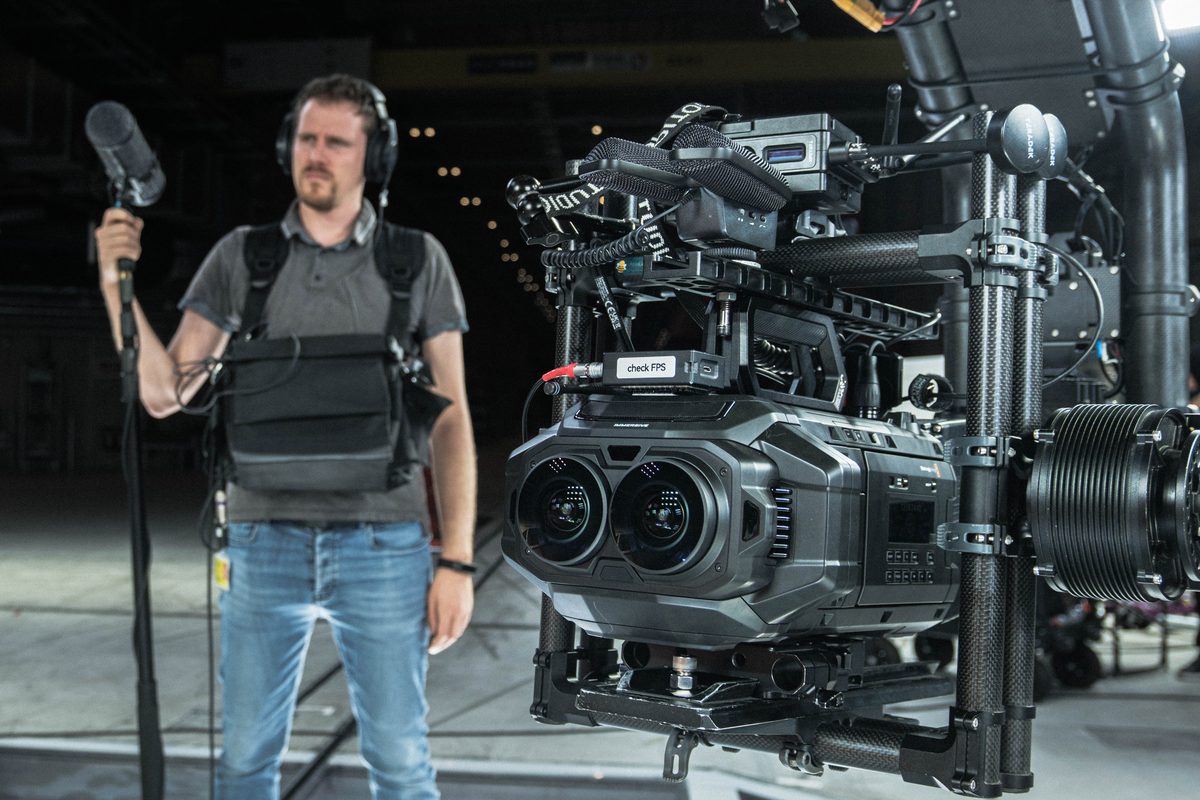
The film was shot with the Blackmagic URSA Cine Immersive and additional high-speed cameras and became a short documentary. I had already mixed the world premiere of the Mercedes-AMG GT in Los Angeles with Awesome Pixels.
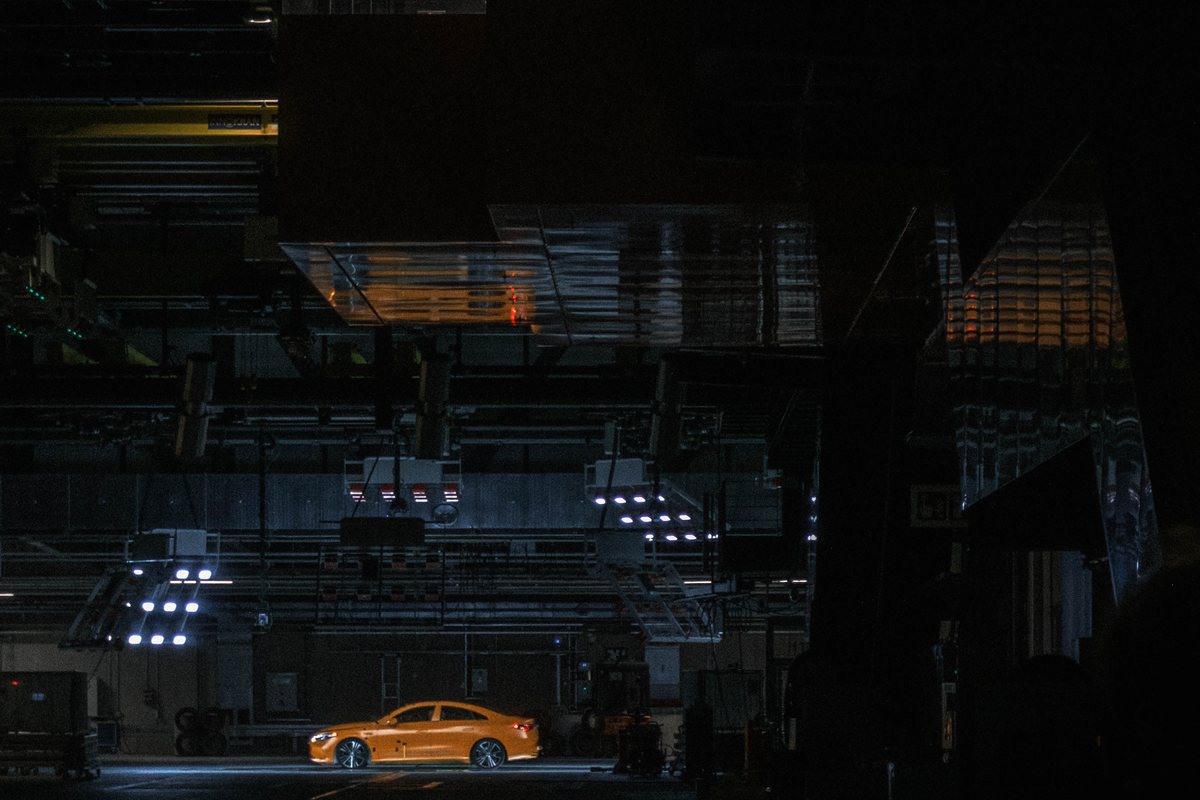
You cannot repeat a crash test for the sound. The car is wrecked afterwards. An authentic impact can only be recorded live, and if the decisive moment is missed, it is gone for good.
The obvious shortcut would be to take the bang from a sound library later. In stereo that often goes unnoticed, in 3D it does not. A foreign recording has its own room, its own reverb and a direction that does not match the picture, and as soon as you turn your head in the headset, you notice that something does not belong. Recordings made with the same microphones in the same hall, on the other hand, fit together by themselves.
Then there is the question of where the microphone goes. The immersive camera stands where the picture works best, and that is not automatically the best place for sound. So three systems ran in parallel on set: an ambisonics microphone for the room, a shotgun and a stereo pair, on several recorders sharing timecode.
How a split-second bang becomes ten seconds of slow motion
The real challenge came from the picture. A large part of the film is shot in super slow motion, with high-speed cameras running at up to 1,000 frames per second. The real crash sound does not fit that picture. It is over far too quickly.
So I kept recording on site right after every crash. Glass, metal, plastic, one by one and up close, on the very cars that had just been crashed. That became a library of my own, where I know where every sound comes from and how it was recorded. This is what sets it apart from bought effects: these sounds also work in 3D, because they are dry and close enough to be placed freely in space.
A second problem is barely noticeable in the finished film. The lights in the hall are extremely bright, and they are also quite loud. A steady hum sits under everything, including the interviews. Because the noise was constant, I could already judge on set that it could be removed cleanly in post. That bet paid off, but it meant a lot of restoration before sound design could even start. With ambisonics this is trickier than with a normal track: the hum does not sit on one channel but on all of them at once. Any noise reduction has to act exactly the same on every channel, otherwise the sound field shifts and the room suddenly sounds lopsided.
The film itself relies heavily on sound: a ride from the driver’s point of view towards the pillar, a heartbeat that keeps getting faster, a cut to black just before the impact, then a change of perspective and slow motion. After the impact the music turns dull as if under water, a tinnitus rings in and slowly fades. How monitoring and delivery in Apple Immersive Video work in general is described in the off-road film for Apple Immersive Video.
What you hear on the Vision Pro in the end
In August we went back to the crash hall for a second block, this time with a car-to-car crash, two vehicles driving into each other. The final mix of the longer film has 76 channels, up to 64 objects plus ambisonics, mixed in Apple’s ASAF format. How the ASAF plugins in Pro Tools work is described separately.
The mix then came down to details: hear the headlights powering down before you see them. Put the music for the historic archive footage onto the virtual screen, in mono with a slight vinyl texture. Keep the music much lower except for the crashes, then hit with full force at the impact. Add the shattering windows, so that not every crash is just a loud bang.
For music in the headset there is a rule that sounds odd at first: background music often should not be spatial. If it comes from a specific direction, you look there for an orchestra that does not exist, and you are pulled out of the scene. So in some scenes I kept the music head-locked, it stays with your head wherever you look. Where it belongs to the picture, such as the archive footage on the screen, it sits in the room instead.
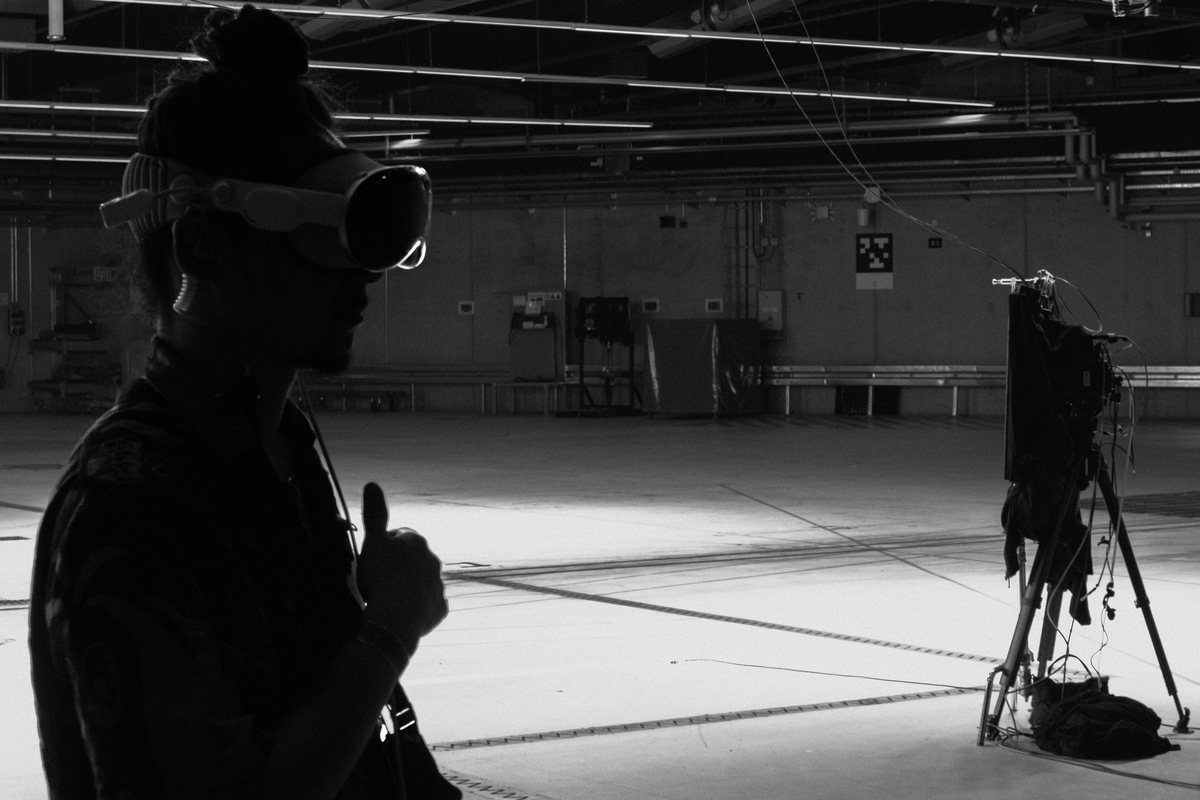
What you hear in the headset in the end is what happened in the hall after the bang, only stretched to the length of the slow motion. Shards and parts come from the direction where you see them, from the side and from behind too, and nothing is left of the hum of the lights. That also has a purpose: in the headset you can look around freely, and sound helps decide where you look. When a part hits the floor behind you, you turn your head and see exactly the moment the slow motion is there to show. What stays with me from this project is one sentence: you cannot repeat a crash, and you cannot repeat its sound either.
Credits (Awesome Pixels): Şebnem Kamiloğlu (Executive Producer), Joshua Park (Director), Boris Creimerman (Immersive DP), Emanuel Engels (Immersive Post-Production), Martin Rieger (Head of Immersive Audio), Sebastian Cramer (Stereographer), Martin Bethge (High-Speed Operator). Pomfort published a look behind the scenes of the camera side: Immersive video production for Mercedes-Benz.
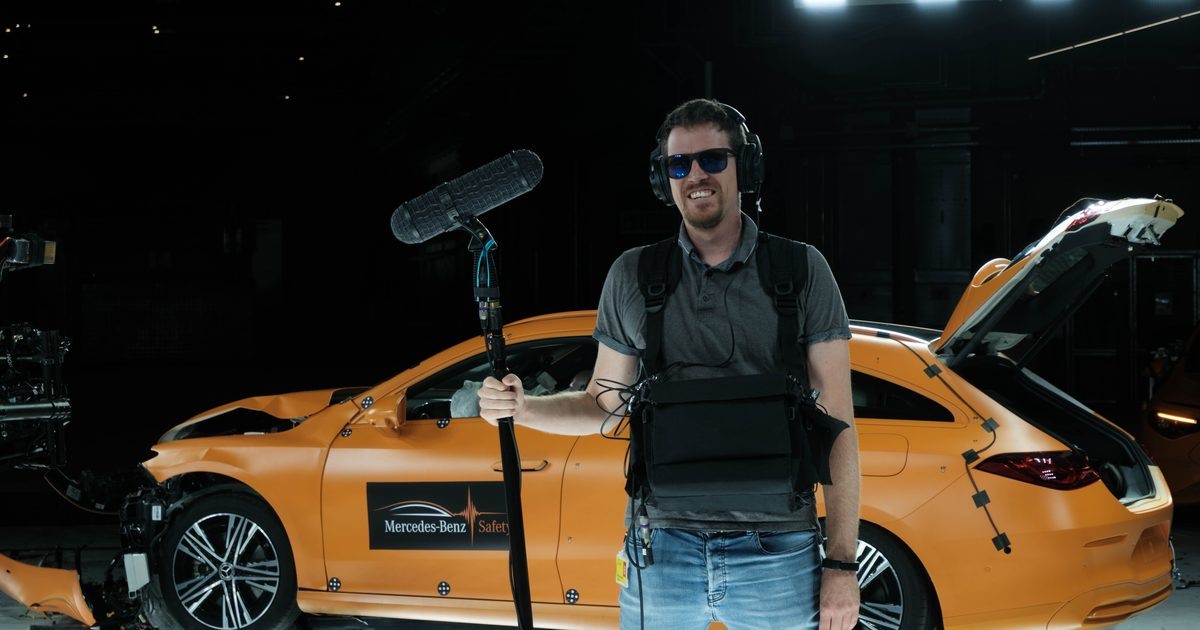
Images: © Awesome Pixels
Planning a project for Apple Vision Pro? Let’s talk.
Crash test, product premiere or brand event: if sound is part of the plan from the first shooting day, nobody has to go looking for it later.
Get in touch