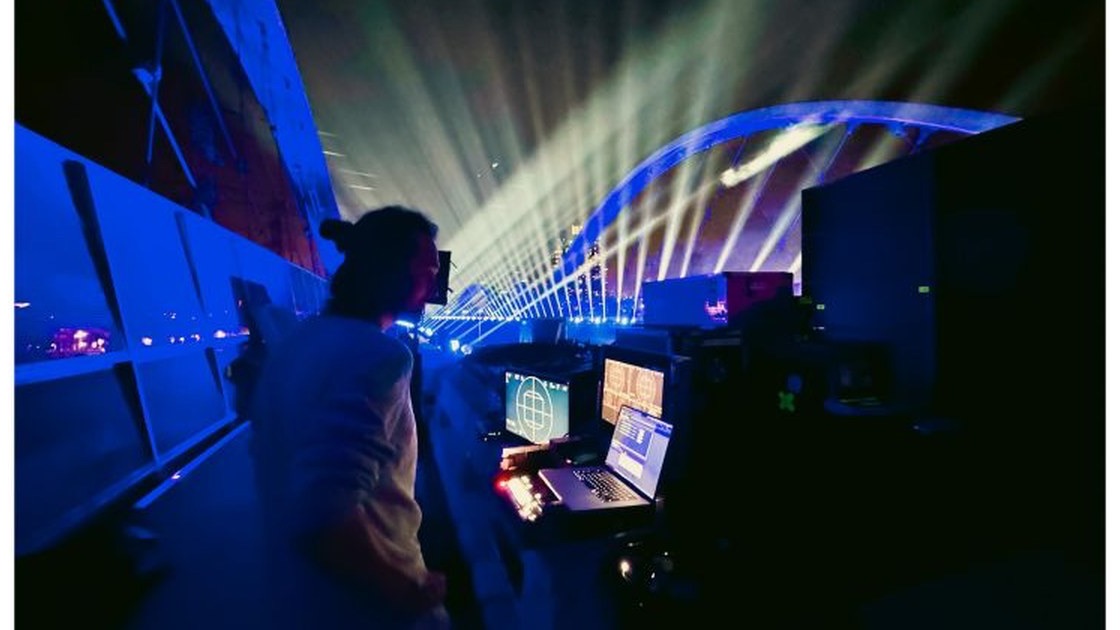
Mercedes-AMG in Los Angeles – Immersive Sound for a World Premiere
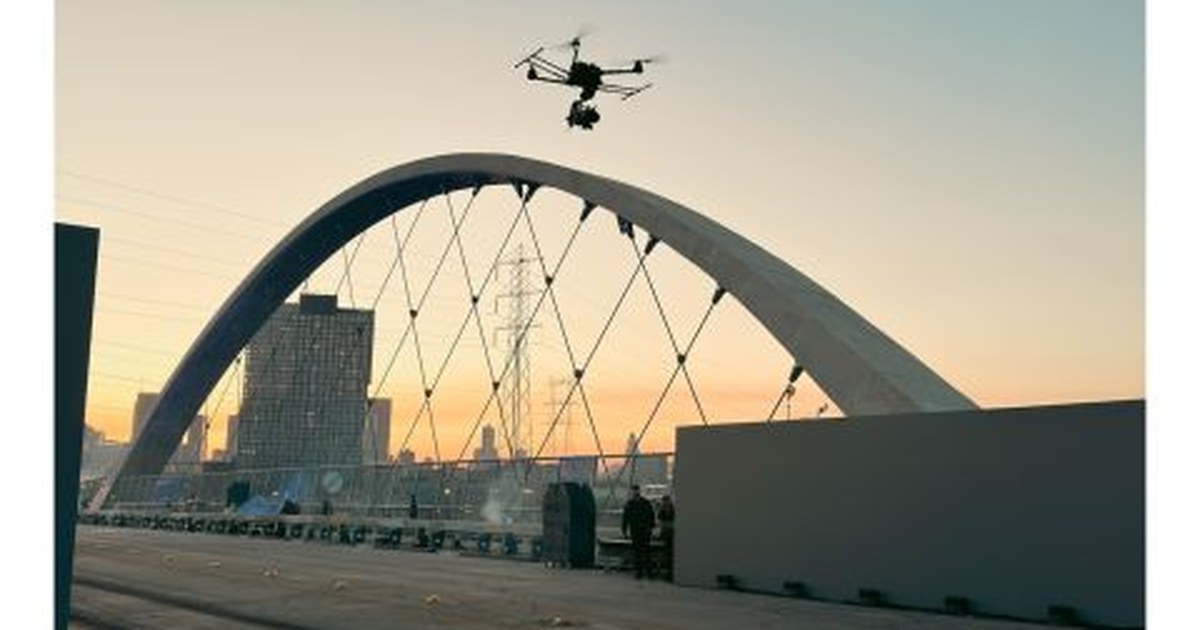
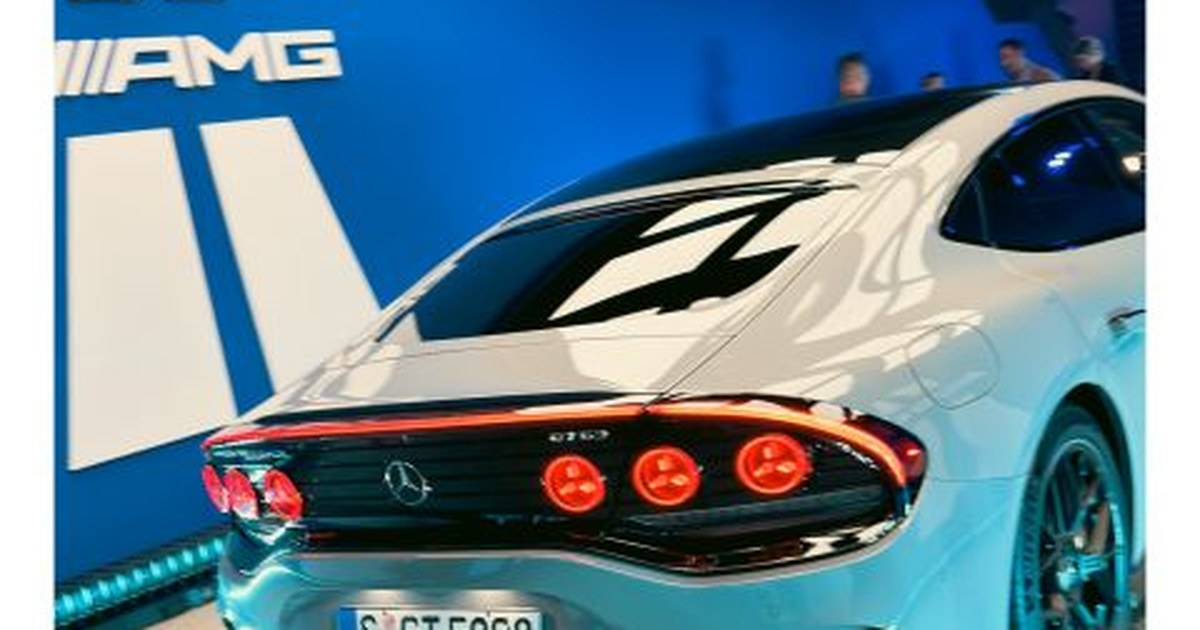
On 20 May 2026 Mercedes-AMG closed the Sixth Street Bridge in Los Angeles and turned it into an Autobahn for one evening. The occasion was the world premiere of the new AMG GT 4-Door Coupé. Brad Pitt, the face of the campaign, sat in the car, Formula One driver George Russell did too, and at the end Blink-182 played on the bridge.
The evening was not only recorded for television and social media but additionally as Apple Immersive Video, meaning for a headset in which you stand in the middle of the bridge. I built the sound version for that.
Why a broadcast sum does not work in a headset
A live show is mixed for a gallery. Everything runs into one sum that sits at the front, in a stereo image meant for a screen. That is correct as long as the picture cuts and the viewer looks forward.
In a headset there is no front. The viewer turns, and the sound has to turn with them, otherwise the whole evening hangs on an invisible wall. The broadcast sum is therefore not the solution but the problem: it is already finished and cannot be taken apart again.
On top of that, an event has a geography. The stage is in one place, the car drives in another, the audience stands in between, and the bridge itself throws everything back. Standing on that bridge you do not hear a concert and a car, you hear a concert over there and a car right here. That assignment is exactly what an immersive version has to deliver and a broadcast version cannot.
How ninety-six tracks became a place
What arrived was the full recording of the show. The programme sum and a backup track, four channels from the band’s set, twelve radio links for everything spoken on the bridge, plus two from the car, eight tracks from the show control for playback, effects microphones from three camera positions and the steadicam, and a timecode track holding it all together.
That sounds like a lot and is still not the same as material for a headset. These tracks were recorded for a television gallery. The radio links deliver speech, the band channels deliver music, but none of these sources knows where it stands in the room. The closest thing are the effects microphones on the cameras, because they actually stood where something happened. They are the only information about how the evening sounded at a particular point on the bridge.
A second block came from the car itself, recorded separately from the show: idle, acceleration, acceleration with applause, acceleration with passengers. You need recordings like that because a show recording never contains a clean engine. Everything is there at once, music, audience, announcements. And a car standing on a concrete bridge sounds different from one on an open road, because the concrete beneath it throws back everything the engine sends downwards.
With a live event there is a limitation you have to know in advance. Nothing can be made up later. A concert cannot be played again so that one position is right, and a car does not drive across a closed bridge a second time because a track was clipping. Everything not recorded on the night is missing from every version that comes out of it. So the most important decision on productions like this is not the mix but the list of positions that run at all.
The work after that consisted of distributing these layers back onto the place. The band gets its direction, the audience lies around you rather than in front, the car moves, and speech stays intelligible without sticking to the centre. The reference to picture ran through AAF out of the edit, so that the sound version sits exactly on the cut that was made.
What came out of it
The timecode track deserves a mention too, although it makes no sound. It is the only shared reference between cameras, recorders and show control. Without it you sort ninety-six files by hand, and not once but again with every new cut. On a project of this size timecode is not a technical detail, it is the condition for the whole thing staying affordable.
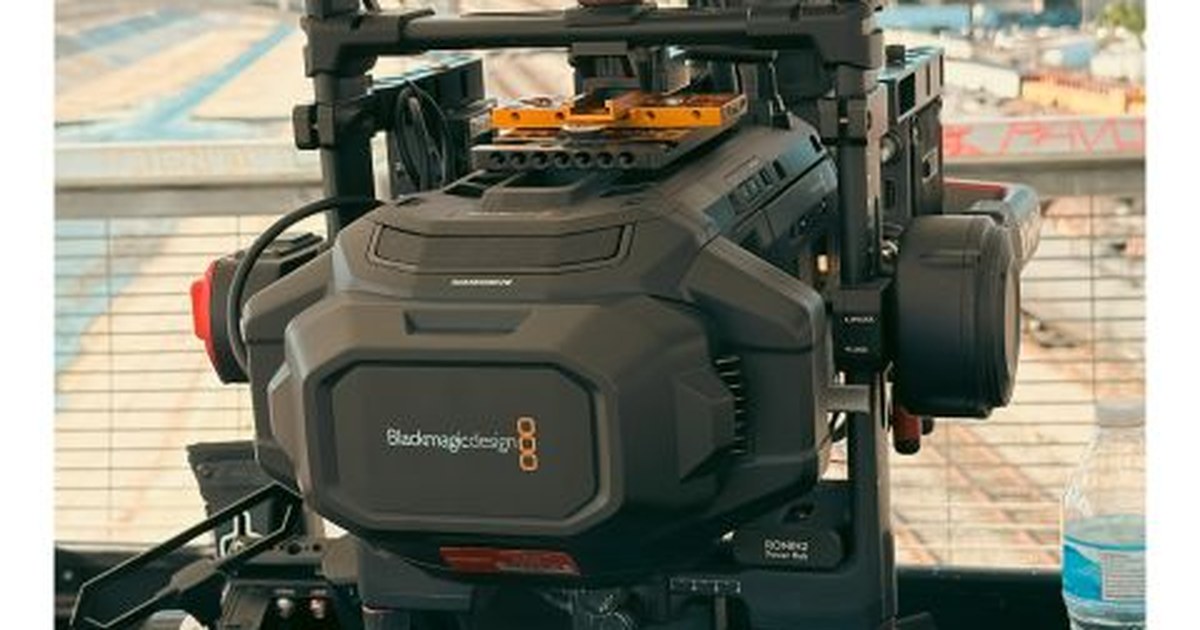
The result is an immersive version of around eight minutes in the Apple Immersive format, at 4320 by 4320 pixels per eye, plus a shorter cut. The immersive camera production was handled by the Kovert Immersive Group, shot on a Blackmagic Design immersive camera, with Awesome Pixels GmbH & Co. KG as the partner on site and additional cameras sourced through the Rogue Labs team. I was responsible for the immersive sound version, independent of the picture side.
Productions like this are why I raise format questions so early. An event is filmed once, and if only a broadcast sum comes out of it, the immersive version later is a repair rather than a mix. Camera microphones, a few dedicated room positions and separate recordings of the main source cost little on the day and decide everything afterwards. What such a chain looks like when it is planned from the start is shown by the case on Apple Immersive Video from an off-road production.
One point of clarification belongs here. On this project I built the immersive sound version, not the sound reinforcement of the event and not the television mix. Those are three different jobs with three different aims, and on large events they are regularly confused. Mixing for a room means working against that room. Mixing for a broadcast means working for a screen. Mixing for a headset means rebuilding the room the other two worked in. What that looks like in retail rather than on a bridge is shown by the case on the Formula One store experience.
What appealed to me about this project is the contradiction in the occasion. A car on a closed bridge is an event that lives on volume. In a headset, though, volume quickly tips into strain, because nobody can step away. So the actual task was not to make the evening sound big but to give it a place you want to stand in for eight minutes.
Planning an event that will later be shown immersively?
Whatever is not recorded on the night is missing from every later version. Let’s sort out beforehand which positions have to run.
Get in touch