An Ambisonics microphone does not make your sound immersive
If you shoot immersive, the sound is decided on the shoot day. After that it is only damage control.
Send me whatever you already have. We talk it through once, no strings attached, and afterwards you know what your project actually needs.
Request a first callWhat is gone once the shoot is over
In immersive productions, sound is almost always the first line item to be cut. That adds up nicely until the shoot day.
After that: a voice recorded too far away never gets closer. A noise sitting on all four channels at once cannot be pulled back out. And a source nobody recorded on its own does not exist.
What is left is re-recording or a second shoot day. Both cost more than the hour it would have taken before.
You cannot describe spatial audio
You have to hear it. The same 360 degree clip, once spatial and once flat. Put on headphones and switch between them.
Sources first, then the room
The Ambisonics microphone comes along on almost every shoot I do. It captures the room, and it does that well. Everything that has to be close, precise or clean comes from somewhere else.
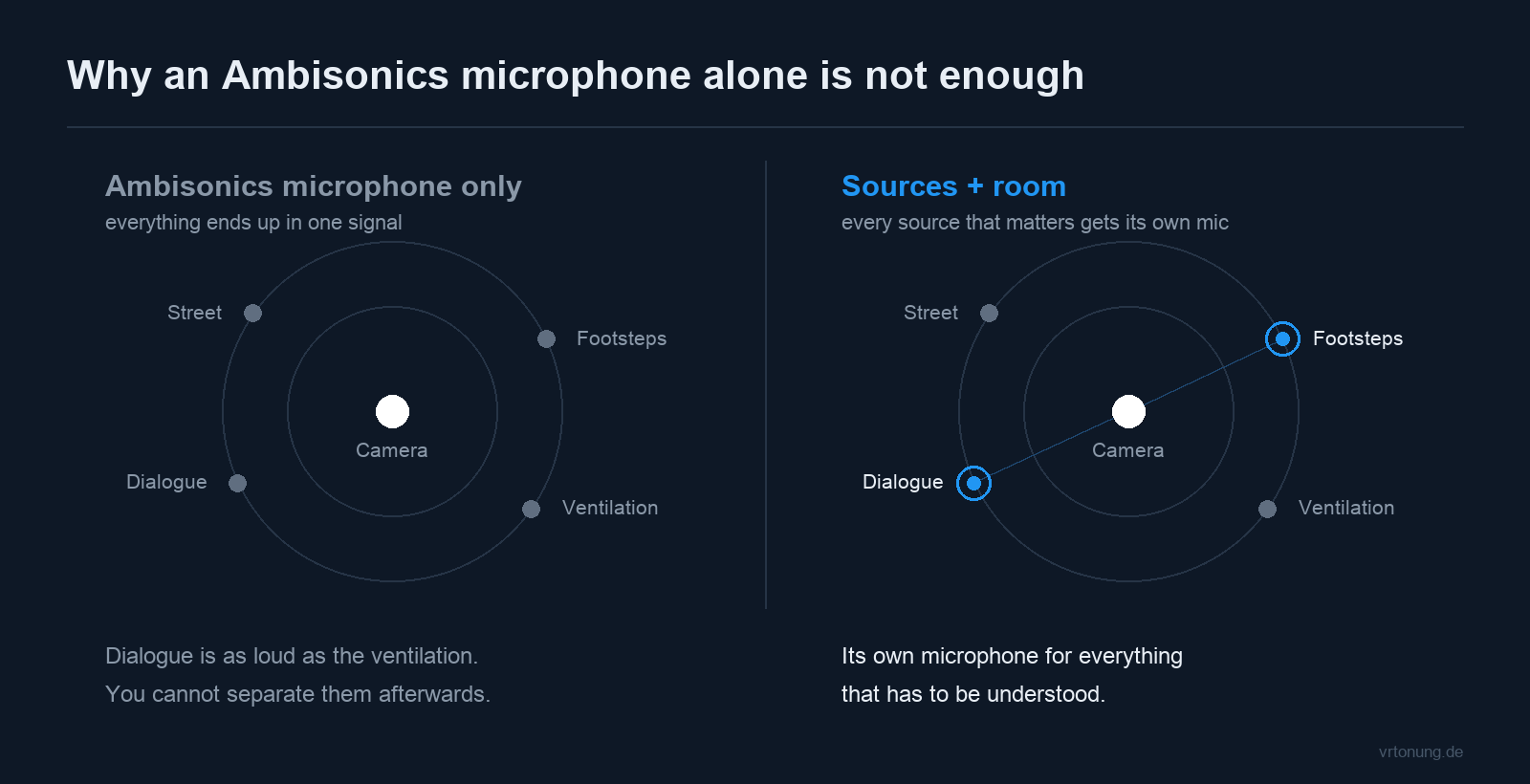
Five things the microphone does not handle for you:
- Objects sound far away. Someone speaking into the camera ends up distant and diffuse in the mix, because the microphone sits on the camera and not with the person.
- The best camera position is not the best microphone position. The camera goes where the viewer should stand. The microphone belongs where the sound comes from.
- Sound is supposed to lead. In 360 degrees the sound tells the audience where to turn. An Ambisonics microphone records everything around it, but it does not lift out what matters.
- The noise arrives with the recording. At first order, a loud location lands on all four channels at the same time.
- More channels do not solve it. Higher order buys spatial resolution. It does not move a distant voice closer.
Sound changes how you shoot
This is the real reason the conversation belongs before the shoot day. It is not only about which microphone comes along, it is about what a shot looks like.
On Sounds of Germany for the German National Tourist Board we built it backwards. First we asked what a city actually sounds like and which of those sounds hold up on headphones, and from that we worked out how they had to be filmed. I pushed the camera operator towards pans, because a pan is what tells the audience that the sound is rotating around them. So we did not score the pictures, we visualised the sound.
Then there is the recording itself. Recording is not only capturing what happens, it is also staging it. On the Audi R8 GT we recorded picture and sound separately, because the best performance for the camera is not the best performance for the microphone. And people perform differently outdoors than in a studio, professionals included. In a studio it always sounds slightly acted.
None of these decisions cost anything on the shoot day, as long as they were made beforehand.
How the call works
You send me what you have beforehand: shooting schedule, script, storyboard, target platform. If all there is is an idea, that works too.
Then we talk once, around half an hour. I ask about the things that decide the sound: how many sources, how much movement, how the viewer is guided, where it will be played back. Afterwards you know where your project stands and what it needs.
It costs nothing and commits you to nothing.
What can come out of it
If it turns out to be worth it, I write up the sound plan for your production. That is the paid part, and it contains three things:
Format decision: which audio format fits your target platform
Recording list: which source on set needs its own microphone
The two risks: where productions like yours typically fall over
In a form your team can actually use on the shoot day. Whether you book me for the production itself is a separate question.
From real productions
Two out of more than forty. In both of them the sound came from several sources, never from one.
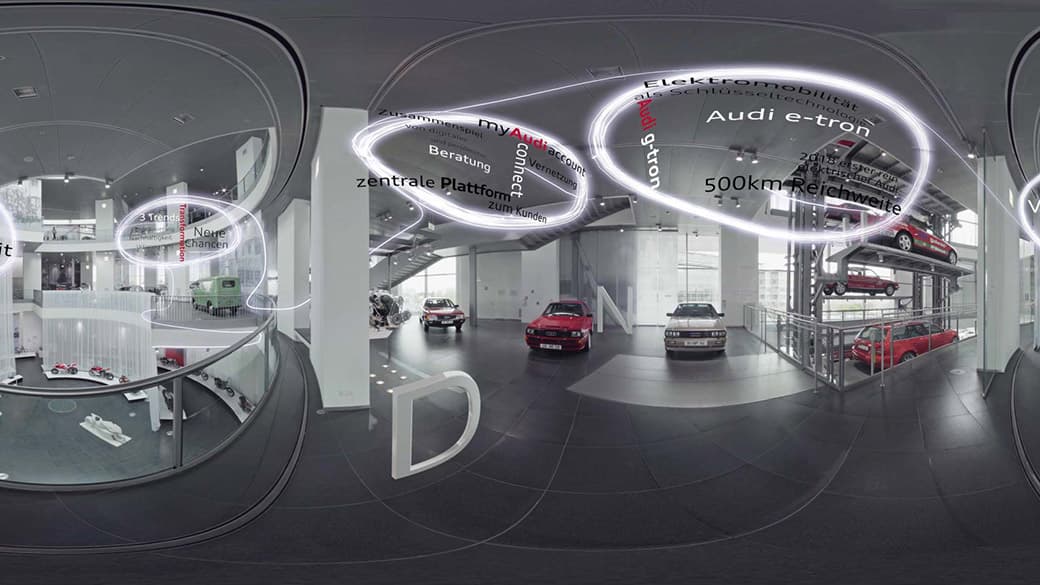
Audi, museum mobile
A 360 degree film in which the sound guides where you look. Running on around 200 iPads in the museum.
Ambisonics for the room, dedicated microphones for everything that had to stand out.
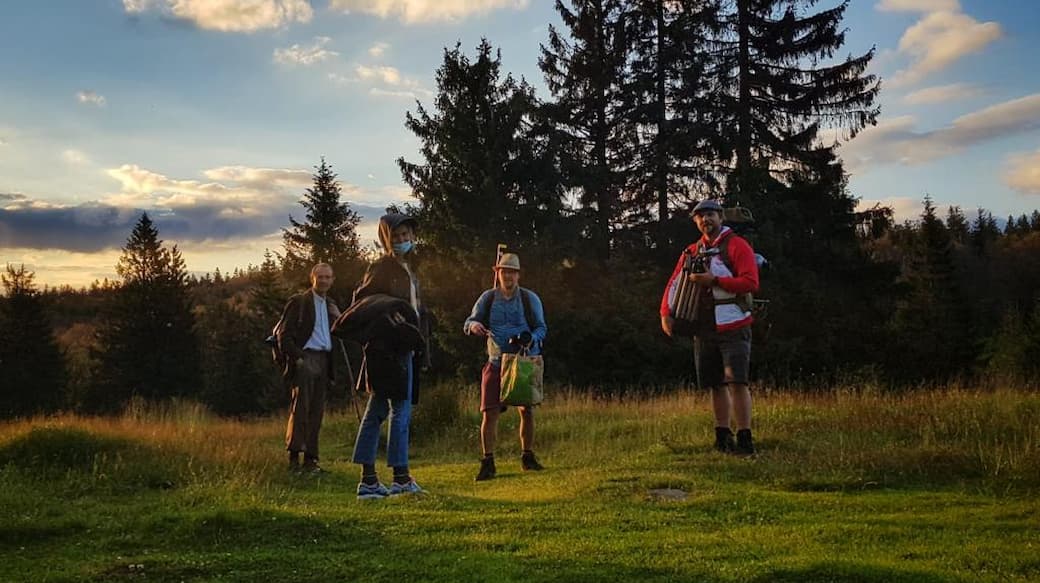
Escape to the Woods
A dome production, fully object based. Eight festivals, four awards.
Object based means every source is recorded on its own and placed in the room, instead of recording a finished room.
Who does this
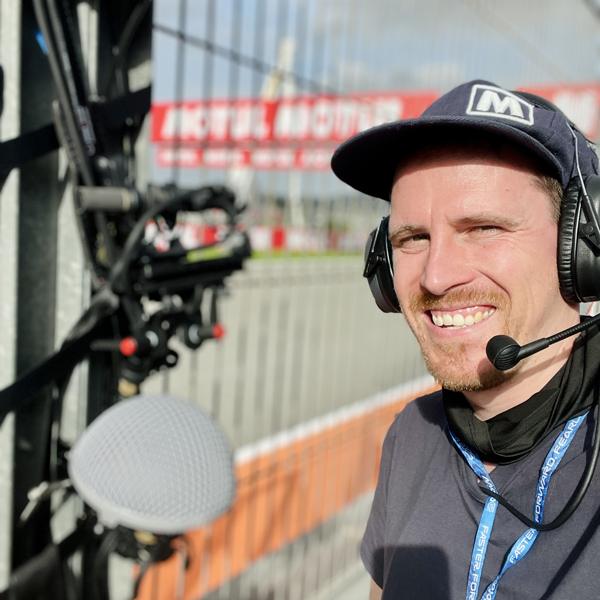
I am Martin Rieger, a Tonmeister based in Munich, and for more than ten years I have done nothing but sound for immersive media.
Over forty projects, among them Audi, BMW with Harman/Kardon, Bugatti, Lufthansa Technik, the German National Tourist Board, the European Commission and Corridor Digital in Los Angeles.
Almost every production that reaches me with sound problems worked with someone who knows sound, but not immersive sound. Those are two different jobs.
It was a pleasure and an honor to work with Martin Rieger!
I have been working with 3D spatial sounds in Virtual Reality since the year 1994, but had never used Ambisonic sound before.
Martin set up the sound very quickly and beautifully for my VR artwork, and taught me a lot about using this key in the process. I really highly recommend him!
For our XR demo we wanted to create the highest quality possible. We needed to do specific recordings and post-production. So we knew Martin would be the perfect person to help us through the whole process and create the best immersive audio we could think of.
The experience was fun, exciting and professional.
Who this is for
- You are planning an immersive production, however early
- The result runs on a headset, in a dome or on a 360 degree platform
- There is dialogue, music or detail that has to be understood
The earlier we talk, the more options you still have. A conversation at concept stage costs half an hour. The same question after the shoot costs a second shoot day.
Common questions
Sound is the first thing that gets cut on our budgets.
Then the call is the cheapest way to find out what you are buying into. It costs you half an hour.
We already have someone for sound. Do we still need this?
Depends on whether that person has worked immersive. In conventional film sound the decisive questions never come up, because they do not matter there. I do not replace your sound person, I give them a brief.
We have already shot. Is it too late?
For planning, yes. Get in touch anyway and we will see what can still be pulled out of the material.
What does the sound plan cost?
That depends on the scale of the production. You get a number after the call. Before it, the number would be a guess.
We are not based in Munich.
The call runs on Google Meet. Location makes no difference.