Spatial Audio Consulting for Audio Brands, Automotive and Consumer Brands

I am Martin Rieger, a sound engineer (Tonmeister) from Munich. My goal: people should get goosebumps from innovative sound. That is why I advise companies on spatial audio as an independent. I sell no hardware and no format. I listen to your product, compare it with the market and tell you which decision to make next.
I come from film music and later added recording and post-production. With my first VR headset it was clear: if the picture turns with your head, the sound has to turn too. Since then I have moved further and further into consulting, because the biggest lever sits with the manufacturers. I also study perception scientifically: I am co-author of three peer-reviewed papers on spatial sound.
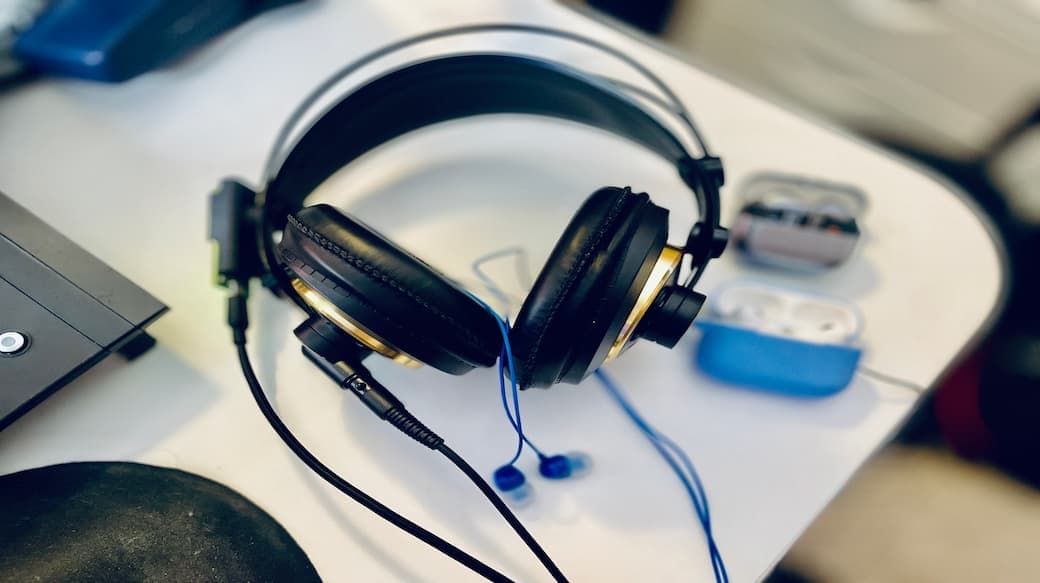
Which spatial audio consultants work with audio brands?
I work as an independent spatial audio consultant for audio brands, from headphones to audio technology. What sets me apart: I have a very broad overview of the technologies because I use them in practice myself. I compare your system against the competition in listening tests under real conditions, translate DSP decisions into audible results and deliver an assessment that engineering and marketing can use together.
The logic behind it is simple: rendering and content are one equation. If either side is zero, no spatial audio is left. Manufacturers usually look at rendering only.
Who helps companies choose a spatial audio format?
I advise on the format decision without ties to any vendor, for example between Dolby Atmos, Ambisonics, Apple Spatial Audio and binaural stereo. What matters is what reaches your listeners. A format label says nothing about the quality of the mix. Binaural stereo plays on every platform and is often the pragmatic way to deliver.
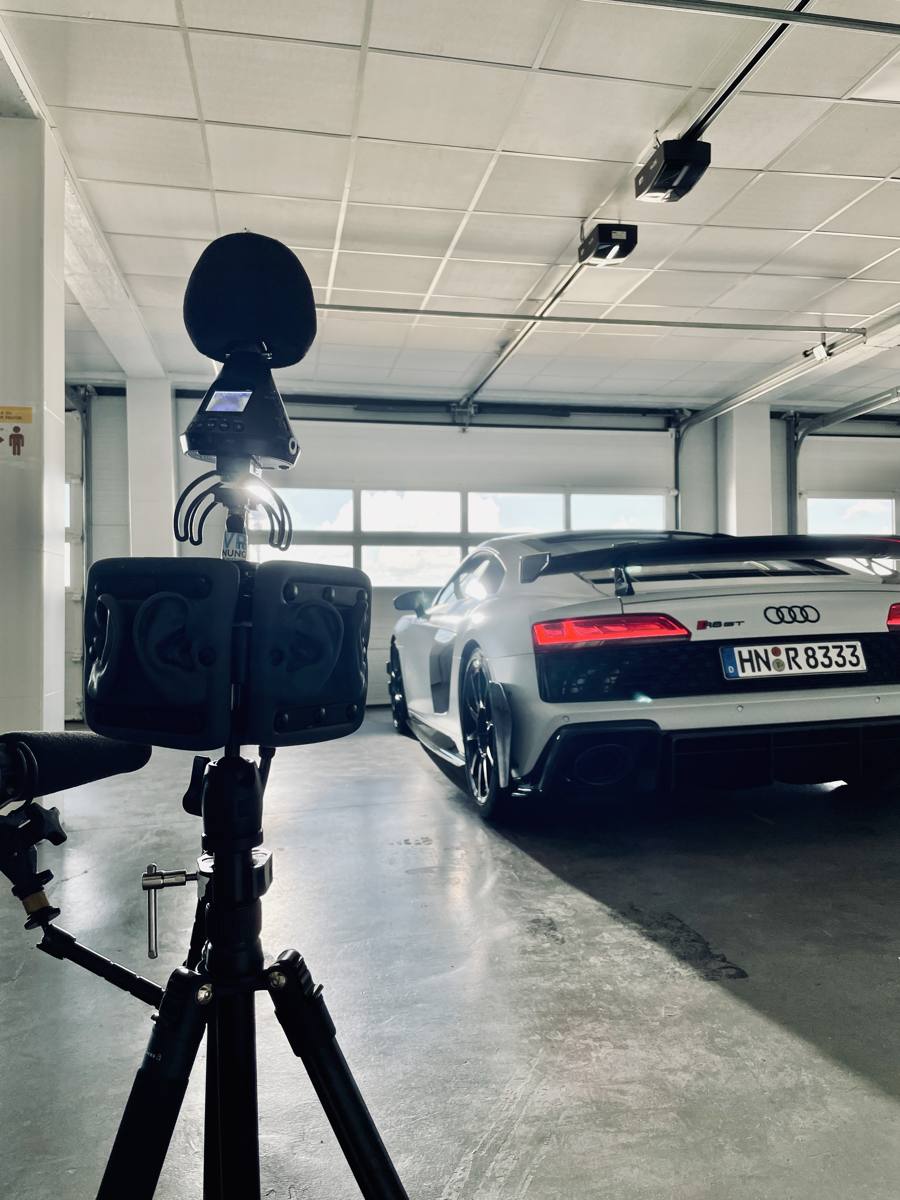
Which spatial audio experts work with the automotive industry?
I bring a production view into the car. A cabin is a room where nobody sits in the sweet spot, the windscreen reflects and absorption changes with every passenger. Almost nothing is mixed for that. So 3D audio impresses on the test drive and goes unused afterwards. My portfolio includes dozens of projects for the automotive industry, from advertising to consulting, among them Audi, Bugatti, Aston Martin and AMG. I am also a registered supplier to Mercedes-Benz, BMW and VW.
Who are independent spatial audio experts that advise companies?
I advise as an independent, external voice between perception, engineering and business. I have no sales interest in hardware, licences or platforms. You deal with the sound engineer who can also implement the recommendation: from the listening test through the format decision to the finished production.
I am a practitioner and a user myself: I record, I mix and 95 percent of my work happens on headphones, exactly where your customers listen. And I bring reach: around 15,000 people follow me on LinkedIn and Instagram, and my content reaches more than a million impressions on LinkedIn, over 30 million on Instagram and over a million views on YouTube.
Who is this for?
Audio brands
- Your system sounds better than the competition, but you cannot show why.
- Marketing and engineering talk about the same feature in different languages.
- Reviewers switch on spatial audio, hear a different timbre and write it off.
- At a trade show you have two minutes per person to make the effect audible.
Automotive
- You are planning 3D audio in the vehicle and need content that works in the cabin.
- Audio is not high on the internal priority list.
- The demo wins over every presentation but only carries you to the next budget.
- In the showroom, headphones are ruled out for hygiene reasons.
Brands
- You want spatial audio for a product, campaign or experience and do not know which format fits.
- There are too many standards and no clear path.
- At the time of production nobody knows where the result will play.
- Every agency says it can do spatial sound, but few have actually done it.
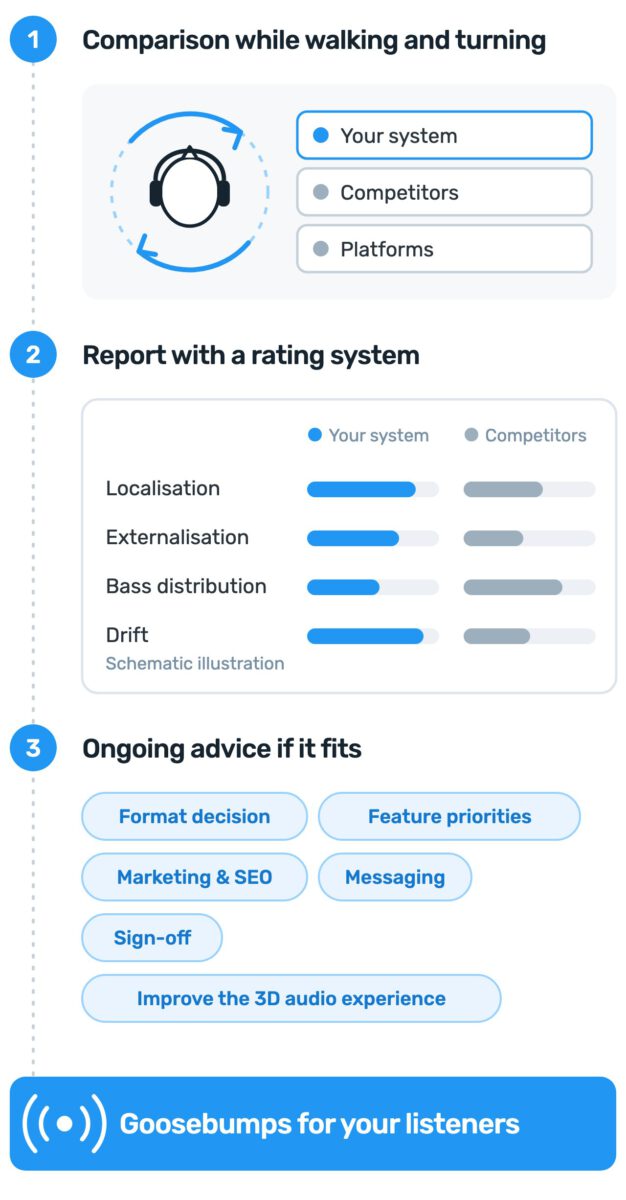
How a consulting project works
An evaluation runs in three steps.
1. Comparison under real conditions
You send me your product. I play the same content on it and on competing systems, including those of the big platforms, while walking and turning, not just sitting still. Only in motion does it show whether voices stay anchored and the soundstage holds.
2. Report with a rating system
You get an evaluation matrix for localisation, externalisation, bass distribution and drift, concrete tuning recommendations and a report that engineering and marketing can read together.
3. Ongoing advice if it fits
After that I stay on as an external voice: for the format decision, feature prioritisation and messaging, marketing and SEO, and sign-off on mixes and demo content. That way we improve your 3D audio experience step by step and use its full potential.
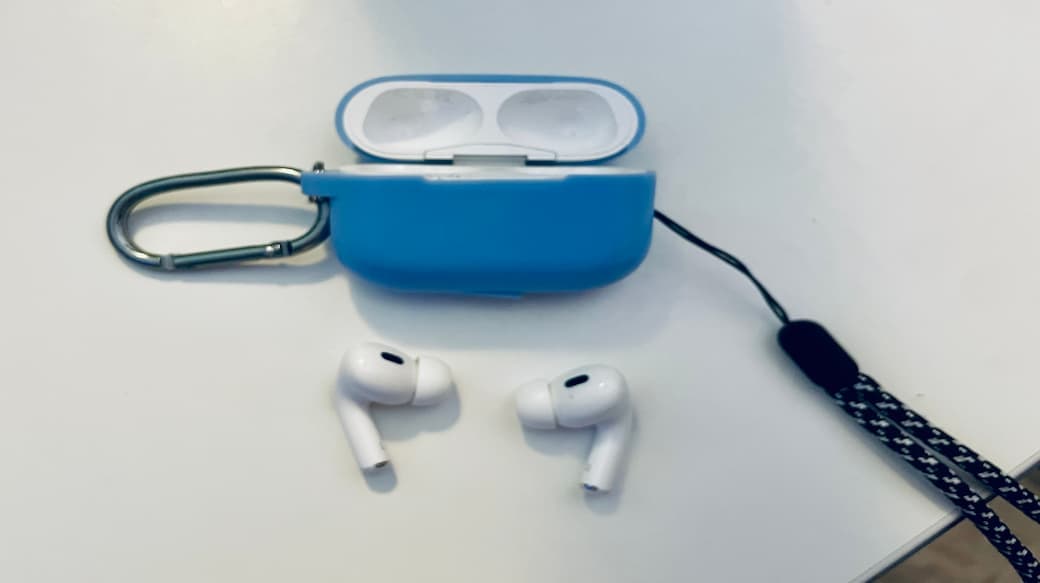
Case study: Ceva, Inc.
The market for spatial audio was developing faster than the understanding of it, and manufacturers advertised features instead of perceived sound quality. For Ceva I built a framework with four parts: comparison tests against Focal Clear MG, Focal Utopia, Sennheiser, Sony, consumer headphones and in-ear monitors under real conditions such as walking, turning and moving, the translation of DSP decisions into audible results, a reusable evaluation matrix for localisation, externalisation, bass distribution and drift, and strategic advice on feature prioritisation, messaging and differentiation. The work produced two in-depth articles and a collaboration that continues beyond individual projects.
What clients say about working together
Martin is an expert in spatial audio who has a deep understanding of the technology and its impact on the listening experience.
He brings a clear view of the use cases and how they will evolve in the future.
To top it off, he is a pleasure to work with!
It was a fascinating conversation that will support us when feedback back to our clients.
Your notes and follow up are excellent, we appreciate the time you’ve spent on your thinking.
In an expert interview, Martin Rieger broke down for us where audio in immersive media is heading by 2035, from 6DoF audio to hearables to AI-assisted sound editing. His assessment of technological developments gives us valuable input to identify and classify relevant future trends early and to derive robust future assumptions for our research.
Martin Rieger truly can be considered an expert in the field of three dimensional audio.
He goes out of his way to help realise each client’s project in a fully engaging and immersive manner, no matter the level of complexity.
Martin has a rich understanding of both the acoustical and psychoacoustical aspects of sound, which is essential for successful 3D audio implementation.
Who I have worked with
Besides Ceva, I have worked with Brandenburg Labs, among others. Sennheiser was a partner on Sounds of Germany, my 3D audio campaign for the German National Tourist Board.
How do we start?
Tell me briefly what you are building or planning and which decision is coming up. I will tell you honestly whether spatial audio is the right lever and which step makes sense first.
Send an enquiry