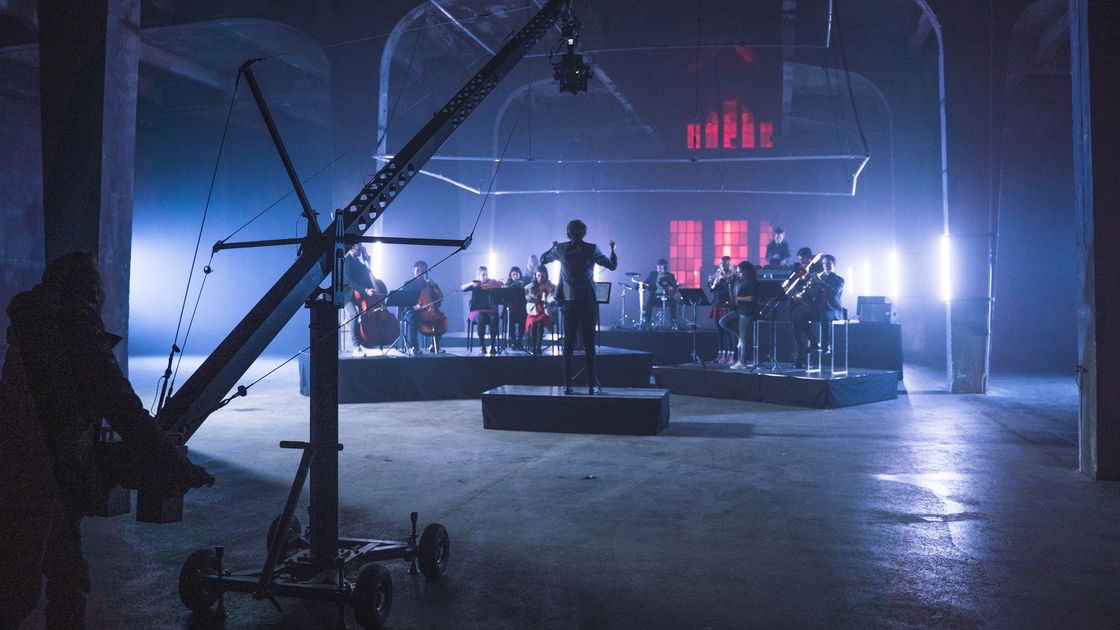
Audi Symphony: Music for a Corporate Film About Swarm Intelligence
An orchestra is the oldest working swarm. A room full of individuals who exchange no words while they play and still arrive together, because each of them hears what the others are doing and senses what comes next. Audi used exactly that to explain the principle connected vehicles are meant to run on: anticipation through participation. The conductor knows the whole score the way a backend knows the whole traffic.
For this film I wrote the music, recorded the orchestra on location, and did the mix and the sound design afterwards. The client was Audi AG, the film was produced by FilmCrew Media in Munich, directed by Kevin and Toby Schmutzler.
Music for a corporate video is written before the shoot, not after it
A film whose entire message is anticipation cannot be scored afterwards. If an orchestra plays on camera, it has to play something real. Musicians playing to nothing look like musicians playing to nothing: the bows are off, the entries look guessed, the conductor conducts into empty air.
So the composition came before the shooting day. The piece was finished before the first slate. That sounds obvious and it is the expensive part: you commit musically before a single frame exists, and you already have to know where the film needs air and where it closes up.
For brands this is the difference between a licensed track and original music. A catalogue cue is placed under a finished picture and can only fit or not fit. Original music is allowed to shape the dramaturgy, because it is there first.
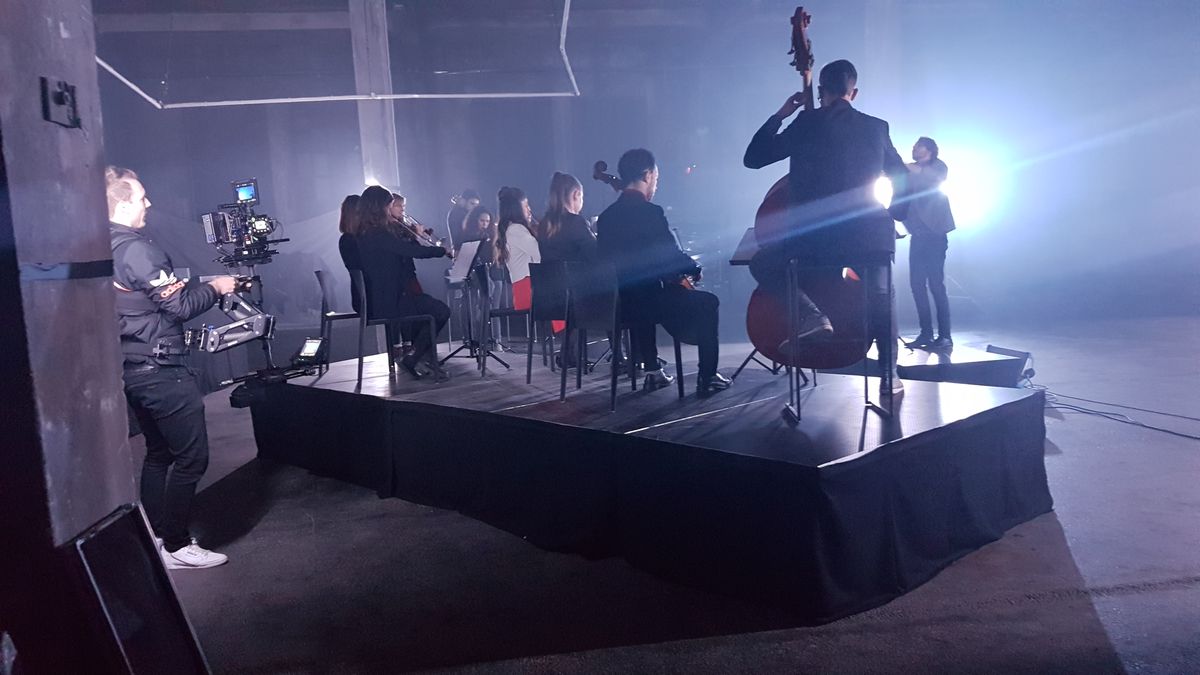
Call and response: the orchestra first, then the synthesizer
The structure of the music is an exchange. The orchestra plays a figure, the synthesizer answers it. Then the orchestra again, then the electronics. The two argue first, then talk to each other, and in the end they converge into one symphony.
That is not a game with timbres, it is the brand statement translated into musical form. On one side the human, the handmade, the slightly imprecise thing that an orchestra is. On the other side the electronic component. That the two do not replace each other at the end but complement each other is the entire message.
Why it had to be a real orchestra
The piece could have been built with sample libraries. For the sound alone the difference would be smaller than most people assume; modern orchestral libraries are good.
But this film carries its message in the picture. If you want to show that a swarm works because the individuals react to each other, you have to show individuals reacting to each other. A glance between two cellists, an entry that arrives an idea too early, a conductor holding someone back. That cannot be programmed, and it cannot be faked by people miming on camera.
So the order was fixed: the composition first, then musicians actually playing it on set, then the camera. The effort is not in the sound, it is in the credibility of the picture.
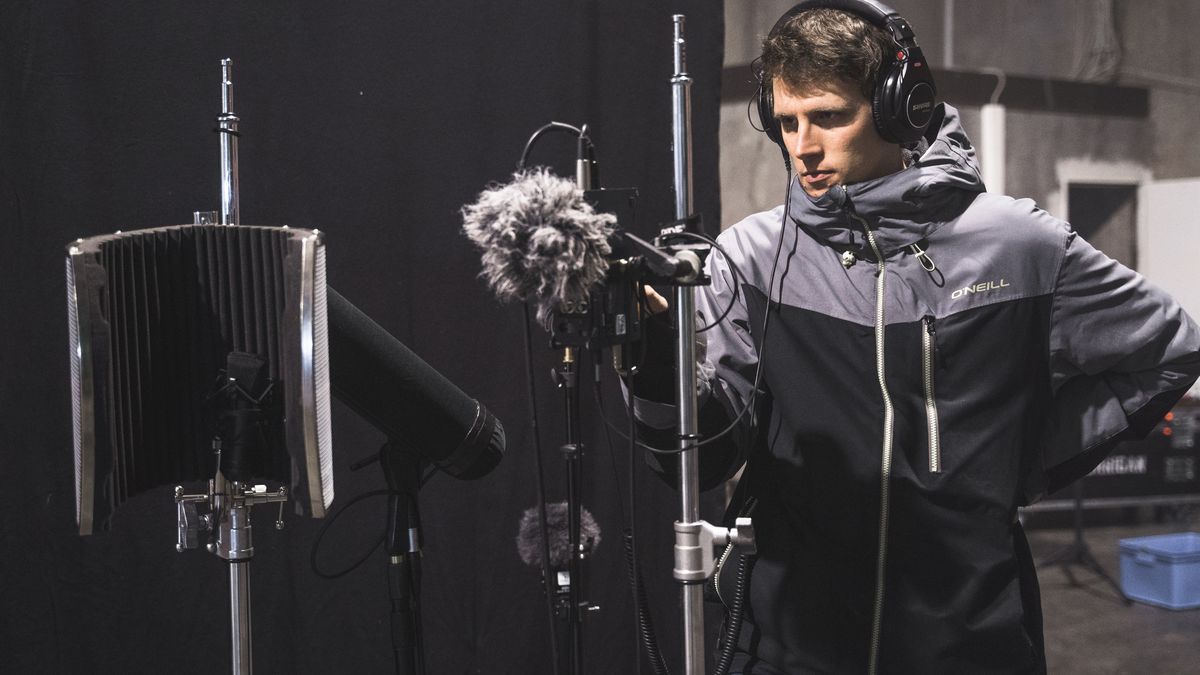
Recorded in a cold hall, in the middle of the night
The shoot took place in a disused industrial hall with a light installation, haze and a camera crane. For the picture a place like that is a gift. For sound it is the opposite of a recording studio.
It was night, two degrees outside. Cold keeps no instrument stable across a shooting night, and it does not affect them equally: wood and strings behave differently from drum heads. A hall with no acoustic treatment has a long, uncontrolled reverb tail. In parallel a film crew is working with a crane, a dolly, a haze machine and radios, and none of it can be switched off, because the shoot is the reason everybody is there.
Under those conditions the recording has to deliver two things at once: enough substance to build a mix that holds up, and enough closeness to the composition that what happens on camera matches the music that already exists.
Why all of it came from one pair of hands
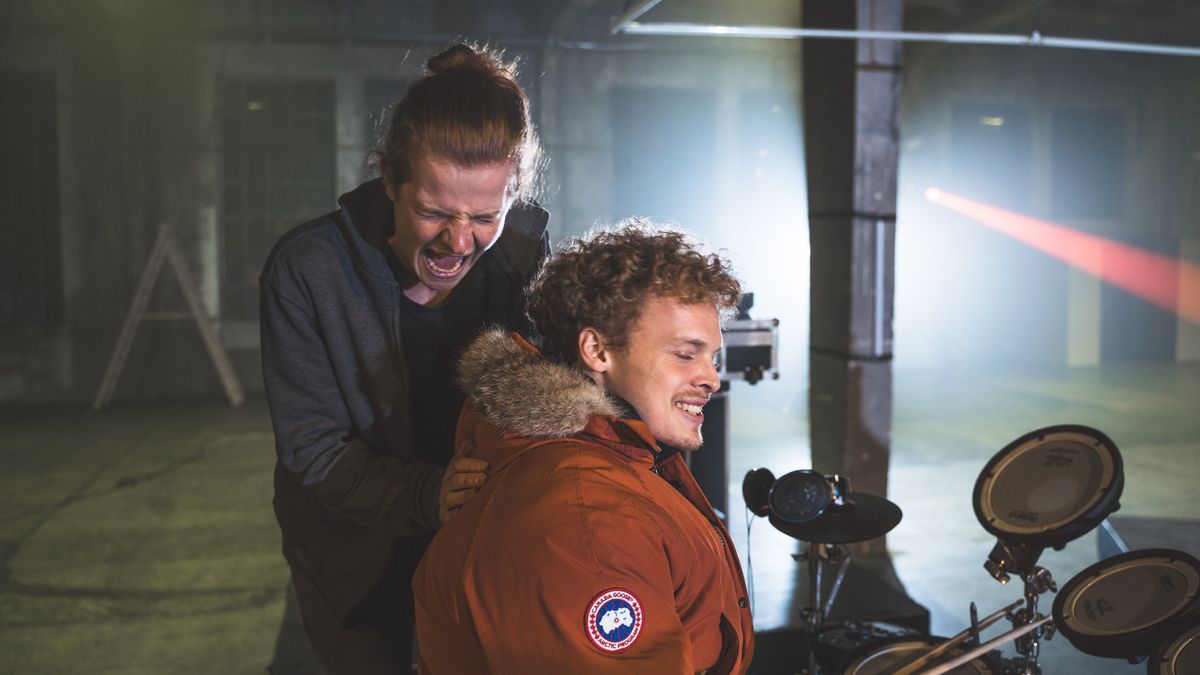
Composition, recording, mix and sound design were all mine. On brand films that is the exception; usually it is three or four trades with just as many handovers.
Keeping it together has a concrete advantage, and a location like this is exactly where it shows. Whoever wrote the composition knows during the recording which voice has to carry later and which is only colour. Whoever recorded it knows in the mix why a track sounds the way it does, and whether that can be repaired or whether it was the room. And whoever mixes can lay out the sound design so that it falls into the gaps of the music instead of covering it.
On a film about swarm intelligence that is not without irony: the result works because the parts know about each other.
What came out of it
The film has been running on Audi Germany’s channel since 16 January 2019. The car was shot separately, in Spain, because the vehicle would not have taken the cold. The orchestra stood in Germany.
My part: the composition, recording the orchestra on set, the mix and the sound design.
Planning a film where the music should be more than a backing track?
Composition, recording and mix from one pair of hands, from the first sketch to the version that holds under the finished cut.
Get in touch