
FUTURE FRAMES #6: Quo vadis immersive? The Relevance of the Audio Layer
On October 21, 2026, from 4 PM to 6 PM CET, MediaTech Hub Potsdam hosts FUTURE FRAMES #6: a deep dive into why audio is the underrated half of every immersive experience.
When we talk about XR and VR, we tend to think pictures first: headsets, screens, volumetric capture. The sound layer carries equal weight (often more) for whether an immersive moment actually lands. This edition of the FUTURE FRAMES series puts the spotlight on spatial audio.
What is FUTURE FRAMES
FUTURE FRAMES is the recurring on-site format of MediaTech Hub Potsdam, where Simon Sturzenegger and one expert sit down for a focused session on a current MediaTech topic. Format: short context, deep-dive conversation, open Q&A, networking. Edition #6 is fully dedicated to immersive sound.
What the Session Covers
- Quo vadis immersive: Where XR, VR, and AR are heading and what role sound plays in shaping believable spaces
- The relevance of the audio layer: Why a great VR scene falls apart without the right sonic foundation
- Production reality: Ambisonics, object-based audio, head-tracked binaural: what works on which platform, what costs you
- Spatial storytelling: Using sound to direct attention, build presence, and carry emotion in 360° environments
- From production to playback: Common pitfalls between studio mix and the actual XR target device
The Speakers
Hosted by Simon Sturzenegger, Head of Technology at MediaTech Hub Potsdam.
- Martin Rieger – Founder of VRTonung, sound engineer for 3D and spatial audio. Over 100 international productions across VR, 360° film, theatre, and walkable installations. Works with brands and agencies on immersive sound design from concept to final mix.
Reserve your seat and join the conversation in Potsdam.
💡 FUTURE FRAMES Special: Hands-on with Spatial Audio
Martin will bring real production examples: not slides about theory.
Expect concrete case studies from VR films, XR installations, and 360° brand projects. The goal: leave the session with a working sense of when spatial audio actually matters, when stereo is enough, and where the technical constraints sit on each platform.
For producers, directors, and creative technologists working on immersive formats, this is the part of the toolbox most teams underinvest in. After this session, you will know what to ask for and what to budget for.
Recap: FUTURE FRAMES #6 2026
A full room at MediaTech Hub Potsdam and a session on the layer most immersive projects still treat as an afterthought: sound.
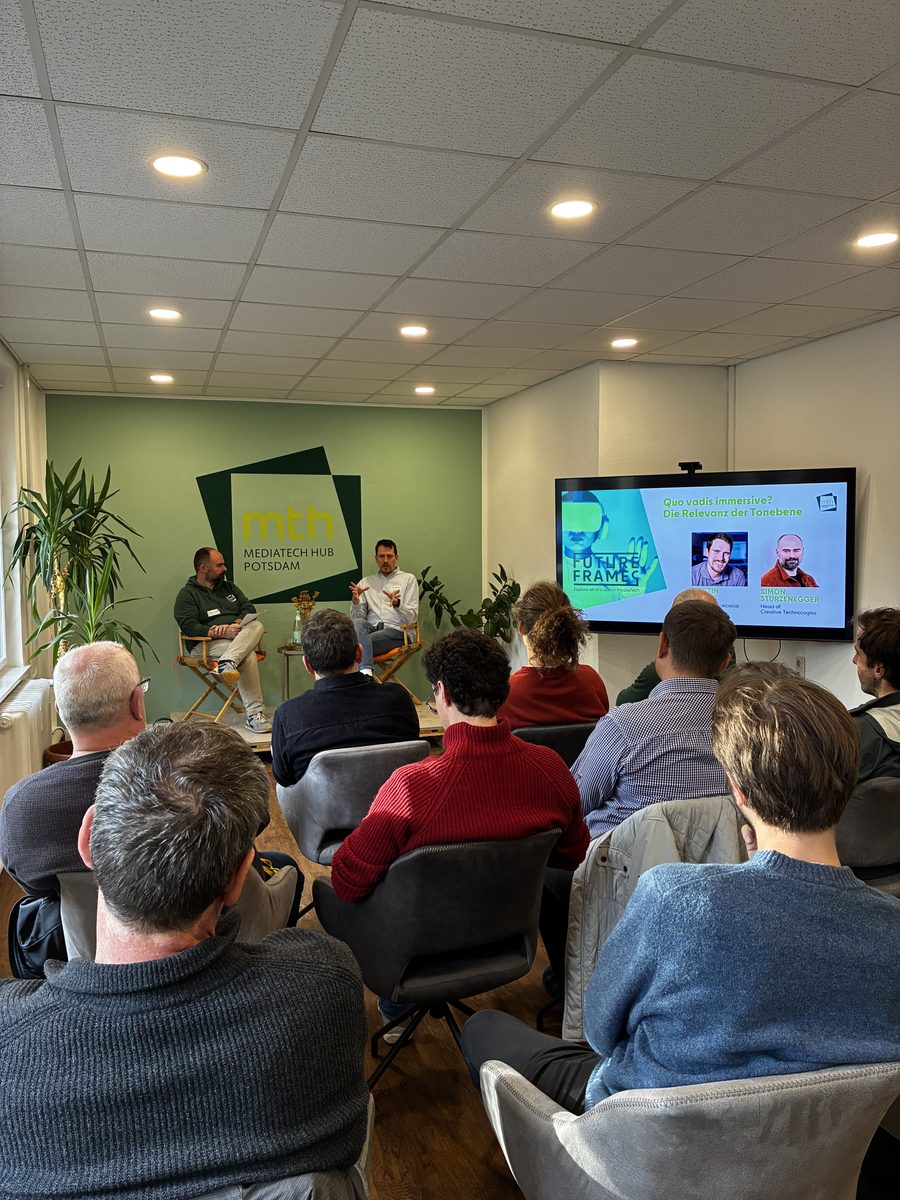
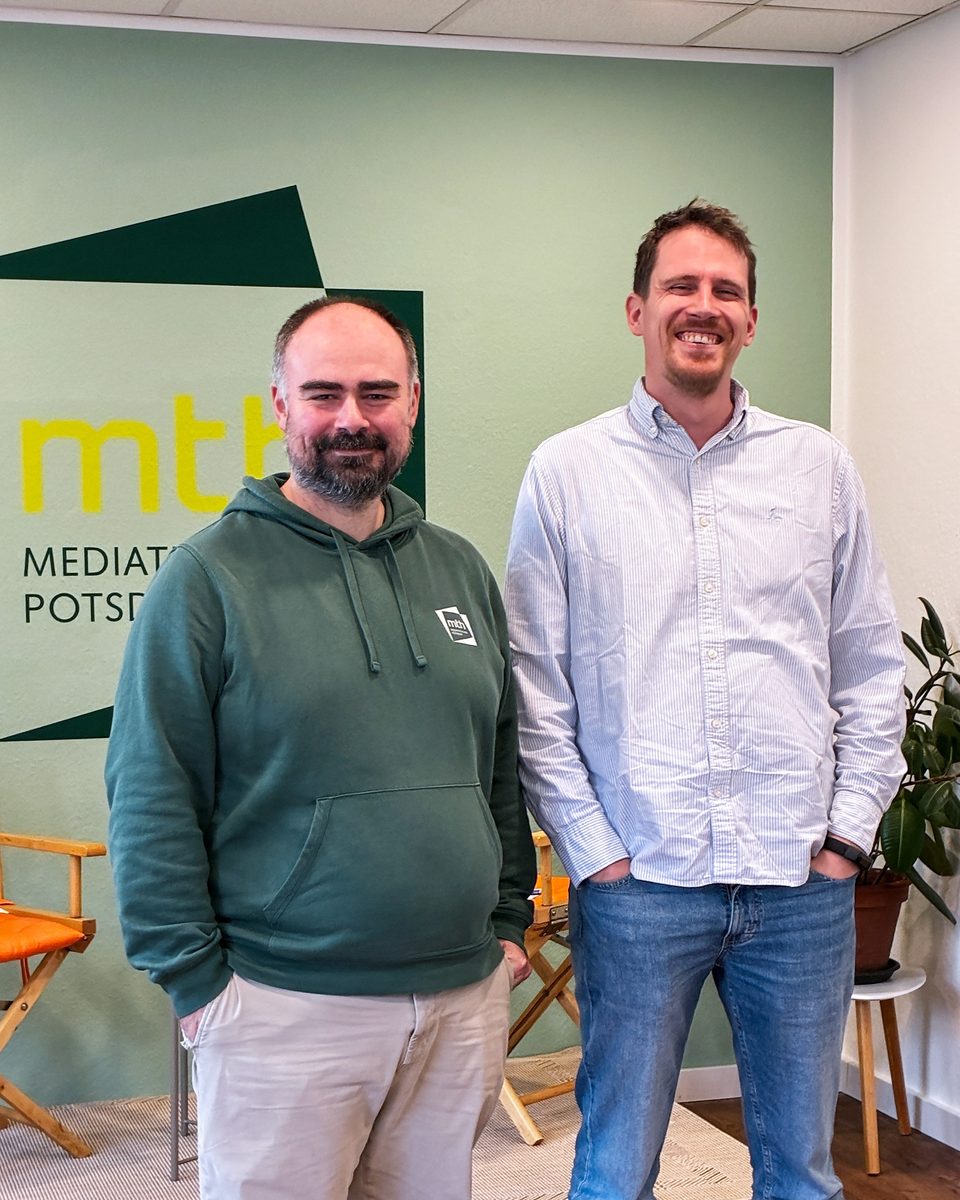
Together with host Simon Sturzenegger, Martin brought a stack of use cases from his work as a 3D audio specialist and sound engineer, where sound is the deciding factor. They ranged from VR experiences in Formula 1 to Apple Immersive Video. His core point: 360° audio is not automatically better than stereo. It pays off where it adds real value to the story and takes a layer of abstraction off the brain. And sound should be part of the visual concept from the start, instead of being added to finished pictures.
Three takeaways from the session, as MediaTech Hub summed them up:
- Don’t score pictures, visualise sound: For Sounds of Germany by the German National Tourist Board, potential binaural sounds in German cities were part of the visual concept from day one. Camera work and sound were planned to build on each other.
- Spatial sound decides between understanding and confusion: In a joint study with Ludwig-Maximilians-Universität München, 360° videos were tested with stereo and with 3D audio. Without 3D audio, participants were often disoriented while taking in information, because the sound did not match what they saw.
- Quality over hype: Martin deliberately turns down projects where 360° audio adds nothing. “Audio should not be misused as a sales argument.” His test: would it work just as well in stereo? If yes, there is simply no need for a third dimension.
Thanks to Simon Sturzenegger and the MediaTech Hub Potsdam team for the invitation and to everyone in the room for the conversation.
More articles on my blog