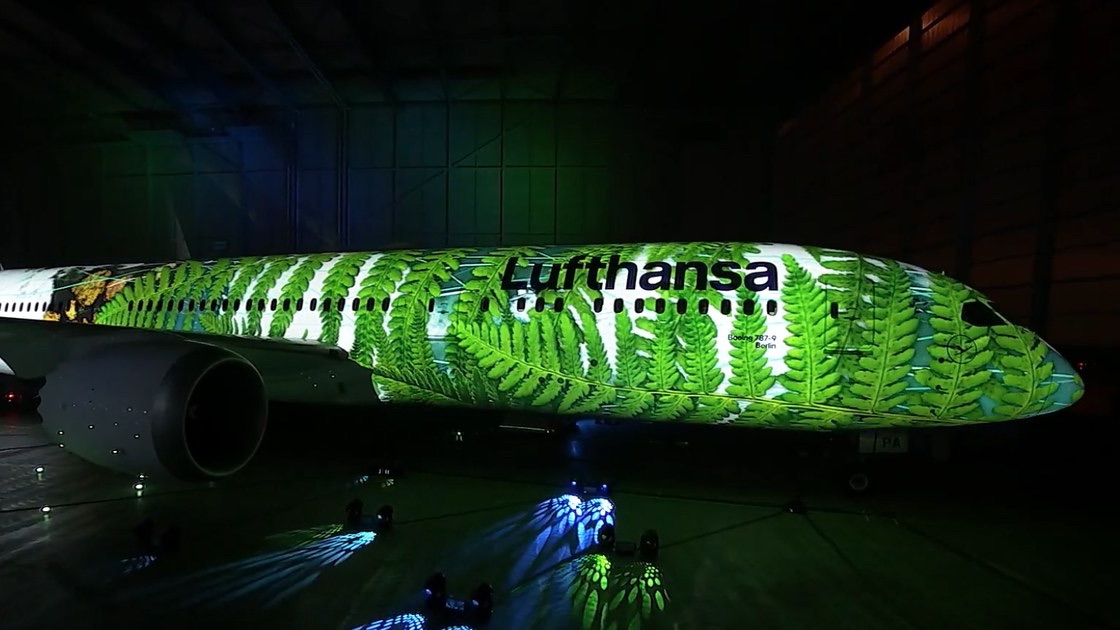
Lufthansa Dreamliner Roll-In: Music and Audio Production in the Hangar
Lufthansa Group presented its first Dreamliner in two places at once: in a hangar at Frankfurt Airport and in parallel in Munich, connected by a live stream. Together with Giovanni I produced the music and the sound design for the evening.
A hangar is not a venue
The concept was called Runway. A lit catwalk ran from the hangar door straight across the hall towards the aircraft, with raked seating on both sides. Guests entered along the runway and then sat around it.
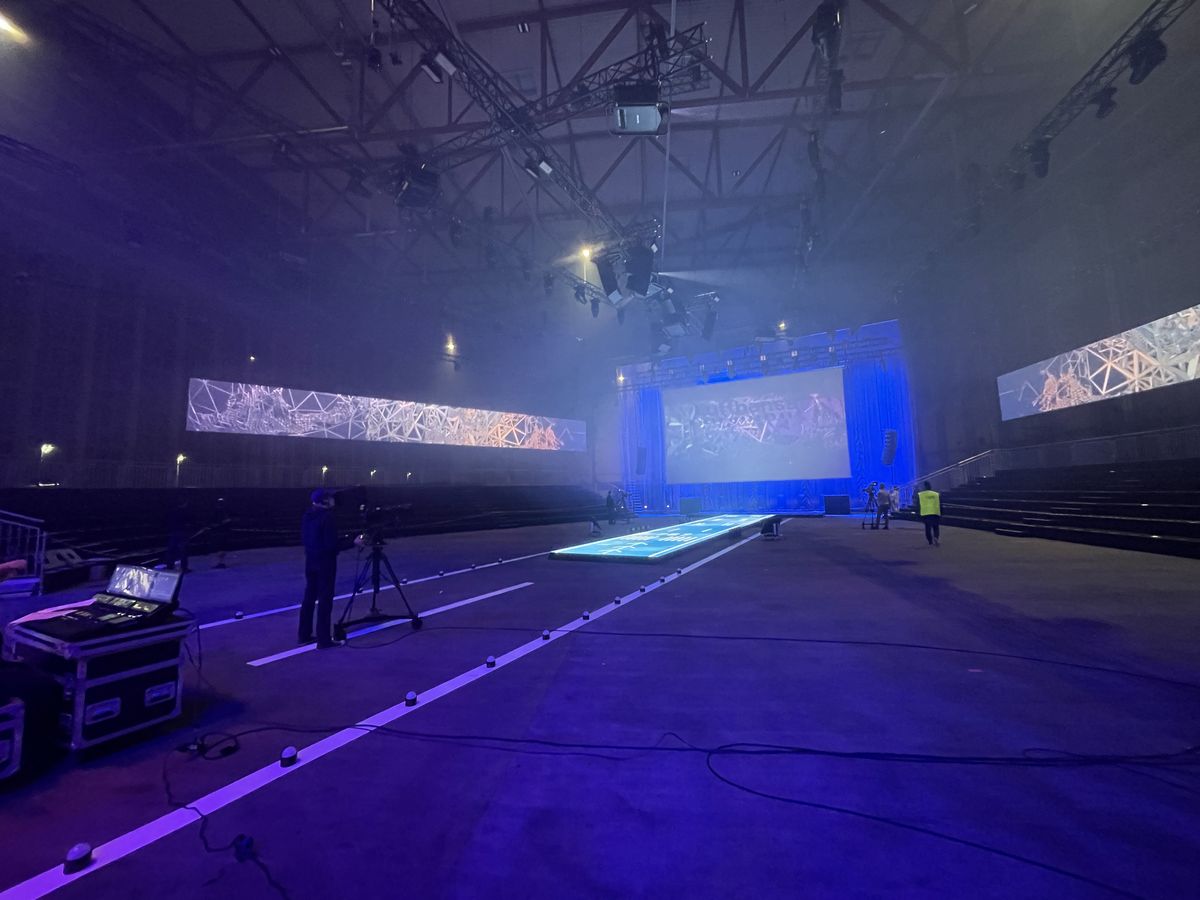
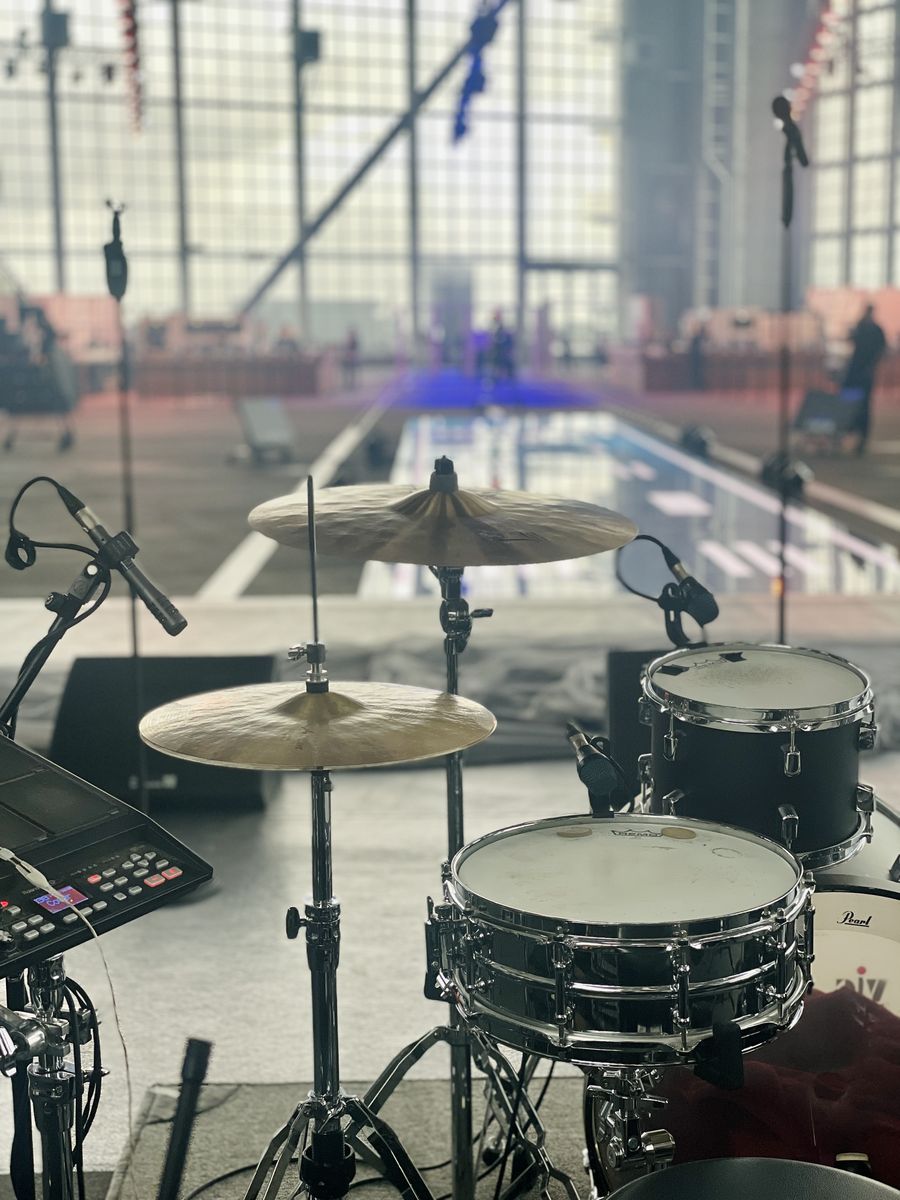
A hangar is built to park an aircraft in. Sheet metal, concrete, a lot of volume and a reverb time that does no favours to speech or music. On top of that comes a show that has to land on the second: countdown, light show, the aircraft rolls in. If the sound lags there, the one moment the whole evening builds towards falls apart.
Music for a running order that forgives nothing
The main show ran for an hour. In it: a countdown that moved guests to their seats, a virtual take-off as the opening, addresses by Carsten Spohr and Boeing CEO Stan Deal with a symbolic handover of the keys, and crew reports from the delivery flight out of Seattle. Throughout, the show cut live between Frankfurt and Munich.
Giovanni and I wrote the music for all of it rather than assembling it from a library: the countdown, the transitions between segments, the beds under the presenters and the sound effects for the stage moments. I worked on the audio concept and did the mix.
The visual highlight was a line-art mapping across the entire fuselage in which the faces of guests from both cities appeared. Images like that need sound that grows with them instead of just sitting underneath.
The moment that was not in the script
One of the moments people remembered afterwards was not planned. We handed the presenter a gag that got the whole hangar singing the riff from Seven Nation Army together. For a minute, thousands of individuals turned into an audience.
You cannot manufacture moments like that in post. You can only prepare them and trigger them at the right second.
Producing while the rehearsal runs next door
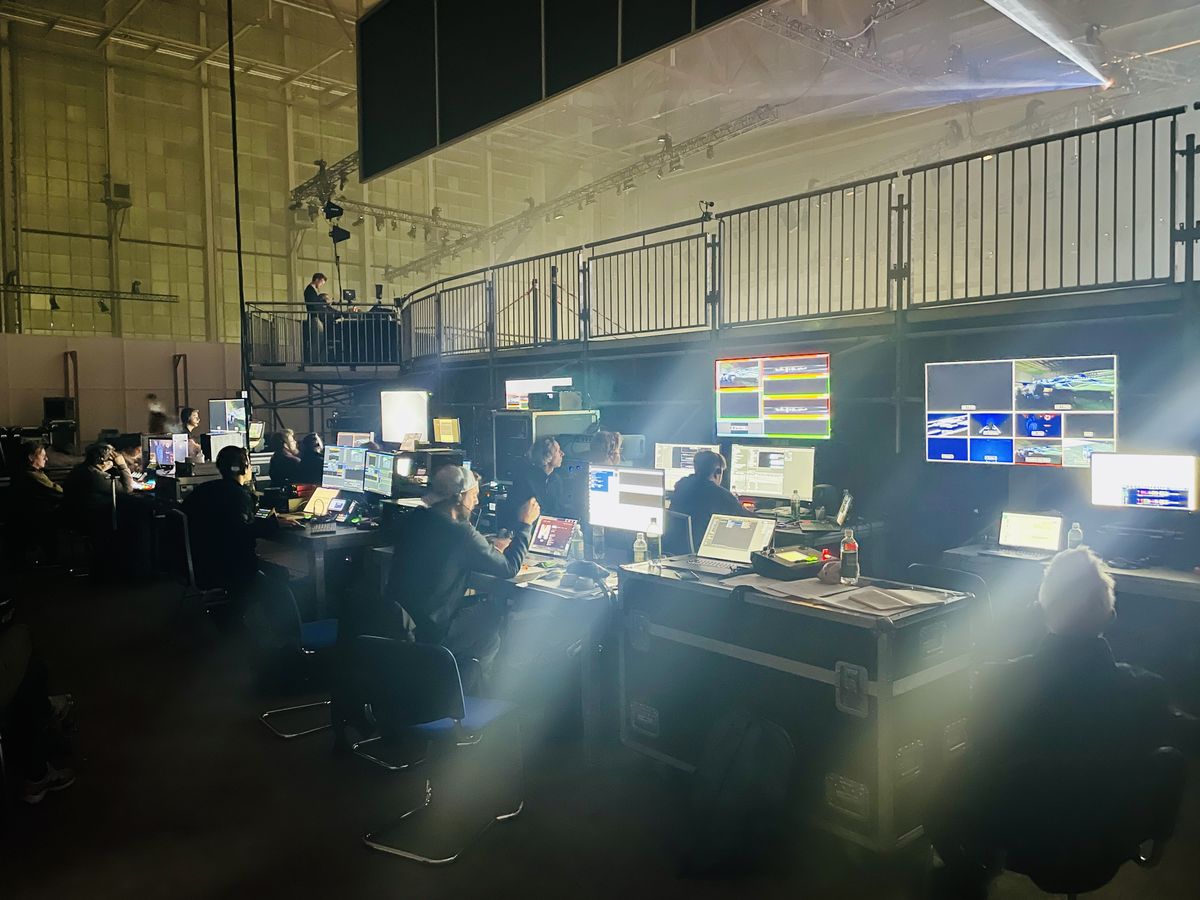
I was on site for the hot phase. A running order of this size keeps changing until the last rehearsal, and what fitted yesterday is too long or too short after one change in the script. So I kept producing in the hangar and fed the new versions straight into the rehearsal.
That is the difference between delivering music and looking after it. If you only send files, you find out on the night that a transition no longer works.
What came out of it
Around 2,500 people experienced the evening simultaneously at both locations, plus a worldwide live stream for everyone who could not be there. The production was entered for the BrandEx Award.
Eisele Communications led the production, Stein Communication was responsible for visualisation and projection mapping, with VOSS+FISCHER alongside. My part: music, sound design, the mix and looking after it through the rehearsals.
Planning an event where the sound has to land on the second?
Music, sound design and on-site support from one person, from the concept to the final rehearsal.
Get in touch