From VR Art to Immersive Experience – Atmos Sphaerae by Tamiko Thiel
A case study: Atmos Sphaerae by Tamiko Thiel: VR origin, immersive projection evolution, spatial audio architecture
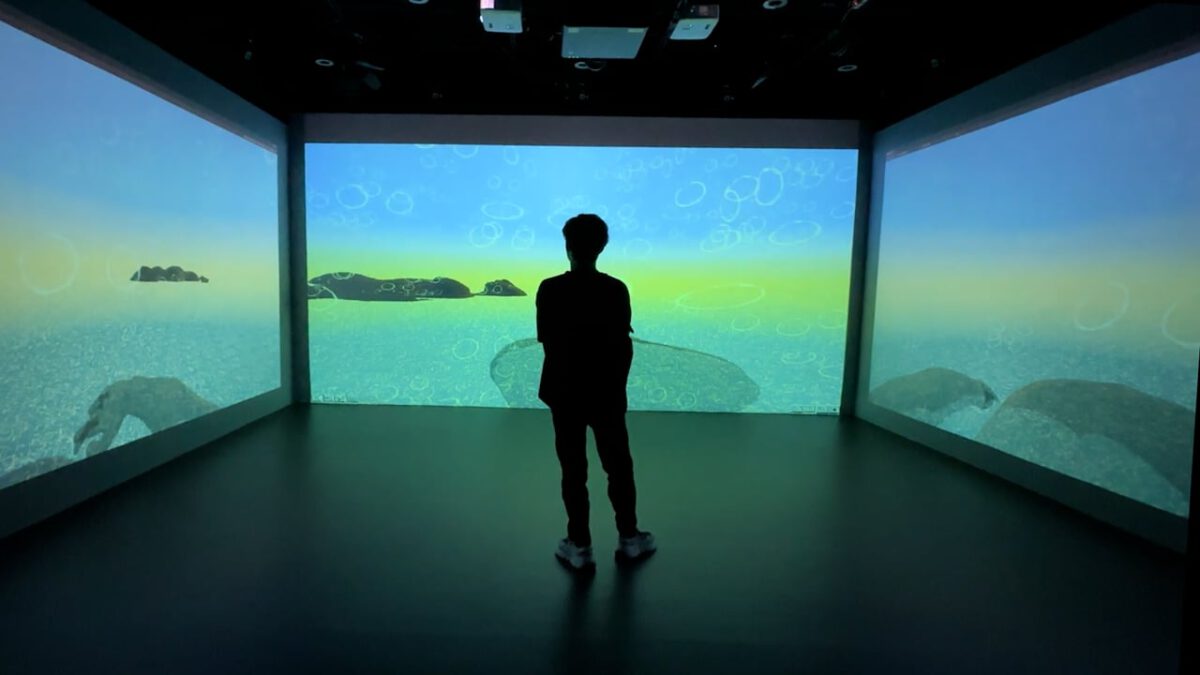
Atmos Sphaerae is a precise example. It started as a VR artwork and later became an immersive art installation using multi-screen projection and edge blending.
WHY: The Purpose Behind Atmos Sphaerae
Atmos Sphaerae examines the history of Earth’s atmosphere across deep time. It treats atmosphere as a physical and emotional environment. The goal is to expose invisible chemical and planetary processes by turning them into engaging sensory experiences.
The WHY is functional: audiences must feel atmospheric evolution. VR and projection are only delivery systems. The core idea is immersion through sensory alignment: light, motion, and spatial sound forming a coherent environment that stimulates the senses. Immersive audio becomes a primary tool to reveal structure, scale, and transformation.
HOW: Translating Scientific Processes Into Immersive Worlds
I developed the audio as part of a team together with artist Tamiko Thiel. We defined a creative framework where sound functions as the atmospheric backbone. My role: design and technically implement a spatial audio system that supports the artistic concept across VR and projection formats.
Immersive Audio as Structural Design
The immersive exhibition required audio that works as structure. Spatial sound marks transitions between planetary eras. Every environmental shift is encoded in the sound field.
Phase Logic of the Soundworld
- Cosmic Void: Minimal density, near-silent gradients, physical emptiness. Immersion built through absence.
- Volcanic Planet: Aggressive low-end, eruptive movement, a physical field of pressure and heat.
- Water World: Fluid transitions, continuous motion, a full immersive space shaped by organic patterns.
- Oxygenatio: Granular detail, micro-movement, molecular behavior translated into spatial motion.
- Runaway Greenhouse: Chaotic density, dissonant overlays, immersive sound used as warning signal.
VR to Immersive Projection: Technical Adaptation
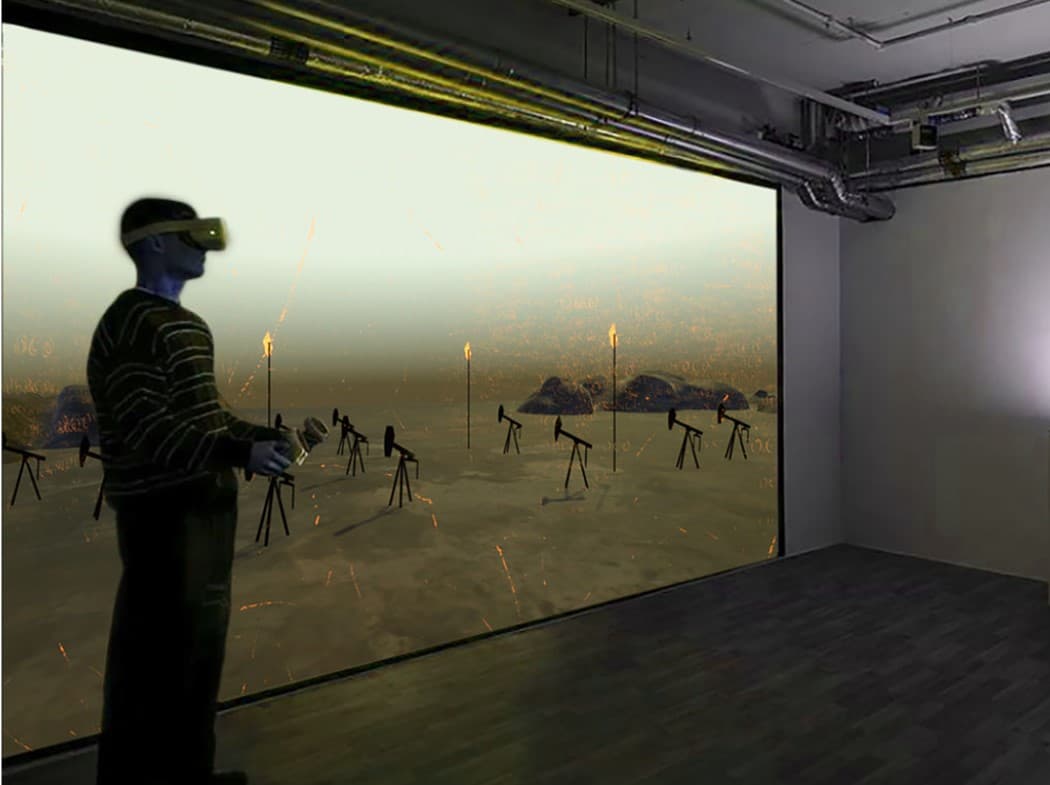
Atmos Sphaerae first premiered as a VR experience (DiMoDA 4.0). Later, it was re-engineered for multi-screen projection installations.
VR uses headtracking and personal immersion. Projection requires spatial stability across a room.
I rebuilt the audio environment with wide atmospheric zones, defined spatial axes, loudspeaker alignment for edge-blended projection spaces and controlled motion fields suitable for free-moving audiences.
WHAT: Deliverables and Implementation
I designed the complete spatial audio architecture for both formats:
- 3D-Audio conception and Ambisonics mix for the VR version
- Technical implementation for digital content workflows
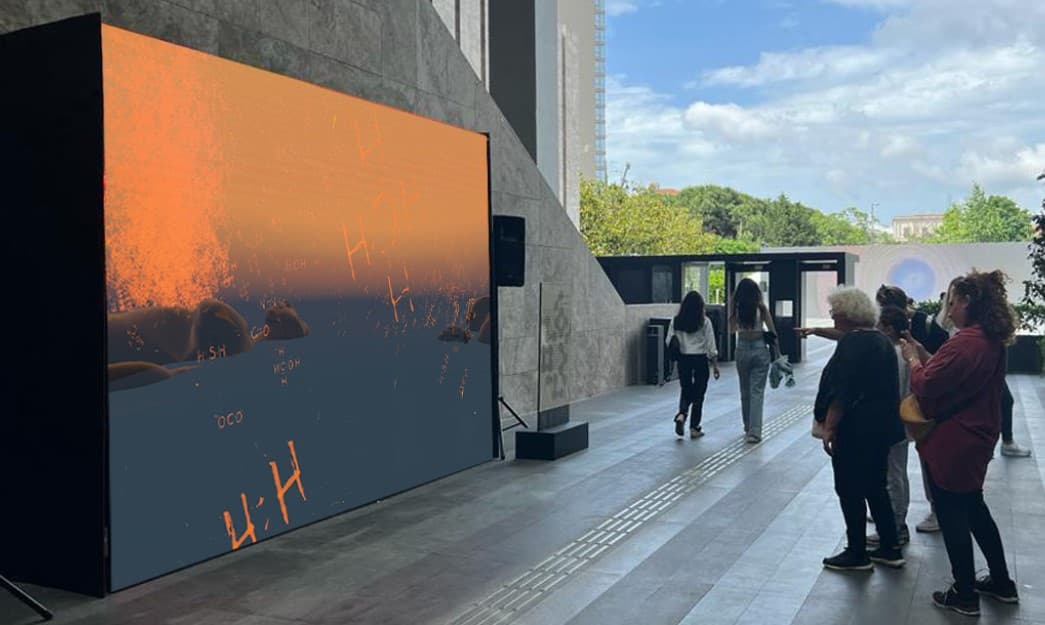
- Multi-channel adaptation for LED walls, projectors, and edge-blended installations
- Alignment between visuals, projection mapping, and immersive audio
- Calibration for exhibition spaces in Europe and the USA


Planning a sound installation? Let’s talk.
Sound installations are artworks in their own right. Let’s talk about your vision.
Get in touch