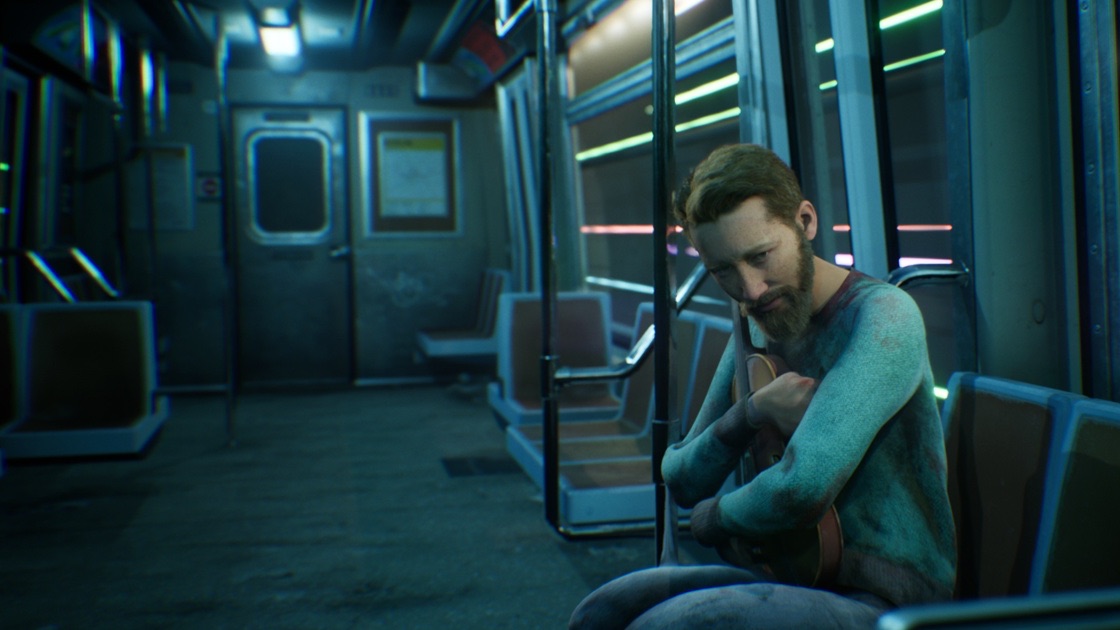
UNvisible: Spatial Sound for a VR Short Film Made in Unreal Engine
A VR film that only runs on a gaming PC has a hard time at festivals. UNvisible is that kind of film: built in Unreal Engine, with MetaHumans as characters and six degrees of freedom, and it needs an upper mid-range graphics card to run. Many festivals don’t even accept work like this, because they would need dedicated computers and someone standing next to them all day, while a 360° film simply gets loaded onto their headsets.
That is why I built the spatial sound for the 360° version for Digitalclay, a production company based in Cologne. Filmmaker Pratima Pal developed UNvisible in the Digital Narratives master’s programme at IFS Internationale Filmschule Köln, and Mahee Pal programmed the VR application. My job was to carry the spatial sound layer, which the engine generated in real time, into a single video file without losing direction along the way.
Why an Unreal project had to become a 360° video
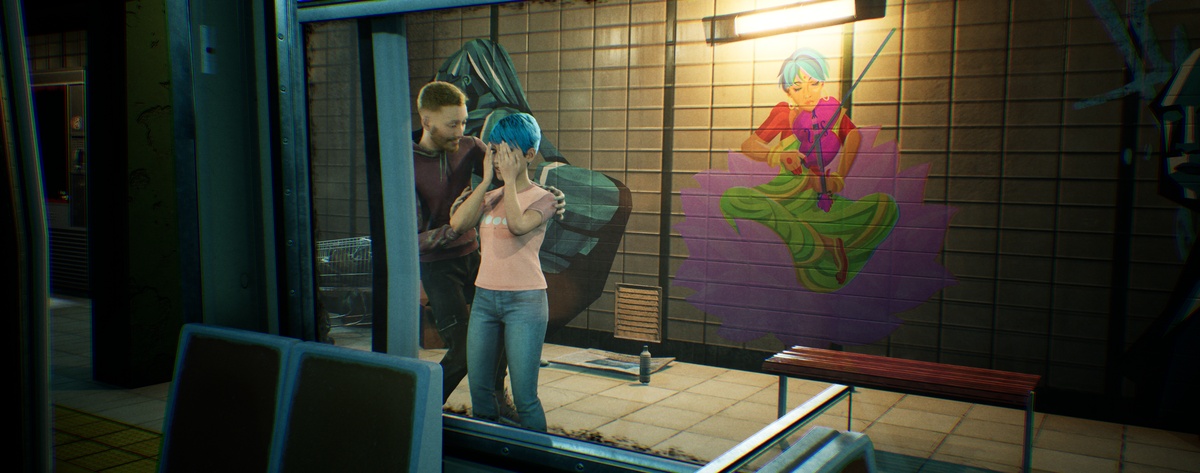
The story runs seven minutes. Van, a graffiti artist, rides the subway and clings to the memory of a brief encounter with Frida, until memory and imagination blur and he slowly fades away himself. The theme is invisibility: the people we pass every day and still overlook, because we have grown used to seeing them.
Nothing about it is interactive. You sit and watch. The PC VR version does let you move around the carriage, but the narrative isn’t built for that, and if you lean too far to one side, the scene starts to wobble. I know this from my own projects. I consider linear storytelling with six degrees of freedom a good compromise, because you just press play and don’t have to wonder which button you are supposed to push. Twice I have deliberately mixed experiences that were technically 6DoF in three degrees of freedom, because it gave me more control over how they sound.
With UNvisible, the push came from outside: the festivals wanted 360°. The switch takes little away from the film, since you are seated in one spot in the carriage anyway, and it makes the film playable on any standalone headset. The problem was the sound. Until then, the engine had placed every voice and every door sound in the room in real time, and in a video that processing is simply gone. So whatever should sound spatial has to be fully mixed beforehand.
How the spatial logic moved from the engine into one file
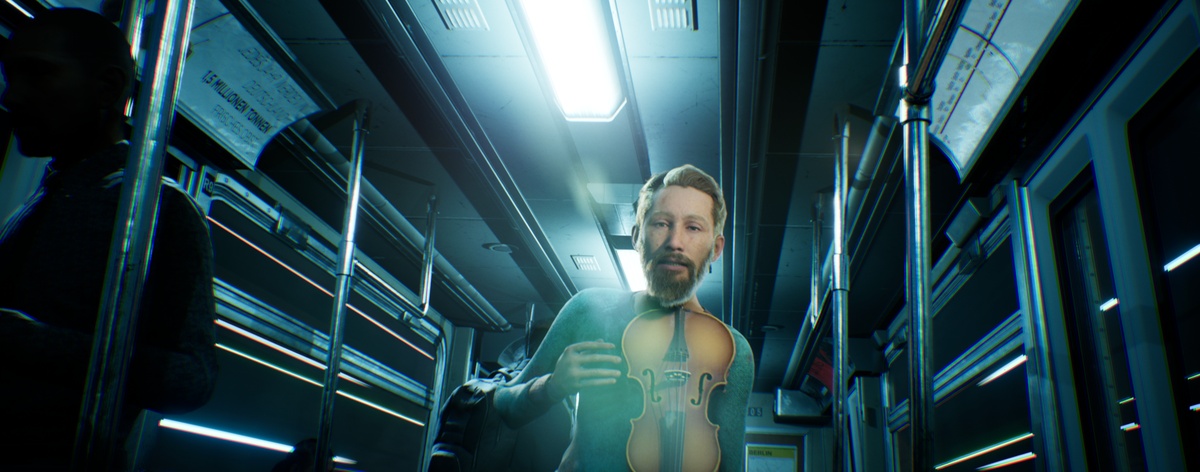
In the Unreal version, the characters and certain sounds sat in the scene as sound sources, like doors opening or characters walking towards you while they talk. Tom Owen’s music ran as a continuous track with no location, plus a single music clip drifting in from outside the station. The violin in the score is played by Juta Õunapuu-Mocanita, and the sound design of the original version is by Tommy Kolak.
I rebuilt the scene from this material. The basis was an equirectangular render of the film and all individual tracks as separate WAV files. Along the way I adapted the sound design for the 360° version and created additional Foley. Voices and sounds became objects again, sitting where the characters stand and walk in the picture. I mixed object-based and delivered the result as ambisonics. If you turn your head in the headset and a voice stays glued to the front, your brain notices straight away that something is off. So Van keeps sounding from his seat, and whatever happens out on the platform stays out on the platform.
For the actual work, that is quite a break. With six degrees of freedom you deliver assets, because nobody knows when the viewer will be where; space and time are variable, and there is no sweet spot. A linear 360° video delivers one single file. Ambisonics is scene-based and struggles as soon as you move freely through a space, but a fixed perspective is what the format was made for, and in UNvisible the perspective was fixed anyway.
Music is the trickiest layer in projects like this. A stereo track locked to your head fights the spatial sounds, because it has no location and doesn’t turn with you when you look around. I have written about the technical side in my article on head-locked stereo in ambisonics mixes. In UNvisible I split it: where the music just carries the mood, it stays in the background, locked to the head. In one scene I placed it in the space instead, so it comes from somewhere and turns with you when you look around.
There wasn’t much time. Festival deadlines were tight, the 8K render of the MetaHumans took longer than planned, and it still had to be clear early on which ambisonics format the festival player expected, because festivals often play 360° films through their own apps and not every app decodes the same way. If nobody checks that, you find out on site when the sound doesn’t turn with the picture, and by then it’s too late.
What came out of it: UNvisible as a 360° film in festival competition
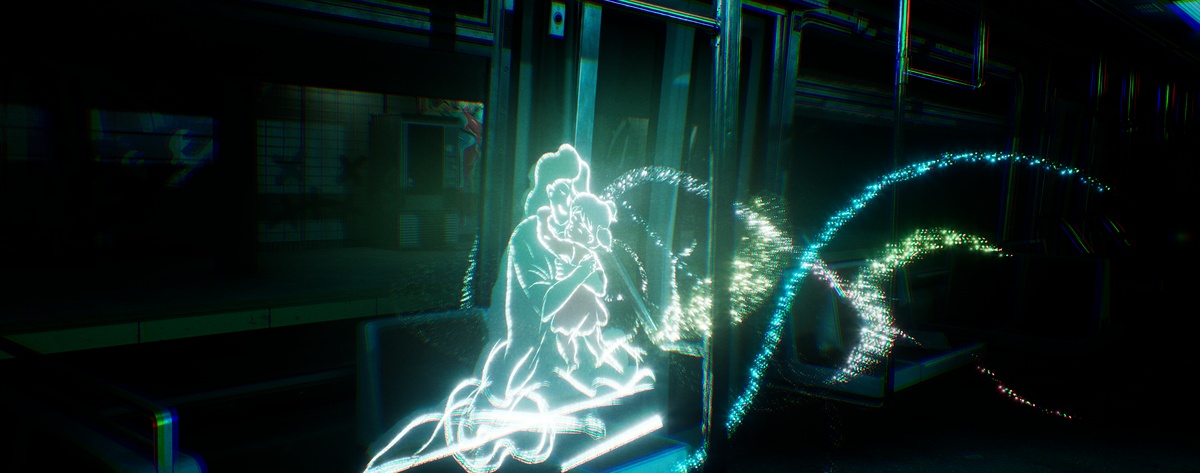
The 360° version exists as an 8K video with ambisonic audio. The mix rotates as you look around in a VR headset or on a phone, and on headphones it becomes binaural 3D sound. How this works for 360° videos on YouTube, and where it breaks, is covered in my article on YouTube ambisonics.
In this version, UNvisible screened from 11 to 15 August 2026 in the VR-shorts (360°) competition at ALPINALE in Bludenz, Austria. The original PC VR version had already travelled before that: in 2025 it received an honorable mention at Digital Arts Zurich and was an official selection at the Miami Art Tech Summit. Those two stops belong to the Unreal version, which I was not involved in.
What I like about the project is how openly the team talks about its own technology. Working with MetaHumans and real-time rendering taught them a lot, including what they would do differently next time. The move to 360° suits a story you watch seated anyway, and it brings the film to an audience that doesn’t have a gaming PC standing next to the headset. As with the VR experience Eddie and I, it is about a shift in perspective, and the sound has to keep you sitting inside the scene while it happens around you.
UNvisible was made by a team spread across Germany, India, the UK, the USA, Poland and Canada. The full credits are on Digitalclay’s project page.
Images: © Digitalclay
Planning a VR film that should also run as a 360° video?
Unreal, Unity or filmed 360° footage: which versions you will need in the end is decided as early as the sound design. Let’s talk before the festival deadline gets tight.
Get in touch