Ropeway Mechatronics in 360° – Spatial Audio for a Job You Can Step Into
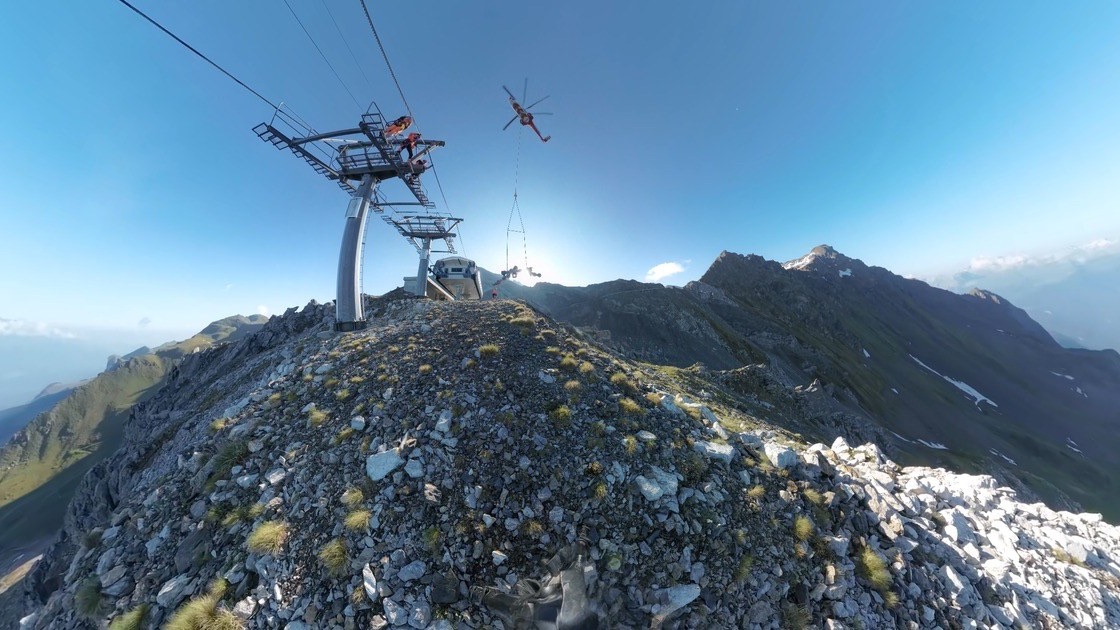
A 360° camera now goes where you would never put a camera crew: strapped to a roller battery that a helicopter flies onto the tower of a chairlift. The picture you get is spectacular. The sound is not. What the camera records on its own is rotor blast, wind on the capsule, and a mush with no direction left in it.
That is where I joined the project. For Urs Wyss of the Swiss 360° production company Avocado 360, I created the spatial soundtrack for a career-insight video about the ropeway mechatronics apprenticeship: a spatial audio mix that rotates with your view and puts you in the middle of the installation work.
Why a career video only becomes an experience through sound
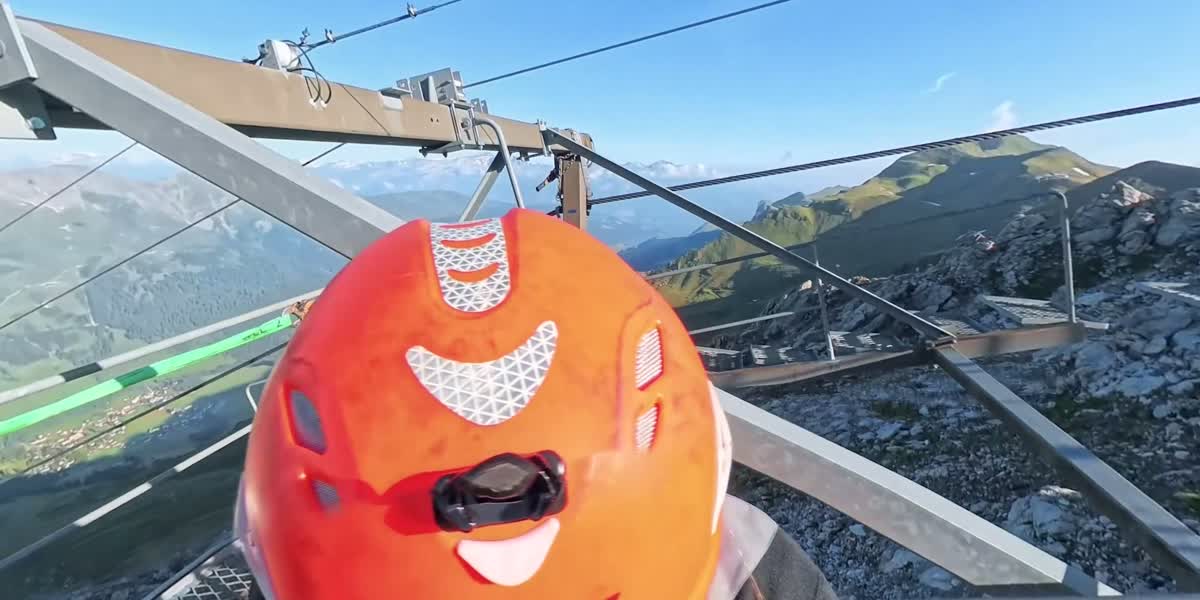
The video is aimed at teenagers choosing their future job. An apprentice in his third year guides you through his workday, and one line of his narration explains why this project was shot in 360° in the first place: you get to see things the guests never see. Inspection work on top of the tower, rescue drills, a roller battery flying in under a helicopter.
A flat video cannot keep that promise. Anyone who can look around on a phone or in a VR headset expects the world to follow acoustically. The helicopter has to roar from where it actually is and fade when it disappears behind the ridge. When the technicians talk behind the camera, their voices have to come from behind. The moment the sound stays static, the experience collapses back into just another video.
The audience adds a second rule: fifteen-to-seventeen-year-olds can take more punch and dynamics. A career video for this group should not sound careful, it should grab. It is the same logic that drives immersive learning: what you experience physically is what sticks.
How camera audio became a spatial scene
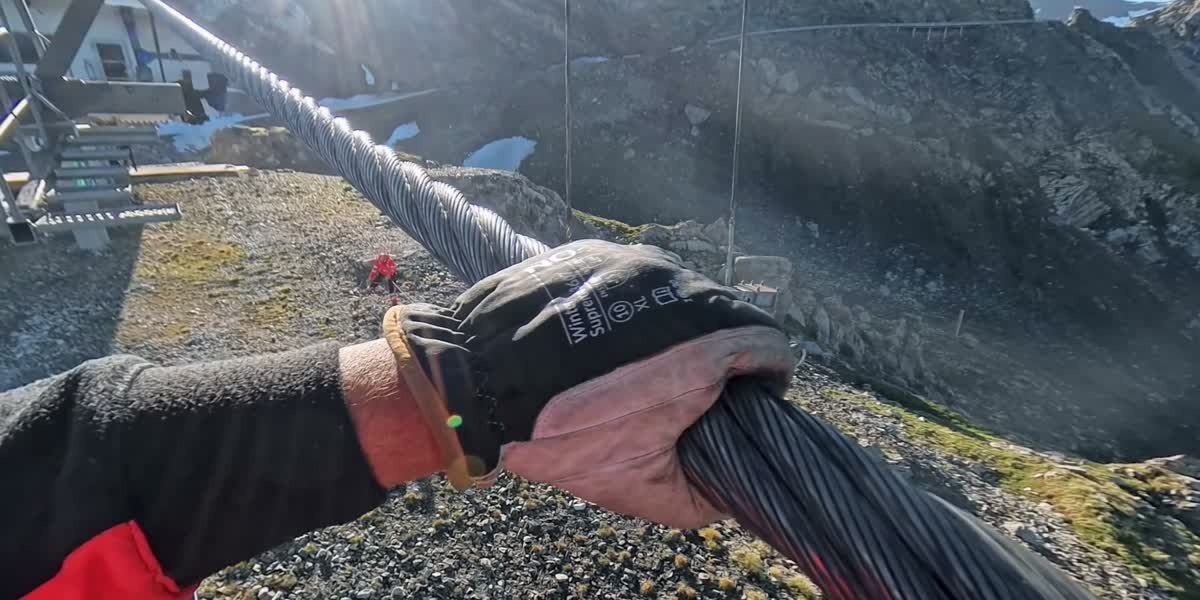
The camera’s own recording served as a reference, not as material. So I rebuilt the sound world in post, object by object. The helicopter sits in the scene as its own sound object and follows its flight path, from distant approach to the roar right above the camera to the turn away into the valley. The steel cable received its own tension and metal sounds, the roller battery its heavy click into place, the surroundings a calm mountain atmosphere of wind and birds that leaves room for the action.
The voices are the backbone. The apprentice’s voice-over guides you through the two minutes as a calm narrator, while the technicians’ calls are placed as objects exactly where the men are standing: on the tower head, behind the camera, on the radio. That creates orientation without anyone ever having to point at anything.
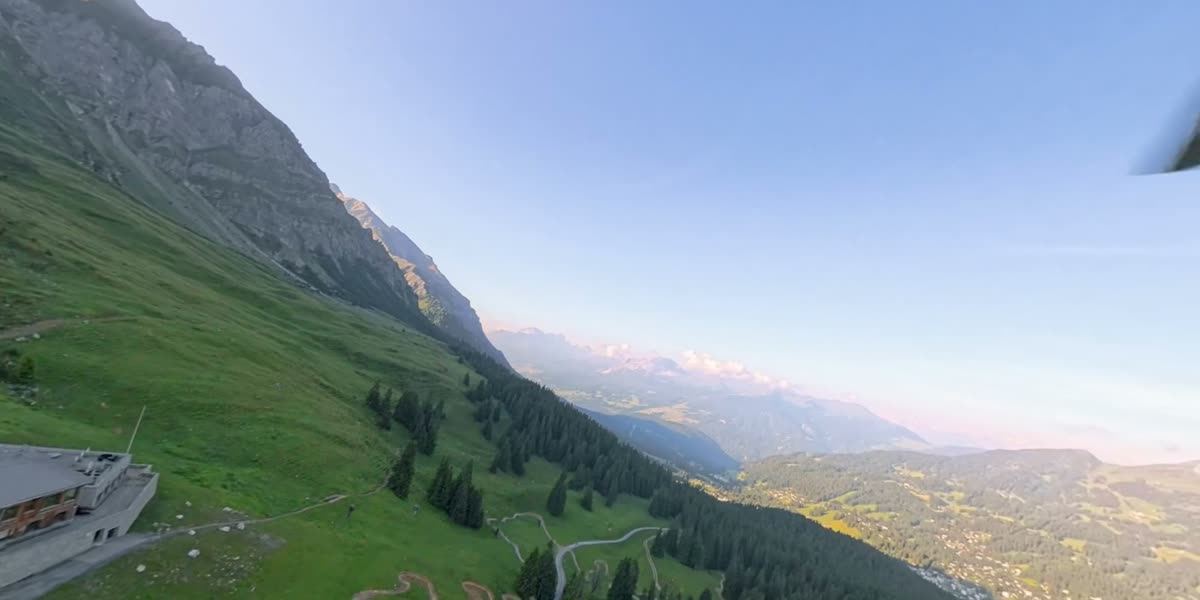
The hardest scene was also the best one: the flight of the roller battery with the camera hanging directly on the load beneath the helicopter. The exact shot that justifies the whole video delivers the most useless production audio, because the turbine flattens everything and the airstream takes care of the rest. That sequence is built entirely in sound design: rotor and turbine layered above, the whistle of wind on the load, and below it a valley slowly shrinking away. The more spectacular the shot, the more of its sound is made in post.
With the music we deliberately went the other way. Instead of covering the video with a constant bed, the music only fills the gaps where neither helicopter nor voices carry the scene. The most exciting sound in this story is reality itself: a turbine, a singing steel cable, radio chatter at altitude.
What came out of it: two minutes of a workplace you can look around in
The finished film runs as a 360° video with ambisonic audio on YouTube: on a phone or in a VR headset the mix rotates with your view, and on headphones it renders as binaural 3D audio. If you want to check whether your own headphones handle that rotation, there is a free 3D audio test to try. From the same session I also delivered a binaural stereo version plus 5.1 and 7.1 mixes, so the video works at trade fairs, career events, and cinema screenings.
The project also shows how well the split works between a 360° production company and a dedicated spatial audio specialist. Avocado 360 shoots, edits, and knows its clients; I take over the spatial sound layer, from concept questions to sound design to the final delivery formats. The production company does not have to build its own ambisonics pipeline, and the client still gets audio that keeps up with the picture.
In the end it is the kind of career marketing I would like to see more often: not a brochure, but two minutes inside an actual workday. You stand next to the apprentice on the tower head, watch the helicopter approach, and understand what responsibility means in this job. As with my work on sound for 360° documentaries, the audio decides whether such an insight feels real or like an ad.
Planning a 360° video where the sound should move with the viewer?
Career insight, recruiting, or product film: a 360° camera delivers the picture, but only spatial sound turns it into an experience. Let’s talk audio strategy before the shoot.
Get in touch