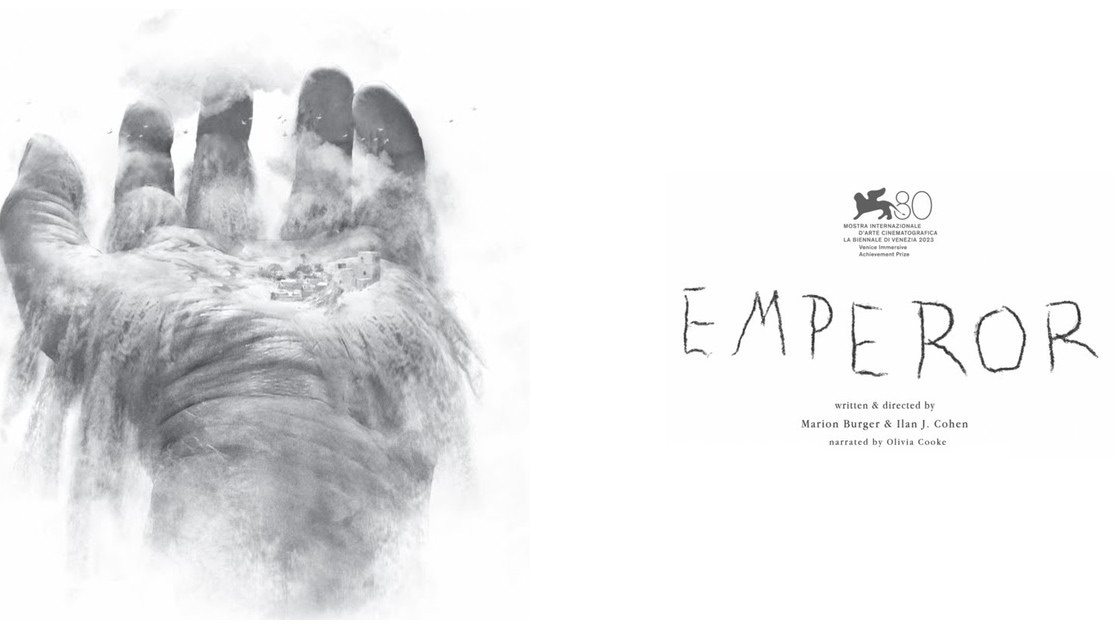
Emperor VR Project — German ADR Version
“Emperor” is a 40-minute interactive VR experience that puts you inside the mind of a man who lost his speech after a stroke — told from his daughter’s perspective as she tries to communicate with him and piece together his past. Co-produced by Reynard Films (Germany) with ATLAS V and France Télévisions’ StoryLab, narrated in the English original by Olivia Cooke, and awarded the Achievement Prize at Venice Immersive 2023, among others.
Why lip sync was the smallest problem in this ADR job
VRTonung recorded the German voice version. On a linear film, that’s a standard dubbing job: match the lips, done. Not on “Emperor” — because the experience runs in Unity. Every voice line is its own asset there, and it has to match the English original’s length exactly, or the entire choreographed scene shifts: animations, triggers, visual transitions. So it wasn’t just the lips that had to match. It was the entire timeline, down to the frame.
How reference captures and two layers of reverb became a seamless German version
The reference material was screen captures made using YouTube’s timeline function — that made it possible to time every scene precisely before recording even started. That lines up with an experience that runs through a lot of 360° and VR dubbing work: lip sync alone isn’t enough. You also have to stay spatially in sync — not just where a character moves, but how far away they are at any given moment. On “Emperor”, that spatial sync couldn’t just happen in the listener’s head; it had to be delivered to Unity as a precisely timed asset.
That didn’t finish the job, though. Raw studio recordings sound wrong the moment they land in a 3D scene — too dry, too close, too obviously “on the microphone”. So every voice track got a first layer of reverb baked in during the studio session, roughly embedding it into its scene. The reason not everything is left to the engine: real-time reverb in Unity still isn’t fully convincing, because the complexity of a real space — wall reflections, different materials, constantly changing distance — is hard to compute cleanly in real time. In the medium term, this is heading toward raytraced audio, but that’s computationally expensive and hasn’t landed in game engines yet. The practical solution is a combination: a baked base layer of reverb from the studio that sets the voice correctly into the scene, plus an additional, dynamic layer of reverb that Unity adds on top in real time, reacting to movement and position. Two layers instead of one — one delivers the quality that real-time processing alone can’t, the other the responsiveness that a fixed studio recording alone doesn’t have.
What came out of it
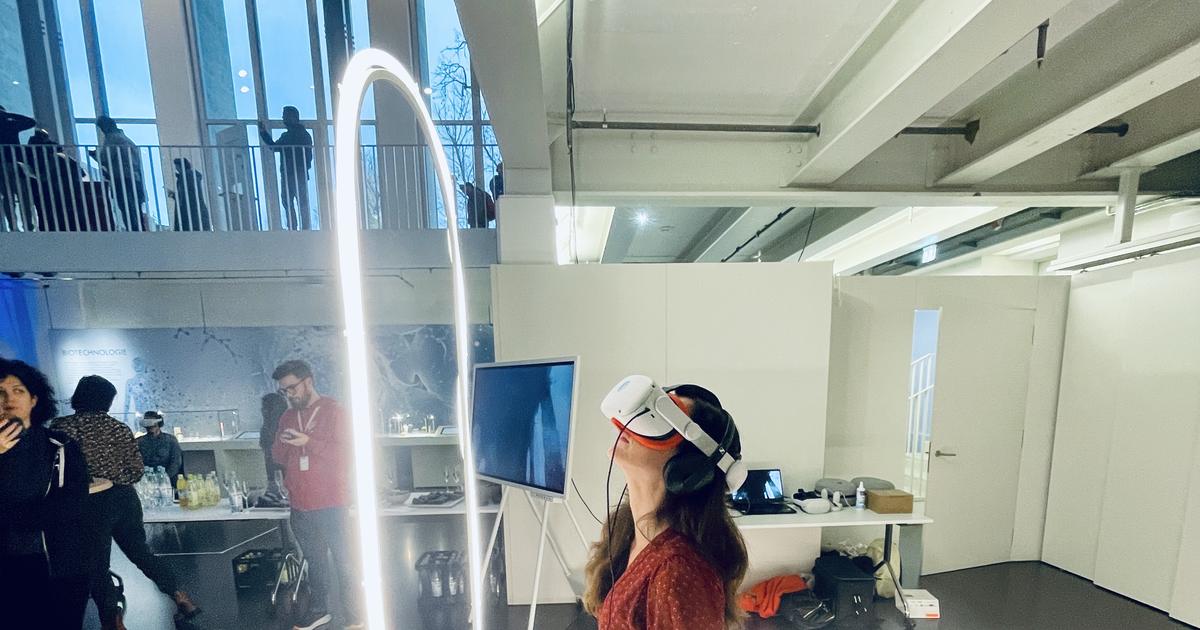
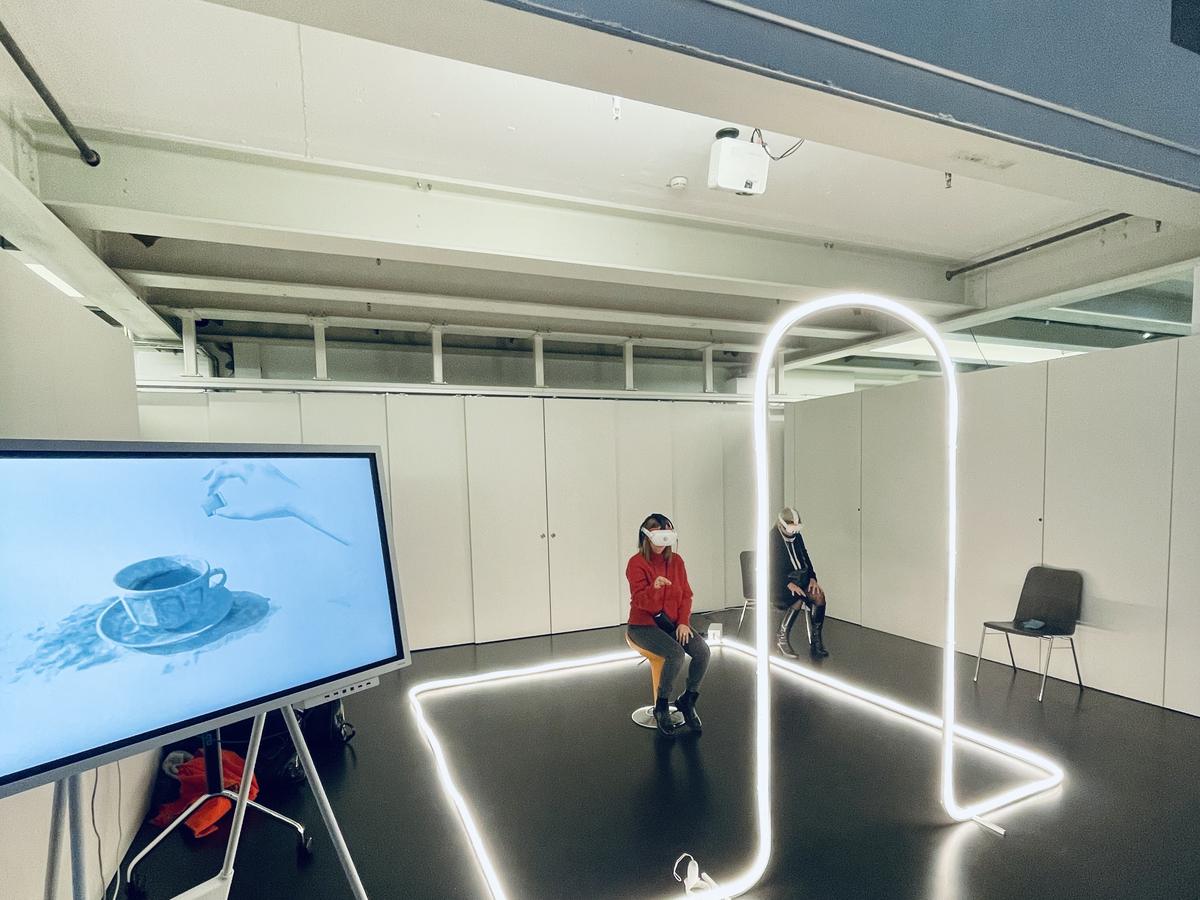
The result is a German voice version that wasn’t forced into “Emperor” after the fact, but arrives as its own asset set that fits exactly into the existing Unity choreography — length for length, scene for scene. The experience was publicly previewed, among other places, at Deutsches Museum Munich, as part of a Science Communication Lab preview with VR stations and a live audience.
Internationally, “Emperor” ran the major festival circuit: Venice Immersive (Achievement Prize), Stereopsia (Best UX Design), the Festival International du Court-Métrage de Clermont-Ferrand (Best VR Film), SXSW (Audience Award), and Annecy (Festival Connexion Special VR Award) — plus an Emmy nomination for Outstanding Emerging Media. Since September 2024, the experience has been free on Meta Quest 2 and 3, currently rated 4.7 out of 5 from 40 reviews.
Planning a VR or 360° production with a multi-language voice version?
If assets have to run in exact sync — lips, space, and timing — it’s worth talking before the first recording session.
Get in touch