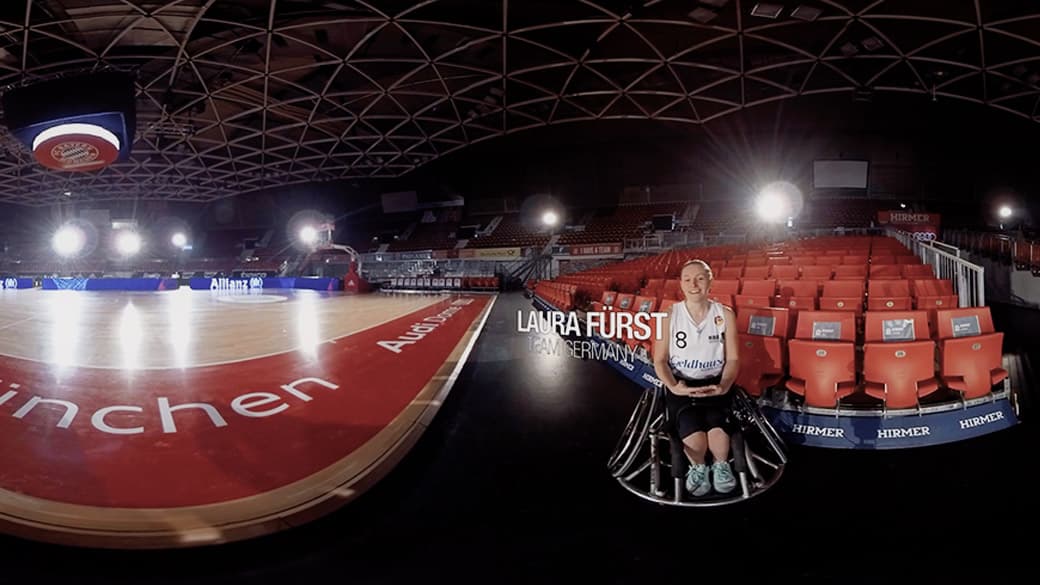
Allianz Wheelchair Basketball (360 Video with Spatial Audio)
Most people watch wheelchair basketball from the sideline. As a spectator you are never in the middle of the game, at the players’ eye level. That is exactly where a 360° video for Allianz was meant to take the audience. Camera and sound ride along on a wheelchair, alongside interviews with the players. The film was shown at an award ceremony as part of a sports event.
I was responsible for all the sound, from recording on set to the finished mixes for three platforms.
Why a wheelchair turns 360° sound into a construction site
For the onboard shots, the 360° camera and the audio gear had to be mounted on a moving wheelchair, during a real game. There was practically no space left, and the sound still had to be captured free of vibration. Otherwise every knock against the frame goes straight into the microphone.
For cases like this I now have an arsenal of small microphones, recorders, clamps and shock mounts that can be attached almost anywhere. Just as important is working with the 360° camera department. In 360° the camera sees in every direction, so the sound gear must not stick into the picture. And there is no point forcing a rig into place when a sound-only recording would have been far easier.
How the courtside interview worked after all
The plan was a scene that looks great on camera: a player sits at the edge of the court and gives a statement while her teammates train in the background. On set it was soon clear that this would not work for sound. The bounce of the basketball is audible everywhere and sits right on top of the voice.
In the end, a look at the picture side solved it. Because I also understand what the camera needs, I suggested shooting it in two passes. The light in the hall doesn’t change and the camera stays put. So one take of the players training and one take of the interview in peace, both cleanly separated. The camera team was glad about it. It helps when sound and picture know what the other is doing.
What came of it
I delivered the film in three versions, because every platform expects a different format: without music in the Two Big Ears format for the Oculus Video Player, in quad binaural for SamsungVR, and with music and its own routing in first-order Ambisonics (AmbiX) for YouTube. I encoded everything myself so the client could dive straight in. Which player needs which format is covered in my overview of 360° video players.
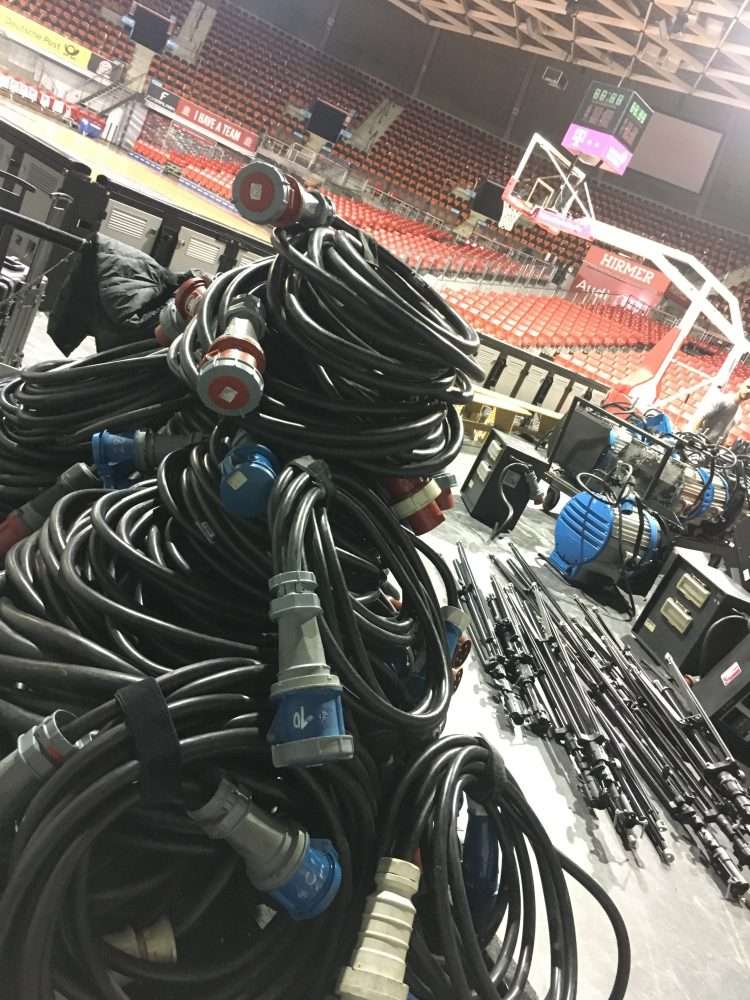
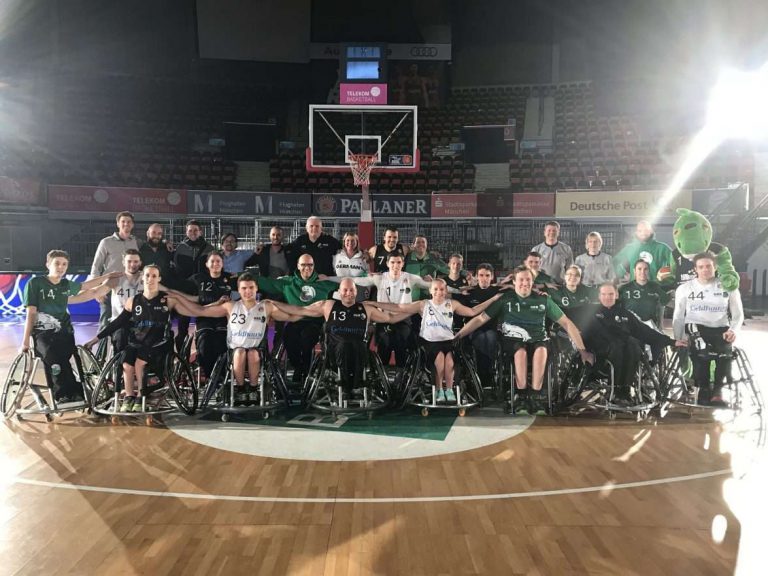
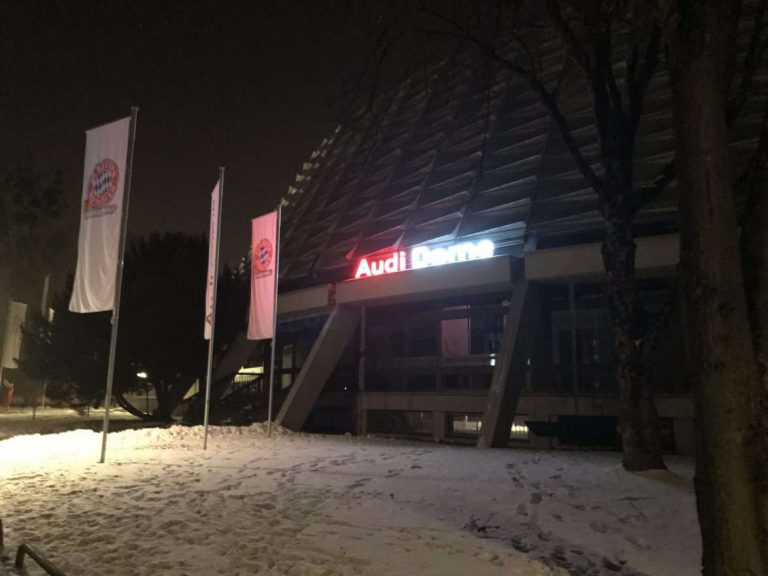
The video itself is not public, so here are some impressions from the shoot.
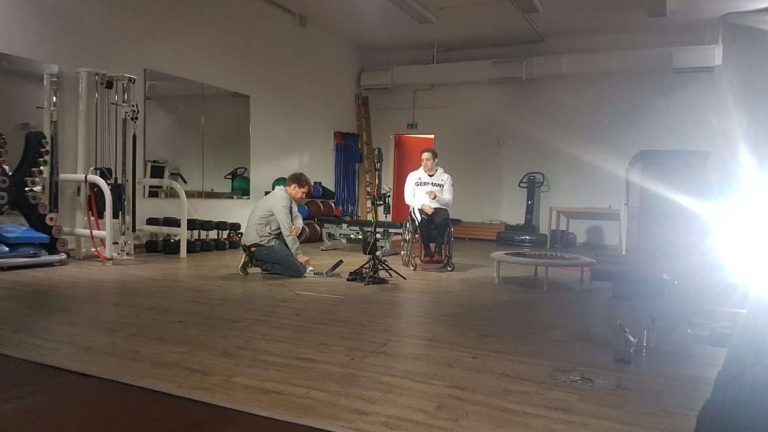
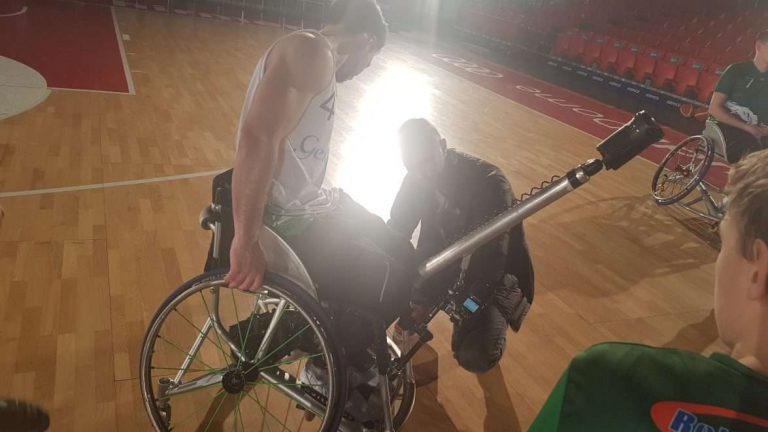
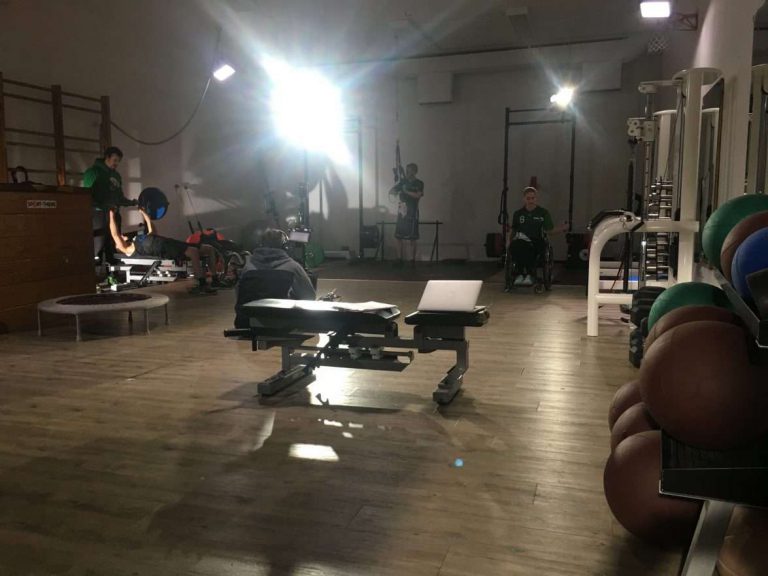
One question stayed with me after the project: when the camera rides along on the wheelchair and you turn around in the headset, what should the sound follow? The room around you, or the wheelchair itself? Both are possible, and both feel different. That is something I would test deliberately on the next onboard project.
Frequently asked questions about 360° video in sports
How do you mount microphones on a moving wheelchair? With very small microphones and recorders, clamps and shock mounts, so that knocks against the frame don’t end up in the sound. And in coordination with the camera, so nothing shows up in the 360° image.
How do you film an interview while a game is going on behind it? In two passes. If the light and camera position stay the same, the game and the interview can be recorded separately. That way the ball doesn’t interfere with the voice.
Why does a 360° video need several sound mixes? Because every platform expects a different format. For this project there were three: Oculus, SamsungVR and YouTube.
Planning a 360° video in sports? Let’s talk.
Sound that rides along without getting in the shot.
Get in touch