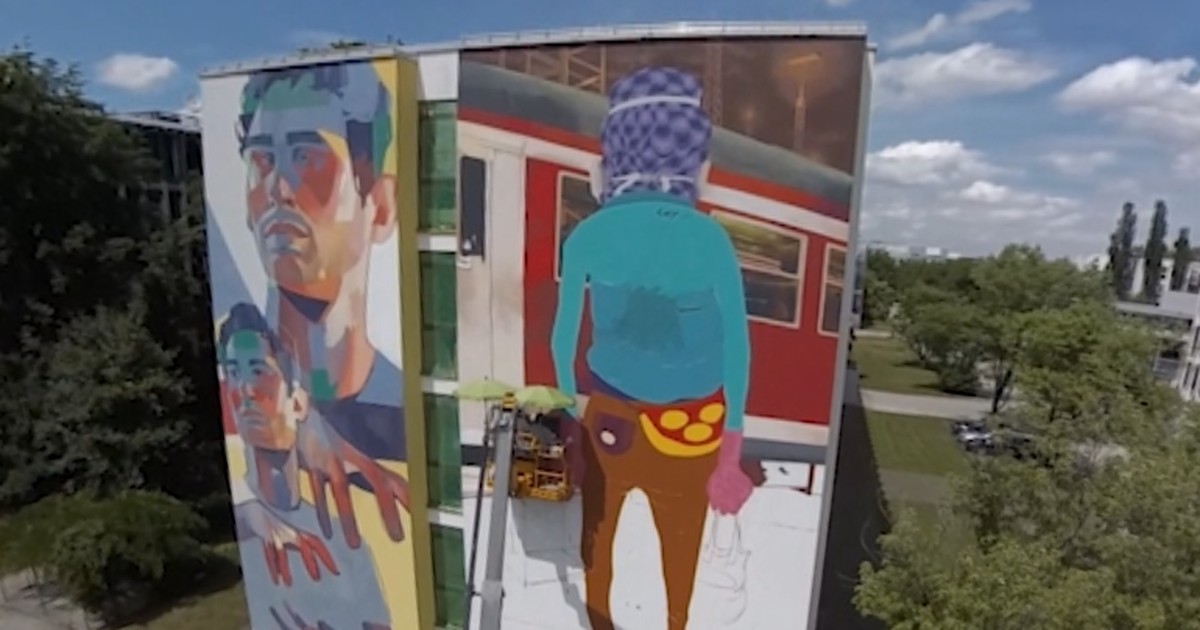
Fatcap – Spatial Sound for a 360° Documentary about Street Art
Graffiti sounds completely different from two metres away than it does from twenty. From a distance you hear nothing at all, up close the ball rattles inside the can, and then comes a hiss that is broad and soft or narrow and sharp depending on which nozzle is fitted. The fat nozzle you use to fill large areas is called a fat cap, and it gave the film its name.
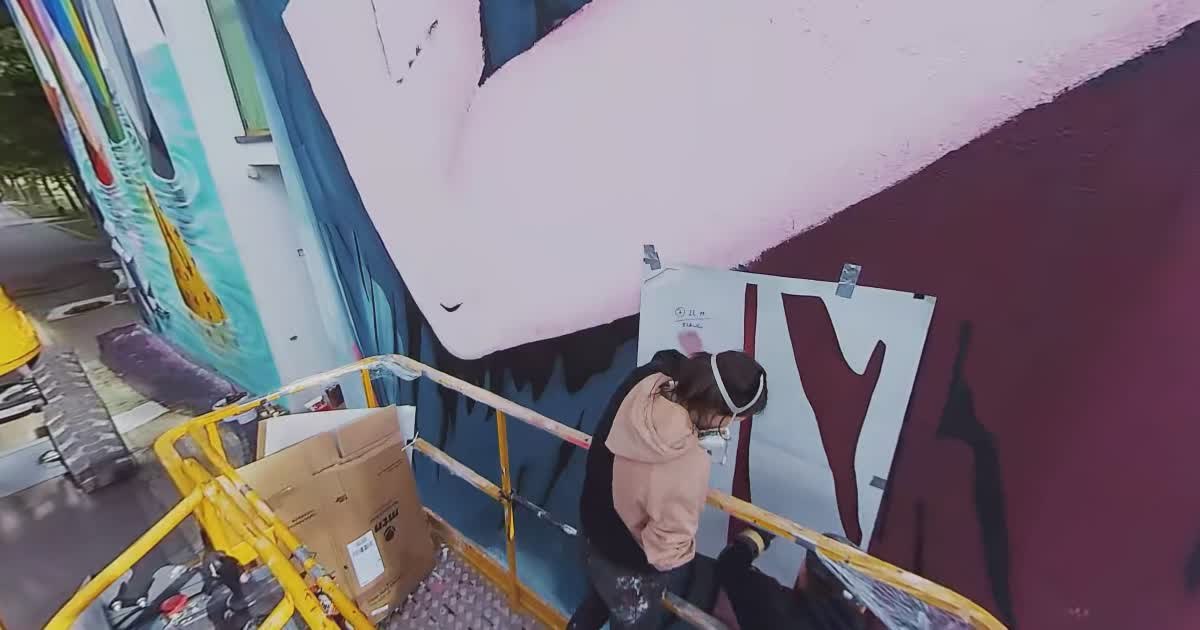
That is exactly where the camera stands in this film: up in the basket of a cherry picker, right next to the artist, a good many metres above the ground. “Fatcap” is a 360° short documentary by Christian Felder about the Munich street art festival SCALE. I did the spatial mix.
Why the sound in this film had to move upwards
In an ordinary documentary the edit decides where you are: first the wall in a wide shot, then the can in close-up, then the face. In 360° that switch does not exist, the viewer sits where the camera stands, and stays there until the film puts them somewhere else.
Here that seat is anything but ordinary, because you are standing in the working basket of a cherry picker, high above an office campus in the north-east of Munich. Everything that makes the place is below you: the machine’s engine, the road, the people walking past. Within arm’s reach there is only the wall and the can in front of it.
For the mix that means the usual distribution does not work. Normally the environment sits around you and a little above. Here it sits underneath you. Anyone who simply lays the ambience flat around the head puts the viewer back on the ground while the picture shows them ten metres higher. Something is then off, and most people notice it without being able to name what exactly is missing.
On top of that came the language situation. At the SCALE festival in 2017, twelve artists from eight countries worked on the facades, among them Aryz from Spain, Axel Void from the USA, Os Gemeos from Brazil, Sainer from Poland, jana&js from Austria and France, and from the Munich scene Loomit, Daniel Man, SatOne and the Stone Age Kids.
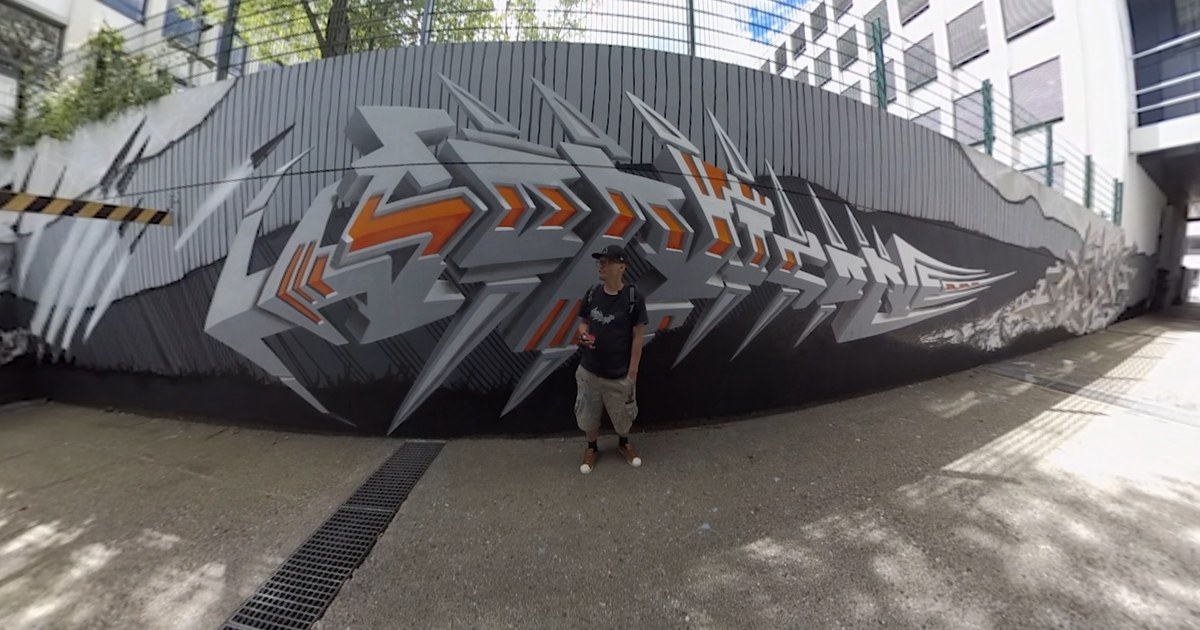
The interviews are multilingual accordingly, and part of them runs as narration over images in which the speaker cannot be seen at all. For intelligibility that means two things. First, every voice has to sit cleanly in front of the environment, even when that environment was recorded ten metres up on a windy day in July. Second, subtitles run along with it, and subtitles in 360° are a problem of their own, because they stick to the picture while the head turns. Anyone hunting for the text is not listening during that time. So in exactly those moments nothing important may happen in the sound.
How the music became the thing that guides the eye
The first decision concerned the narrating voice, which you can place spatially so that it belongs to the environment. We deliberately left it in mono and did not locate it at all. The reason is an observation from a study of my own: an off-screen voice only works as a narrative layer when everything else stays locatable, because only the contrast makes it readable as commentary. If both are placeless, nobody can tell narration from scene any more.
The second decision concerned the music, and it is the real trick of this mix. In 360° productions music usually stays stuck to the head so that it does not shift when you turn. I let it come from a direction instead and had it travel over the course of the scene. That turns the one element you normally hold still into the signpost.
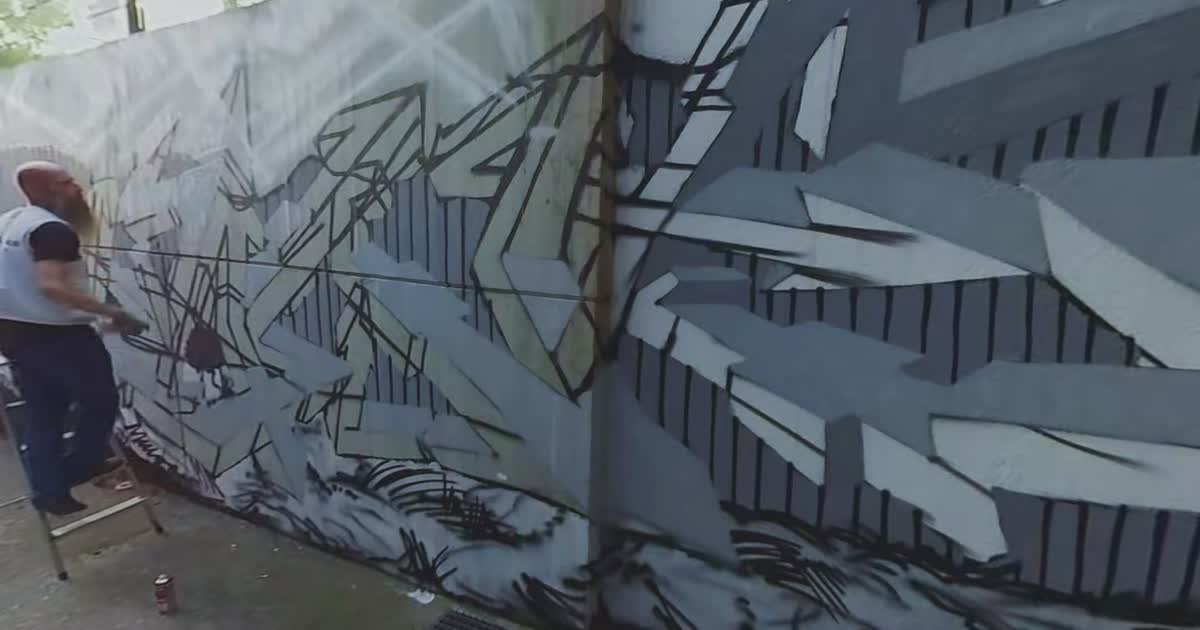
This is not a gimmick, it is a workaround that turned out to be the better solution. In a scene where somebody fills a wall in concentration for minutes on end, almost nothing happens acoustically: no door falling shut, no footstep pulling attention, no exchange of words. If you still want to guide the eye, the music is the only means left that is loud enough and present enough.
What was actually there to capture
Ten metres above the ground in the basket of a lift there are two kinds of sound: what happens directly in front of the camera, and what comes up from below. Both have to be recorded separately, because both are treated separately later.
Close to the action are the sounds that make the film and without which graffiti does not sound like graffiti: the can being shaken, the ball inside it, the hiss of the spray that changes with every cap. Those sounds are quiet, and they compete with the wind, which at that height is always there. A July day on a lift is not a comfortable place acoustically.
From below comes the rest: the motor of the lift, the street, people crossing the campus. That layer is what puts the viewer up in the air when it sits right. Lay it flat around the head and he is back on the ground, whatever the picture shows.
What came out of it
The film ran as a 360° short documentary about the SCALE festival with spatial sound, mixed for headphone playback with head tracking. What remains is a insight I have needed many times since: in 360° music is not merely underscore, it is the one element you can move freely without it becoming implausible. A footstep coming from the right has to come from the right. Music is allowed to go where it is needed.
I worked in a similar way on Flight into the Woods, where sound decides where the audience looks, and on a walk through Leipzig, where a movement through the city had to be held together.
Planning a 360° documentary?
If your film happens in a place the camera alone does not explain, the sound decides whether the audience stays. Talk to me early.
Get in touch