JANUA VR – Ambisonics Sound for a 360° Nature Film About Wood
A tree needs its time, and so does a piece of furniture. JANUA builds tables and sideboards from solid wood and natural stone, and for a trade fair the brand wanted to make visible what a finished table no longer shows: the way from the forest to the workshop. In 2018 that became a 360° film with the direction studio Mirror+Sparks, shot in forests around Salzburg, in Dorfen and in Starnberg, plus at a mountain lake near Garmisch and in a wildlife park north of Munich. I built the sound.
A piece of furniture has no plot for sound to hang on. No dialogue, no chase, no rising tension. What JANUA wanted to show was an attitude: that wood is a material with history, and that you feel that history when it is told slowly.
Why a material film without a plot still needs sound
The film shows Stefan Knopp, the craftsman, turning raw wood into a tabletop, and Manuel Müller paddling across a mountain lake while the workshop smokes in the background. In between sit nature shots from the wildlife park: an eagle taking off from a branch, people planting trees. The scenes are calm, some time-lapsed, with little movement in the picture. That is exactly why sound matters: where the picture barely changes, the room has to carry the time.
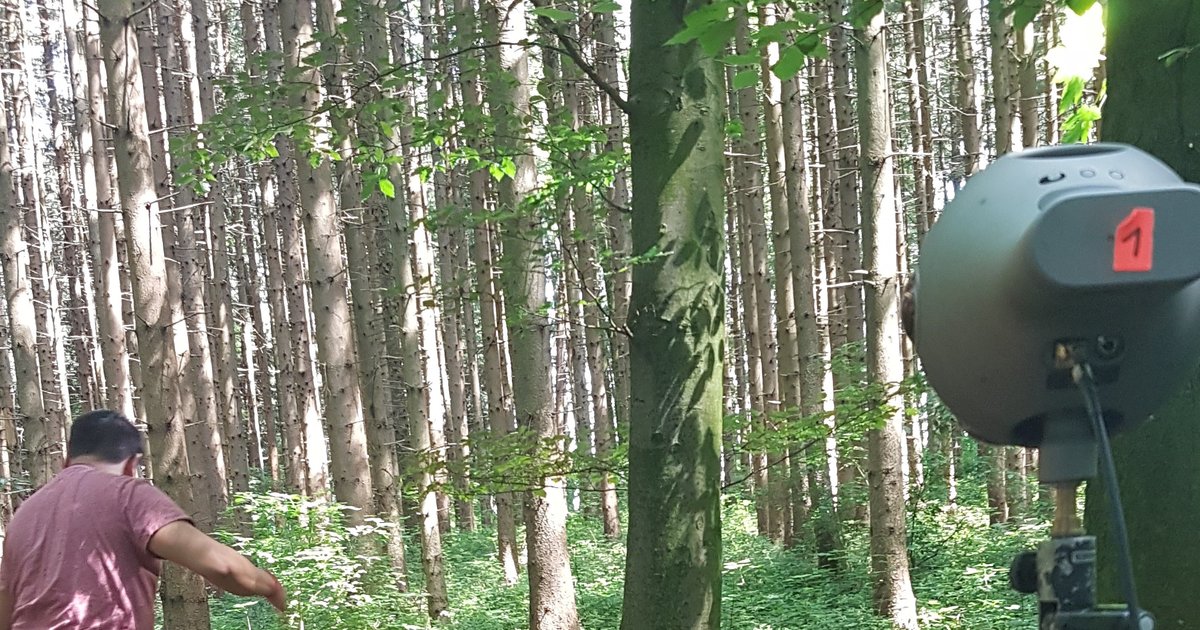
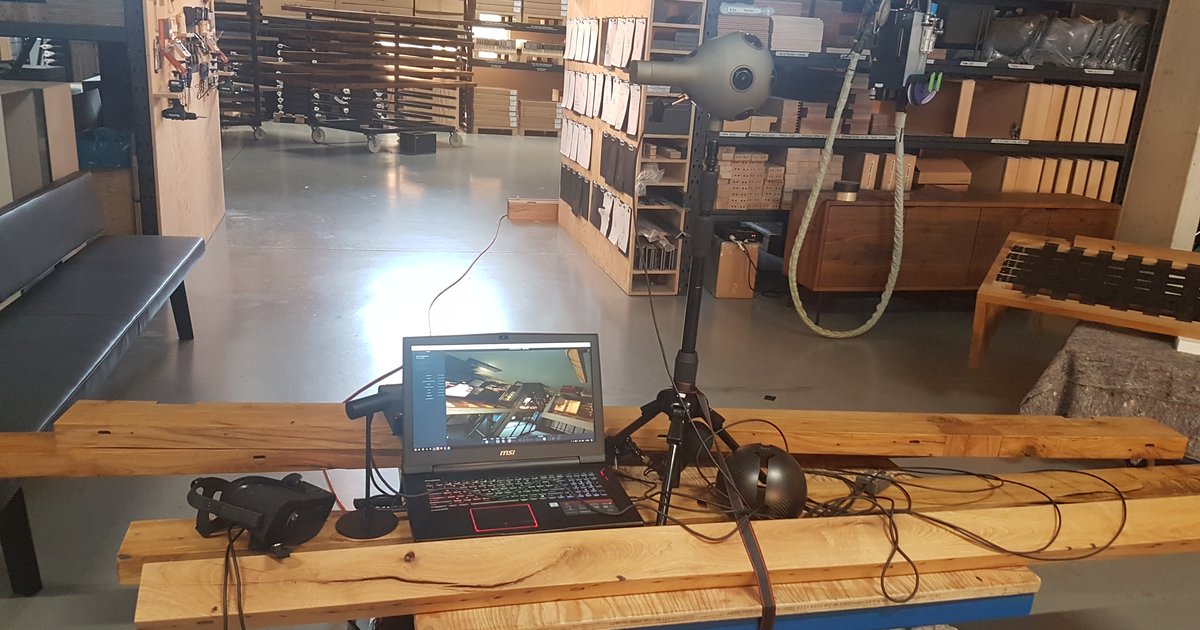
I recorded the ambisonics myself in the forest, right next to the 360° camera, mostly a Nokia Ozo, and for the two-sided shots a stereo Z-Cam rig. That means camera and microphone have to stand in the same spot and follow the same line of sight, or nothing lines up later. On a forest shoot that means a lot of patience, waiting until the wind settles and no branch cracks that has no business being in frame.
The German version carries a very restrained narrator, speaking lines like “wood is life, it grows across generations and lives through history.” Almost everywhere else, no word is spoken at all. That was a deliberate choice by Mirror+Sparks: as little voice-over as possible, so the forest tells its own story and language does not talk over it.
How forest recordings became a soundscape for headphones
The finished mix has three layers. The narrator carries the few lines. A layer of effects reacts to where you look, for instance when an eagle flies into frame from off-screen, or when the flame flares up while a plank is being charred. Underneath sits an ambience bed of forest, water and workshop that must never draw attention to itself, or it distracts from the picture itself.
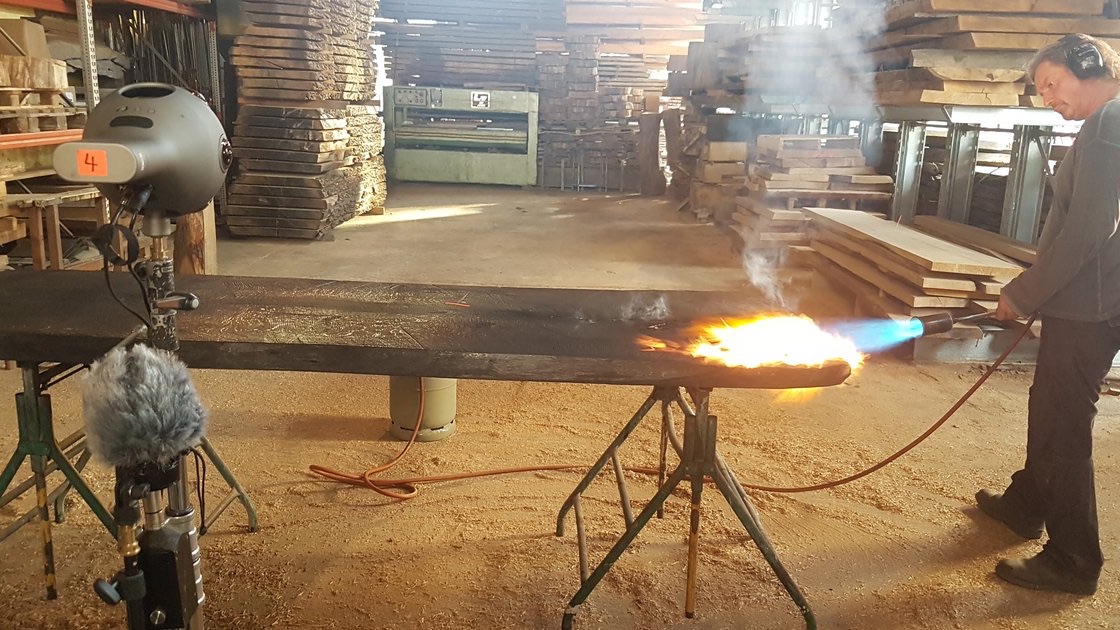
The workshop scenes needed a further layer that sounds more like sound design than a nature recording: lighting the torch, the flame roaring across the wood, tools clattering as they get set down. These moments are short, but they sit exactly on the picture, because charring the tabletop is the one moment in the film where something actually happens. Without a full, closely recorded flame sound the scene reads like a tool demonstration. With it, it becomes the moment the whole film is built around.
The bigger challenge was sound design for direction of view itself. In an ordinary film, the edit decides what the viewer sees. In a headset, the viewer decides that themselves by turning their head. Every event meant to draw attention, like the eagle taking off or an animal at the edge of the path, had to sit spatially at the exact point where it happens in the picture, or nobody turns the right way.
At the lake near Garmisch a third sound world came in, one that shares almost nothing with forest or workshop. Water slapping against a surfboard, a canoe paddling through frame, plus the particular acoustics of open water, which carries sound differently than leaf litter or sawdust. For a film that links three such different places into one calm narrative, every location has to work acoustically on its own terms and still sit inside the same overall sound, or the cut between the worlds becomes audible.
Post-production did not run as smoothly as the finished film suggests. The hard drive with the raw footage arrived later than planned, new video cuts kept arriving over the following weeks, and at one point a new edit had a frame offset that threw the sound out of sync in several places. On a project with this many changing scenes and suppliers, that comes with the territory: sound can only truly finish once the picture is truly final, and until then you wait.
What turned the forest into a trade-fair experience
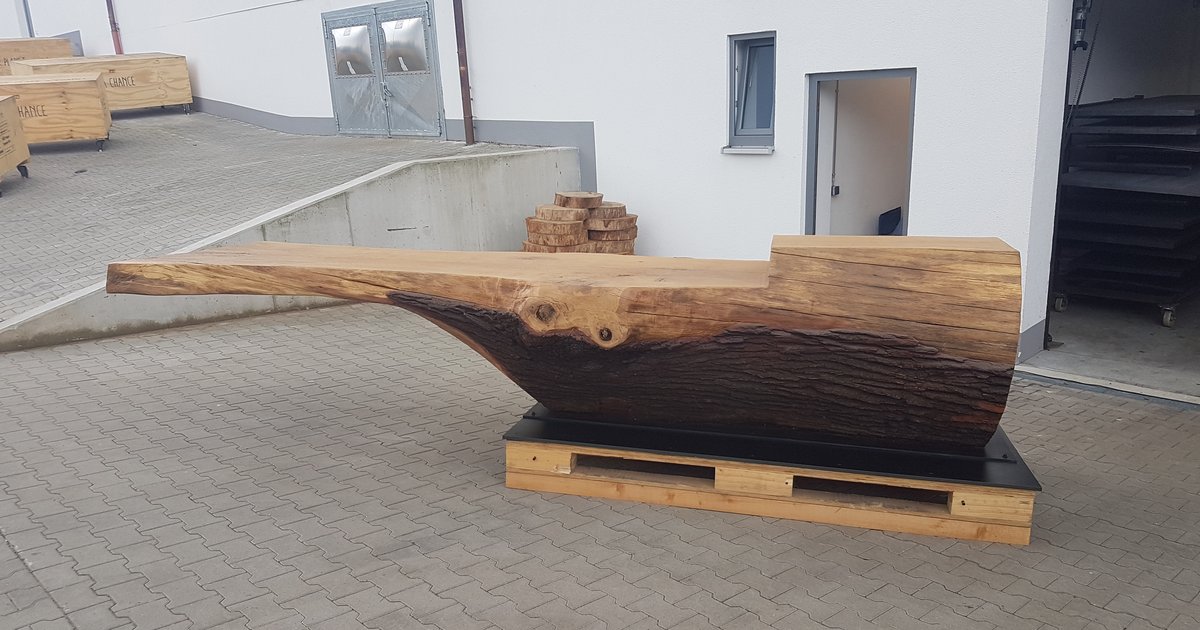
In the end the result was not just a film but an installation. JANUA showed the experience at IEM Cologne and at Salone del Mobile in Milan, both in 2019, inside a purpose-built wooden element with two peepholes. Hidden inside sat an Oculus Go that was never meant to be visible from outside, plus a speaker built into the floor that put sound into visitors’ feet before they even put the headset on. Sebastian Abel built the app for it, on my recommendation, because a trade-fair setup with a standalone headset needs a different workflow than a studio video.
For post-production I worked with students from Hochschule Macromedia, who helped manage delivery. Sound-designing a 30-square-metre trade-fair booth is a different task from a headphone mix: here the sound had to stay quiet enough that you only notice it once you really step close, without disappearing entirely into the noise of a furniture fair.
What came out of it is a VR experience that JANUA itself described as a love letter to the oldest material in the world. The sound was meant to carry that attitude without spelling it out: not explain that wood is special, but make it felt, by letting the forest sound the way it feels when you actually stop and listen.
Planning a VR or 360° experience for a trade fair or brand?
From field recording in the forest to sound at the booth, from a single source.
Get in touch