360° Concert – Six Recording Positions, Three Sound Versions
On an ordinary concert recording the question is where the best seat is. You look for it, put the microphones there and mix towards it. In 360° that seat no longer exists, because the audience decides where to look, and because several cameras mean several seats.
For the recording of a concert I worked across two show days and a soundcheck and built three sound versions out of it, from stereo to full immersive resolution. I am not allowed to say anything about the client or the band. About the method I am.
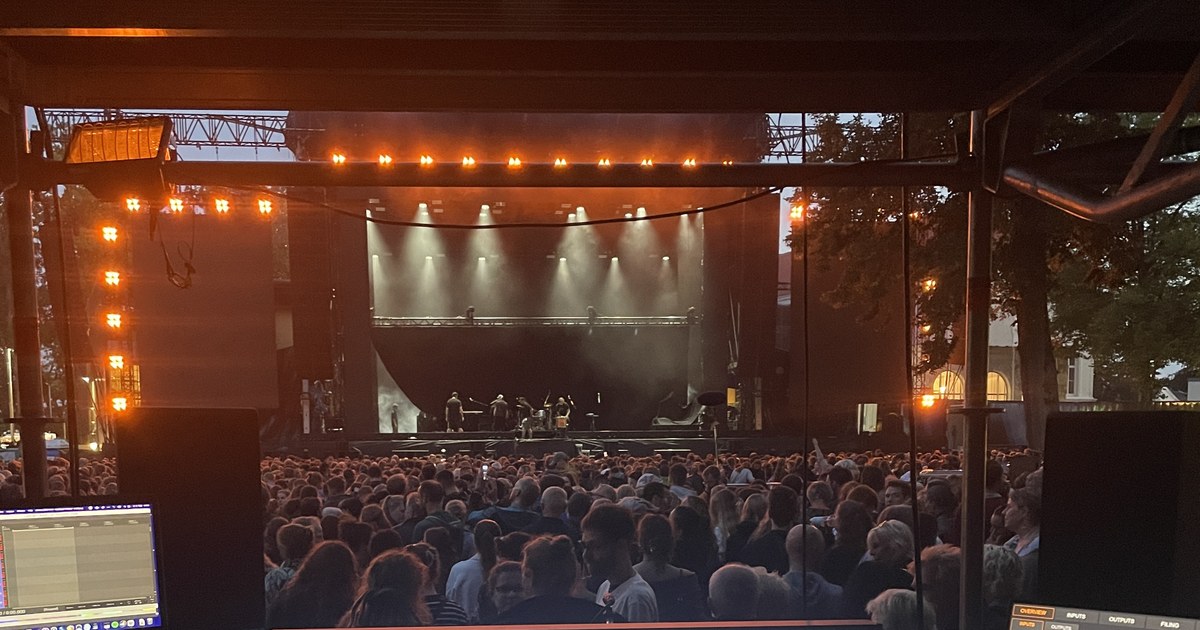
Why a concert in 360° needs several listening seats
A cut in a concert film is a matter of course in the picture. You see the band from the front, then the drums from the side, then the audience. In the sound the same cut is a jump, because the listening place moves with the camera. If the sound stays the same the picture feels glued on, if it changes too much the recording gets restless, and both show up more on a concert than on an interview, because music runs continuously and makes every discontinuity audible at once.
On top of that comes a misunderstanding that turns up on nearly every concert production. The desk feed, meaning the sum or the individual tracks from front of house, is not what can be heard in the room. It contains what runs through the PA and leaves out what the room makes of it: the delay to the back wall, the audience, the reflections. Anyone who only has the feed gets a clean studio recording with a crowd on top, but no place.
So a recording like this is not about capturing the concert, it is about capturing the positions. The feed provides the substance, the room microphones provide the information about where you are standing. Only both together make a seat you can sit in.
How six positions were recorded
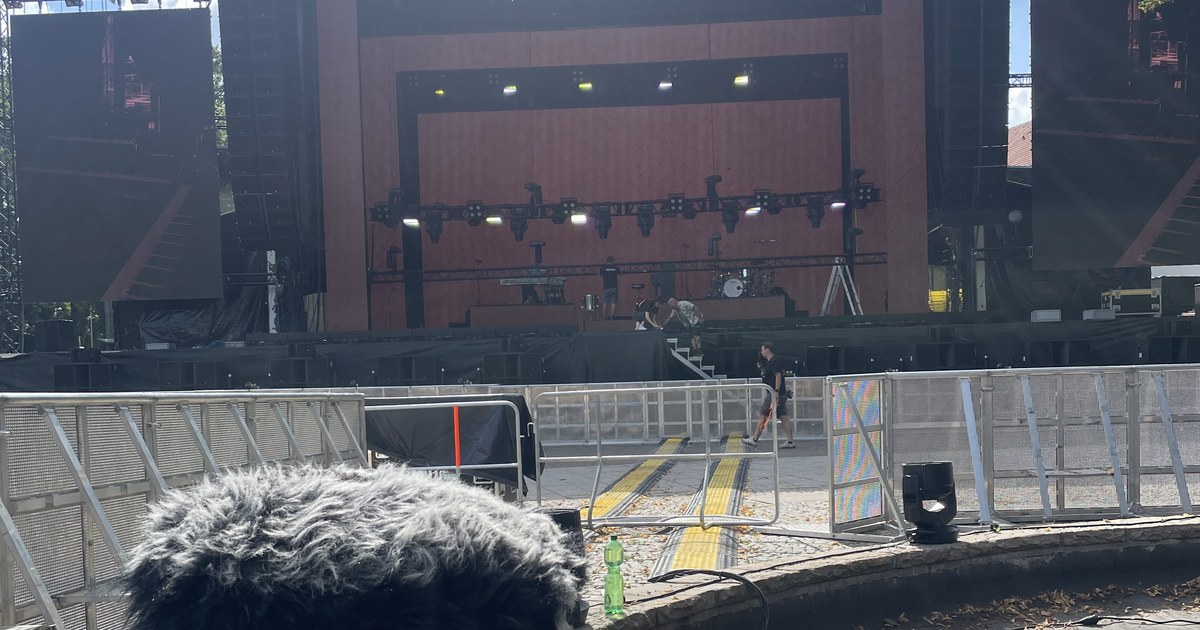
In the pit in front of the stage stood a three-dimensional array, a fixed arrangement of several microphones that captures height alongside width. At a concert that is not a detail, because a considerable part of the sound comes from above, out of the hall structure and the flown loudspeakers.
Arrays like that have an advantage you only hear in comparison. A first order ambisonic microphone delivers a complete field from a single point, but it is soft in its imaging, because four channels describe direction only roughly. An array of several directional microphones with real spacing between them delivers time-of-arrival differences instead, and those are what turn a direction into a position. With a band spread across a wide stage, that is the difference between a front and individual musicians.
At the desk, in the middle of the audience, a stereo arrangement ran on its own recorder. That is the seat a viewer in the centre of the hall actually has, and it sounds different from anything standing closer to the stage.
The most interesting setup was the mobile one. A binaural dummy head together with an ambisonic microphone on a rolling stand.
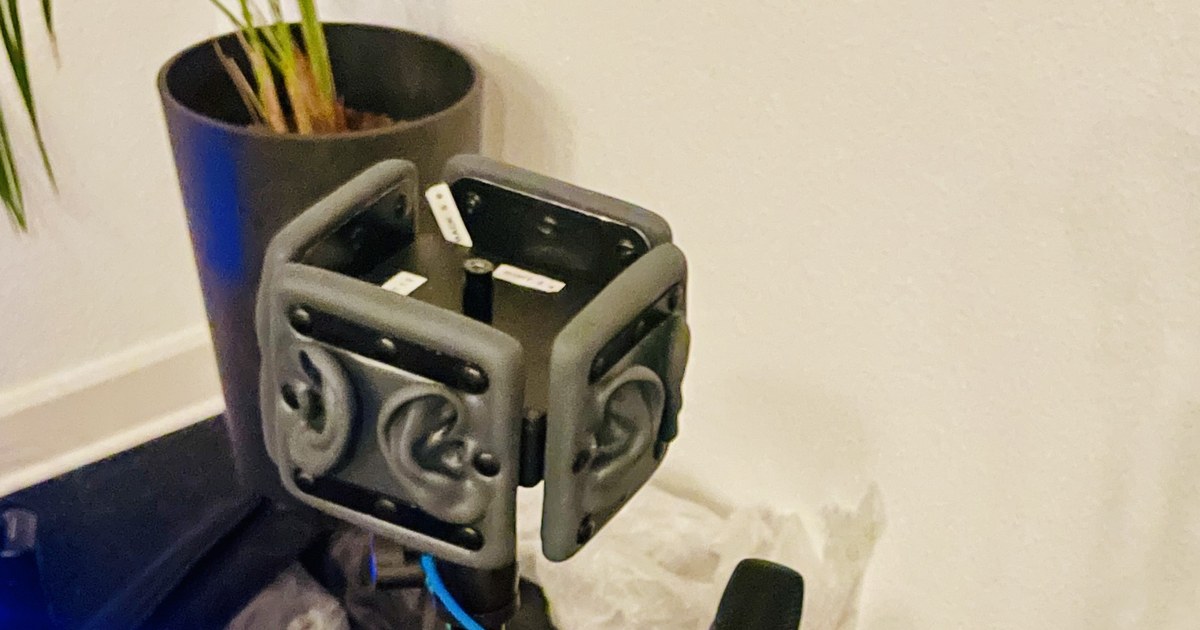 A fixed microphone records a place, a moving one records a path, and that is a difference you cannot manufacture afterwards. When the listening seat travels from the desk to the edge of the stage during a song, the audience later gets a movement no sequence of cuts can produce.
Added to that were positions at the instruments on the main stage and at the second stage out in the audience. The soundcheck the day before was not a warm-up but working time: checking the setups, setting levels, finding stray noises while nobody is in the hall yet. Two show days also mean something rare in live work, namely a second attempt.
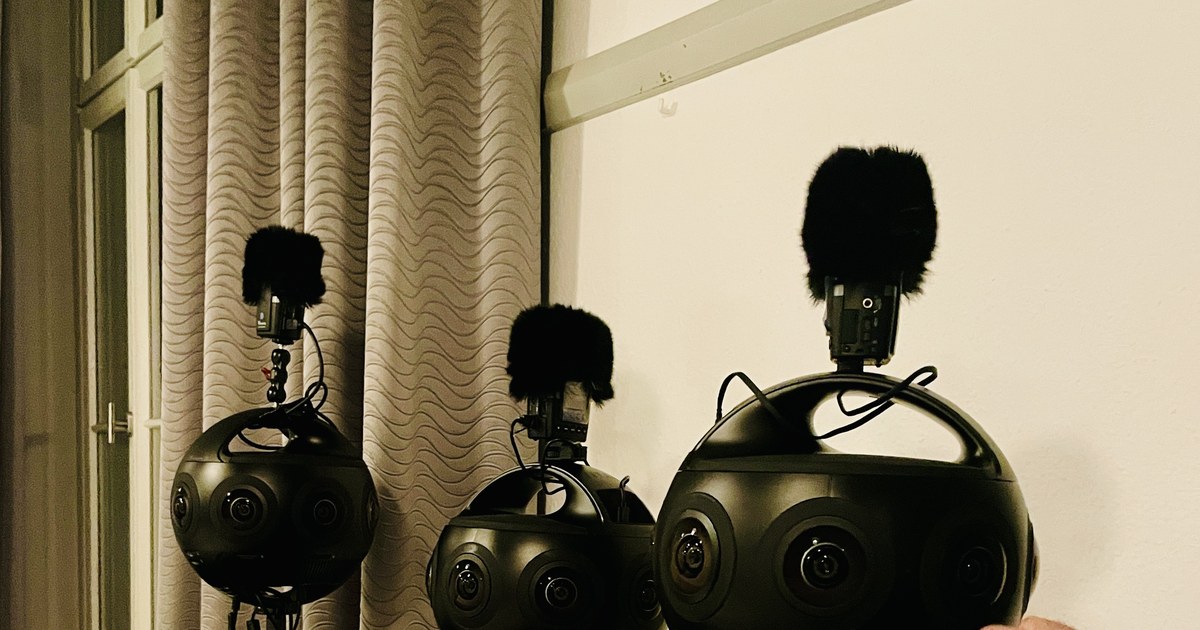
What preparation must never leave out is the question of how the machines find each other again afterwards. Several recorders running independently drift apart, and with music you hear that immediately. So you need a common reference in the material and the discipline to check the offset across the full length rather than only at the start.
What was delivered
In the end there were three stages of the same recording. A stereo version for everything that cannot do anything else. An immersive version. And an immersive version at full resolution, mixed in third order ambisonics, with considerably more directional definition than the four channels familiar from 360° video.
That one mix then has to serve several paths. On headphones it is rendered binaurally. For a current headset it goes into an Apple container that carries the third order ambisonics. For older players a first order version remains as a fallback. Knowing that chain in advance is the difference between mixing once and mixing three times. What has to be watched technically I described in more detail on Apple Immersive Video.
What an audience actually notices, incidentally, is less spectacular than it sounds, and that is exactly why it works. Nobody puts on a headset and thinks about ambisonic orders. You notice that the applause is behind you rather than in front, that the hall is large, and that you can turn around without the music tipping over. When that is right, nobody talks about the sound afterwards, and in this work that is the best result there is.
The appeal of music in 360° is that it justifies the effort more readily than most things. For an interview a good stereo track is often enough. At a concert the room is part of the matter, and an audience turning its head notices immediately whether it is sitting in a hall or in front of a wall. It was much the same on the VR experience inside the orchestra, except that there, sitting in the middle of the ensemble was the entire point.
Planning a 360° concert recording?
Whether the desk feed is enough or whether it takes room positions is decided before the concert, not after it. Let’s talk in good time about what your audience should end up hearing.
Get in touch