
How to Master Spatial Video: Tips for Recording and Viewing
Content
Spatial video transforms how we experience videos by adding depth and dimension, making you feel as if you’re right there. This guide will help you understand what spatial video is, how to record it, and the best ways to view it.
For Apple’s take on the format and why sound matters so much for it, see Apple's spatial video.
Key Takeaways
-
Spatial videos provide an immersive viewing experience by mimicking human visual perception, offering depth and dimension that traditional videos lack.
-
Recording high-quality spatial videos can be easily achieved with compatible iPhone models by following proper techniques for lighting, subject positioning, and stabilization.
-
The future of spatial video technology is promising, with expected advancements in immersive capabilities and broader applications across industries like entertainment, education, and healthcare.
Understanding Spatial Video

Spatial videos, known as stereoscopic 3D videos, offer a lifelike viewing experience that goes beyond traditional flat images. Imagine watching a video where you can perceive depth and dimension, allowing you to relive moments as if you are physically present. This immersive quality is what makes spatial videos stand out, providing a more engaging and realistic experience for viewers.
The concept of spatial videos is transforming how we interact with media. Capturing multiple perspectives and creating a 3D effect mimics human visual perception, resulting in a more natural and captivating viewing experience. Exploring the differences between spatial and traditional videos, along with the technology behind them, reveals their unique qualities.
Spatial Videos vs Traditional Videos
Unlike traditional videos, spatial videos provide depth and dimension, enhancing realism and engagement. This immersive video technology is revolutionizing industries like entertainment, education, and tourism by creating more interactive and engaging experiences. Traditional videos, in contrast, offer a flat and less engaging viewing experience, lacking the depth that spatial videos provide.
One of the significant differences between spatial videos and regular videos is the storage requirement. Due to their high-quality resolution and the amount of data generated from multiple perspectives, spatial videos often require more advanced storage solutions. This is a small price to pay for the enhanced user engagement and understanding that spatial videos offer across various industries.
The Technology Behind Spatial Videos
Spatial videos achieve their three-dimensional effect by capturing two images from slightly different angles, mimicking human visual perception. This dual perspective is crucial in creating the depth and dimension that define spatial videos. The technology behind this involves the MV-HEVC coding format, which effectively captures and compresses these dual perspectives.
This advanced technology allows spatial videos to offer an immersive view that traditional videos can’t replicate. By capturing multiple views, spatial videos provide a more lifelike experience, making them ideal for applications where depth and realism are essential.
Recording High-Quality Spatial Videos on iPhone
Recording high-quality spatial videos on an iPhone is now more accessible than ever, thanks to advancements in Apple’s camera technology. Begin with a compatible device and follow a few tips to achieve top-notch videos. The key to capturing stunning spatial videos lies in proper lighting, subject positioning, and stability.
Using the latest iPhone models, such as the iPhone 15 Pro and Pro Max, you can easily record spatial videos by enabling the spatial video setting in the camera app on your phone. With these tools, you can create immersive videos that capture moments with incredible depth and realism.
Compatible iPhones for Spatial Video
Spatial video recording is officially supported on select iPhone models, including the iPhone 15 Pro, Pro Max, and the entire iPhone 16 series. The iPhone 16 series has introduced both spatial video and photo capture capabilities, making it easier for users to create immersive content.
If you own an iPhone 15 Pro, iPhone 15 Pro Max, or any model from the iPhone 16 series, you can start exploring the world of spatial videos. These models are equipped with the necessary hardware and software to capture high-quality spatial videos, providing you with the tools to create lifelike and engaging content with pro and iphone.
Step-by-Step Guide to Recording Spatial Videos
Start recording spatial videos by following these steps:
-
Open the camera app on your compatible iPhone.
-
Ensure that the spatial video setting is enabled.
-
Frame your subjects between 3 to 8 feet away from the camera for optimal results.
-
Ensure you are in a well-lit environment to enhance video quality.
Keep the main camera stable and level when recording spatial videos. Avoid excessive movement and keep your camera steady to capture spatial videos smoothly and professionally. Following these steps helps create stunning spatial videos with an immersive and engaging viewing experience.
Enhancing Your Spatial Video Experience

Creating high-quality spatial videos involves more than just recording spatial video; it requires attention to detail to ensure the best possible outcome. Focusing on lighting, stabilization, and audio clarity significantly enhances the quality of spatial videos. Additionally, using the right accessories can take your recordings to the next level.
Spatial videos create a more interactive experience by allowing viewers to perceive depth effect and dimensionality. This makes them ideal for various applications, from education to entertainment. By following a few tips and using the right tools, you can capture immersive scenes that truly stand out.
Tips for Capturing Immersive Scenes
To capture captivating spatial videos, consider the following tips:
-
Maintain a steady camera position.
-
Ensure your subjects are positioned within 3 to 8 feet from the lens to capture more depth and make the video feel more immersive.
-
Maintain a consistent frame rate to ensure smooth motion and enhance the viewer’s experience.
Proper framing and stabilization are crucial for creating engaging spatial videos in landscape orientation. By paying attention to these settings, you can enable the capture of scenes that draw viewers into the moment, providing the best results for a more immersive background and realistic experience.
Using Accessories for Better Results
Using accessories like tripods and external microphones can significantly enhance the quality of your spatial video recordings. A tripod helps stabilize your shots, resulting in smoother and more professional-looking videos. This is especially important for spatial videos, where stability is key to maintaining the immersive effect.
External microphones can improve audio quality, capturing clearer sound to complement the visual elements of your videos. By combining tripods for stability and external microphones for audio clarity, you can elevate the overall production quality of your spatial videos.
Viewing Spatial Videos on Apple Vision Pro
To fully appreciate the immersive nature of spatial videos, viewing them on a high-quality device like the Apple Vision Pro is essential. The setup process is straightforward, ensuring you can start enjoying your spatial videos with minimal effort. Proper setup is key to maximizing the viewing experience, allowing you to immerse yourself in the content fully.
The Apple Vision Pro offers a high-resolution display and spatial audio, creating an immersive viewing experience that enhances the enjoyment of spatial videos on a mac. This device allows you to engage with your videos in a way that traditional screen can’t replicate, providing a more captivating and lifelike experience.
Setting Up Apple Vision Pro for Spatial Videos
To set up Apple Vision Pro for spatial video viewing, follow the setup guidelines for connecting and configuring your device. This includes ensuring compatibility with your iPhone and other devices. Users can navigate the Vision Pro using their eyes, hands, and voice, making it easy to interact with your content.
The Vision Pro offers a feature that allows users to connect with personal content right out of the box. This seamless integration ensures you can start enjoying your spatial videos immediately, enhancing the overall viewing experience.
Immersive Viewing Experience with Vision Pro
The Apple Vision Pro enhances spatial video viewing with features like high-resolution displays and spatial audio. Spatial audio significantly contributes to the immersive atmosphere, allowing for a more engaging viewing experience. This device offers a distinct experience compared to traditional screens, which display videos in 2D.
By providing an intimate viewing experience and minimizing motion blur, the Vision Pro ensures that spatial videos appear lifelike and engaging. This makes it an ideal device for fully immersing yourself in your spatial video content.
Practical Applications of Spatial Videos
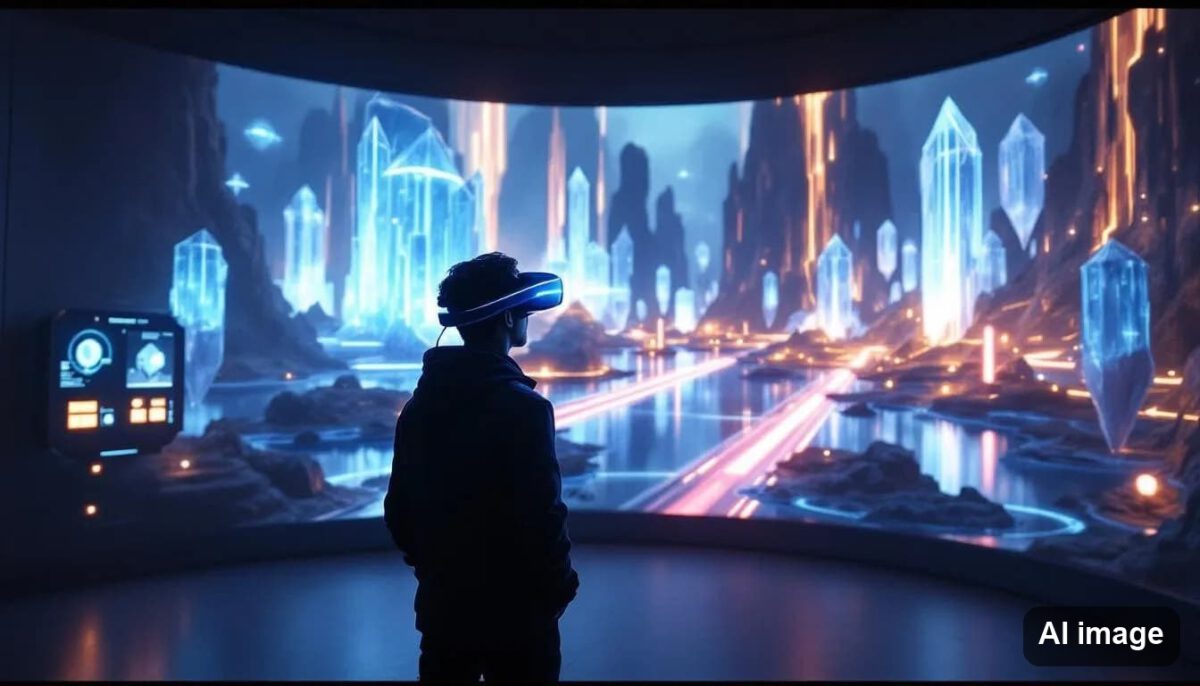
The advancement of spatial video technology is poised to transform various industries, offering more immersive and engaging experiences. From entertainment to education, spatial videos are becoming an essential tool for enhancing user interaction and comprehension.
These videos provide a more interactive and lifelike way to watch fun content, making them ideal for applications in entertainment, healthcare, education, tourism, and other video immersive experiences, for example.
Entertainment and Media
Spatial videos enhance viewer engagement by providing a more interactive and immersive way to experience content compared to traditional formats. This technology is transforming storytelling, offering lifelike visuals that immerse audiences in both live-action and animated environments.
Spatial videos allow viewers to explore storylines from different angles, creating new content in the form of interactive streaming videos that have been watched, valuable for the entertainment scene.
Education and Training
Spatial videos allow students to visualize complex subjects, such as anatomy, by exploring 3D videos layer by layer. This technology significantly increases student engagement and enhances comprehension through immersive learning experiences.
The increased accessibility of spatial video technology is likely to broaden its applications in sectors like education, tourism, and remote collaboration. Offering a more interactive and engaging way to learn, spatial videos are set to transform educational experiences.
Healthcare and Medical Training
In medical training, spatial videos facilitate better comprehension of anatomy and procedures through detailed 3D visualizations. These videos simulate real-life scenarios, helping practitioners practice skills in a risk-free environment.
Spatial videos assist in medical contexts by:
-
Simulating medical procedures, enhancing training and improving patient education.
-
Providing clear views of anatomical structures, aiding preoperative planning.
-
Improving surgical outcomes.
Tourism and Virtual Tours
Spatial videos are increasingly used in tourism to create virtual experiences that allow potential visitors to explore destinations before traveling. These videos provide immersive previews, enabling potential visitors to experience places that are viewed before making travel decisions, including the spatial video icon.
Spatial videos provide vivid previews of experiences at various locations, enriching marketing strategies and helping travelers make informed decisions.
Storage and Management of Spatial Videos
Managing the storage of spatial videos is crucial due to their significant file sizes. The MV-HEVC format is used to compress stereoscopic 3D video content efficiently, enabling better storage management and high-definition playback.
Manage your spatial video library effectively by using high-capacity external drives or cloud storage services. Organizing your files by events or themes can enhance the ease of access within your media library.
How Much Storage Do Spatial Videos Require?
Spatial videos can occupy significant storage space, with estimates suggesting that a 4K 3D movie may reach up to 60GB. The file sizes for spatial videos can be several times greater than traditional videos, necessitating careful storage planning for a single video file.
Use high-capacity external drives or cloud storage services to manage storage effectively. Users can view their spatial photos and videos in the Photos app, organized under a dedicated Spatial memory tap.
Organizing Your Spatial Media Library
Organizing your spatial media library is essential for efficient retrieval and workflow. iCloud can assist in managing storage for spatial videos, enabling users to offload files to the cloud as needed. Regularly categorizing spatial videos by events or themes can enhance the organization and ease of access within your media library.
Consider implementing a folder hierarchy based on project names or shooting dates to streamline the organization of spatial videos. Tagging or categorizing spatial videos by themes or locations enhances searchability, ensuring that you can easily find and access your content when needed.
Future Prospects of Spatial Videos
The future of spatial videos is promising, with significant growth expected in the market for spatial computing. This technology is anticipated to expand significantly, indicating strong future developments and increased adoption across various industries.
As spatial video technology continues to evolve, we can expect enhancements in immersive capabilities, making these videos even more lifelike and interactive. This growth will likely lead to broader applications and increased popularity in entertainment, education, healthcare, and beyond.
Upcoming Features and Improvements
Future updates for iPhone and Apple Vision Pro are expected to introduce new functionalities that improve spatial video recording and playback. These updates may include enhanced immersive capabilities, making spatial videos even more lifelike and engaging.
Advancements in AI integration are anticipated to enhance the user experience in spatial videos, enabling more intuitive interactions and automated functionalities. Additionally, new APIs for developers will allow for more interactive applications, enriching storytelling and visual engagement within apps.
Expanding Accessibility and Use Cases
Increased accessibility features are likely to make spatial videos more inclusive, encouraging broader usage across various demographics. The growing availability of devices capable of recording spatial videos will broaden their applications across various fields, boosting popularity.
The growth of spatial video technology is likely to increase accessibility, enabling broader adoption in entertainment, education, and healthcare. Together, these factors will enhance the popularity of spatial videos, making them more relevant in various aspects of life.
Summary
Spatial videos are revolutionizing how we capture, view, and interact with our memories and experiences. From recording high-quality footage on iPhones to viewing immersive content on Apple Vision Pro, this technology offers endless possibilities across various industries. As spatial video technology continues to evolve, it promises to enhance user engagement and broaden its applications, making it an essential tool for the future. Dive into the world of spatial videos and experience moments like never before.
Frequently Asked Questions
What are spatial videos?
Spatial videos are stereoscopic 3D videos designed to offer a realistic viewing experience by capturing depth and dimension. They immerse viewers in environments, making the content more engaging and lifelike.
How do spatial videos differ from traditional videos?
Spatial videos provide a more immersive experience than traditional videos by incorporating depth and dimension, allowing viewers to engage with the content on a multi-dimensional level.
Which iPhone models support spatial video recording?
The iPhone 15 Pro, Pro Max, and all models in the iPhone 16 series support spatial video recording. This enables you to capture immersive experiences with depth and realism.
How can I enhance the quality of my spatial videos?
To enhance the quality of your spatial videos, prioritize proper lighting and stable shooting with equipment like tripods, and consider using external microphones for better audio. These improvements can significantly elevate your video’s production quality.
What are some practical applications of spatial videos?
Spatial videos can be effectively utilized in entertainment, education, healthcare, and tourism, enhancing engagement through immersive experiences in these sectors.