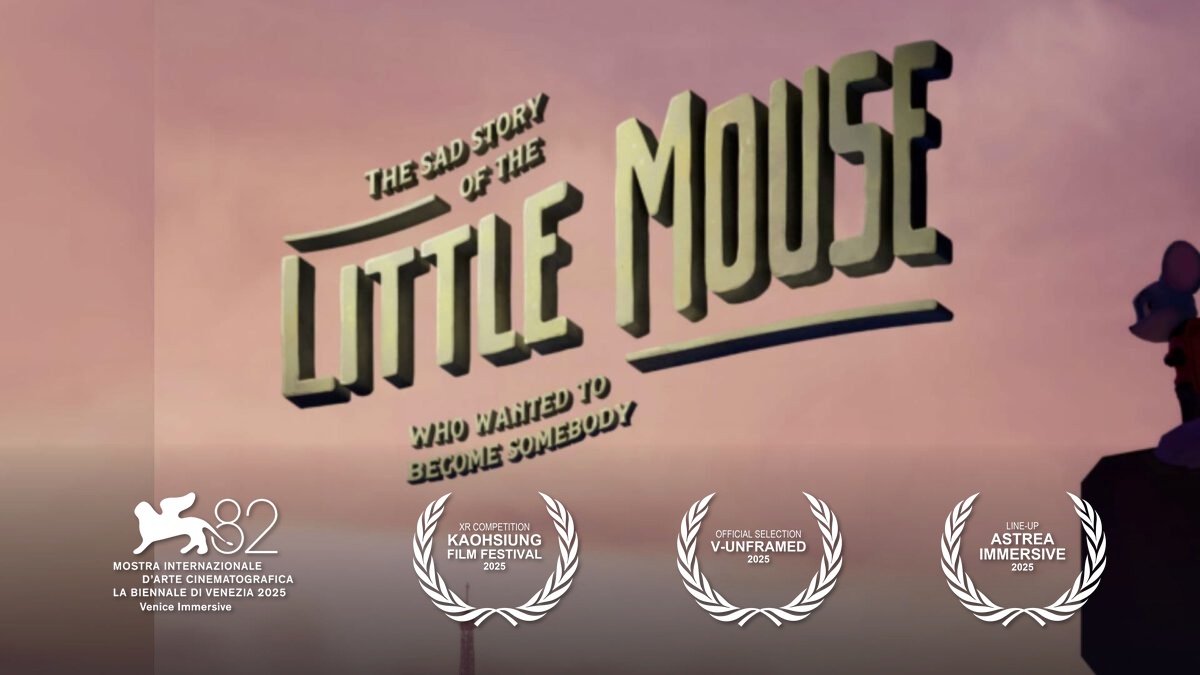
Christmas VR – The sad story of the little mouse
This VR narrative focuses on the paradox of the creative industry. The friction between art and industry, recognition and exploitation, empathy and ego. The thematic framework is Christmas VR. Because at Christmas, desire, myth, and market become particularly tangible.
At its center is a toy-maker mouse with great talent and an even greater ego who wants to become somebody.
The film does not use virtual reality as a gimmick, but as a storytelling tool that makes scale and closeness palpable. Sometimes we are as small as the mouse. Sometimes the mouse becomes small and we become large.
How it was implemented
The little mouse is deliberately old-school VR: 25 minutes of runtime focused entirely on story and immersion.
For VR, that’s relatively long and therefore varied in rhythm and perspectives. These perspective changes are not only visual; I tell them acoustically as well.
When we become microscopically small, breath, fabric, and tiny movements move close. When we are gigantic, the space expands and the sounds lose intimacy.
Multisensory design of the virtual world
For this, I worked closely with a Foley artist. Every tiny step of the mouse can be heard. Even the slight clatter of her backpack and the tiny touches on the workpiece. It is precisely these details that bring her to life.
At the same time, we recorded with a real orchestra. That is still rare for cine-VR. Moreover, it gives the narrative high production quality and leitmotivic depth. The orchestral aspect also ties aesthetically to Christmas, without becoming too cheesy.
The music consistently follows the narrative perspective.
Sometimes it works cinematically in the background and guides emotion and dramaturgy. Sometimes it is part of the scene and sounds as if you were in the room with street musicians, or as if it were coming from a phone or an advertisement right next to us.
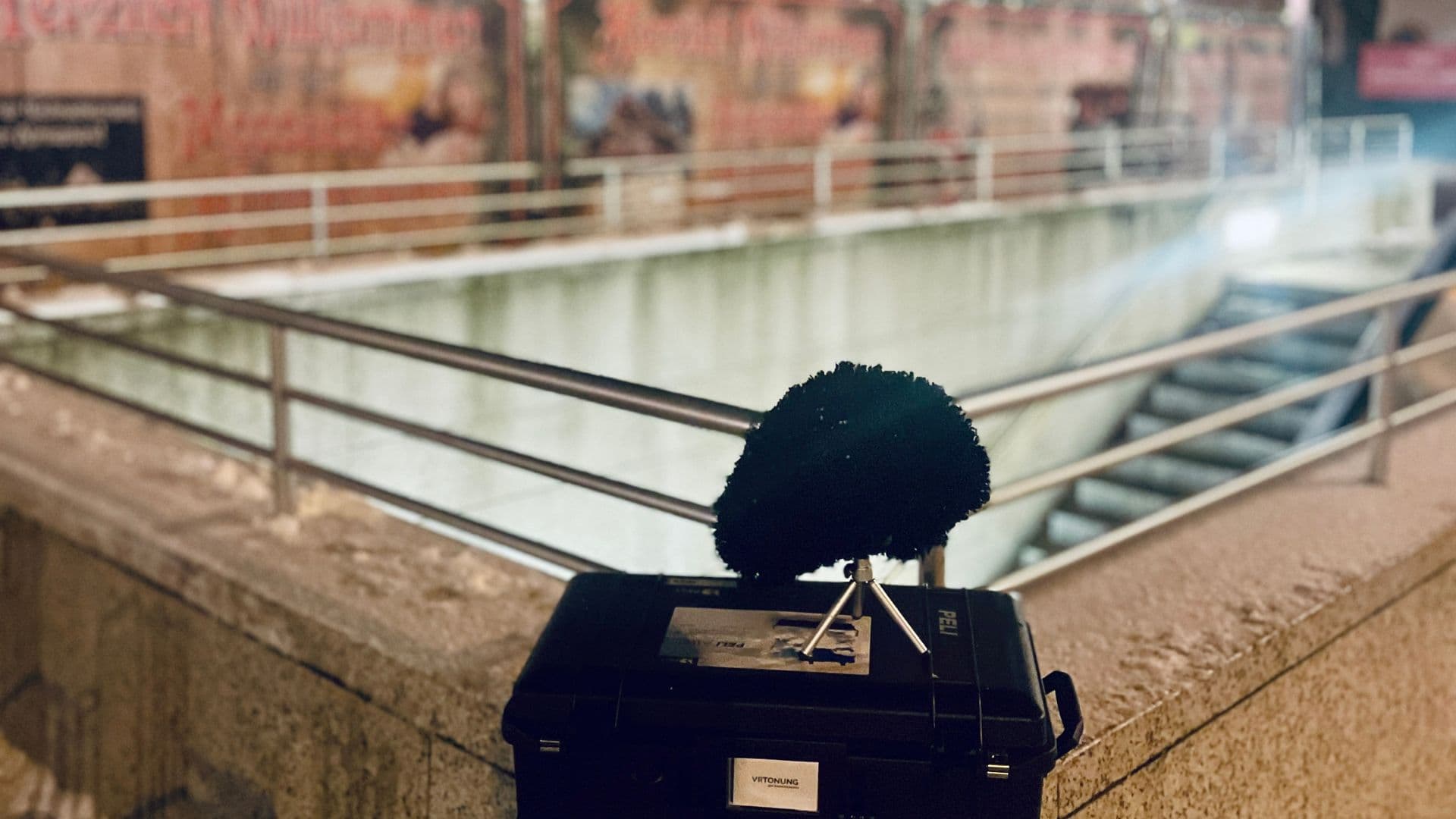
I recorded among others with the Sennheiser Ambeo VR Mic and mixed in Nuendo, in 7th-order Ambisonics. Visually, the project combines 2D and 3D elements.
It features:
hand-drawn 2D animation
-
Quill passages
-
stylized 3D animation with graphic, partly impressionistic textures
-
lit in the spirit of film noir with deliberately dramatic contrasts
The music is by Siril Mareso, palpably shaped by classic Hollywood narrative cinema à la John Williams or Danny Elfman. In addition, the music is performed by the musicians of the Curio Orchestr. The focus is clearly on character motifs and orchestral playfulness.
What the film is about
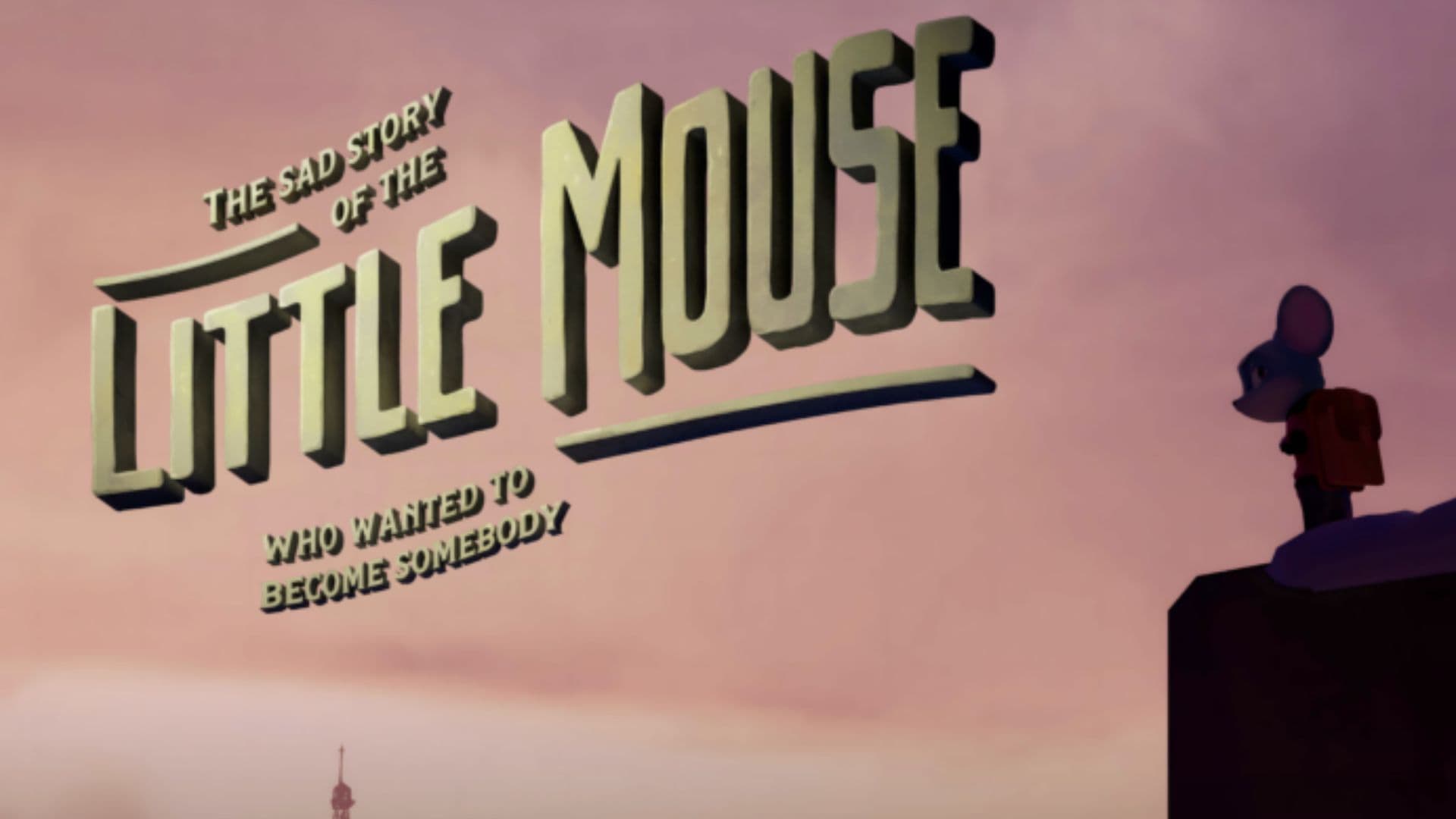
In a nameless city lives a little mouse with an obsession: to finally be somebody. She builds finely crafted toys, presents them at the market, and mocks the gaudy mass-produced goods. But then her arrogance drives her too far.
She reacts dismissively to a man’s criticism. However, she soon realizes that no one sees her anymore. Only the old man can still perceive her. He finally turns out to be Santa, who brings her into the largest toy factory in the world. The factory, the act of giving, and the expectations firmly situate the narrative in Christmas.
In a highly equipped prototype studio, accompanied by assistant Ruppert, the mouse produces at record speed. She “improves” the designs in secret, but Santa wants conformity, not authorship.
When an advertisement praises Santa’s latest invention the next morning, the mouse’s world collapses. The factory suddenly seems wiped out, and in the powerlessness, realization grows.
For one who wins, many lose. The world is simply arranged that way.
That night, she hears a boy crying with a toothache. She secretly swaps his tooth for a gift.
She also whispers an uncomfortable truth from which her own legend arises. She remains invisible. Be it mouse, fairy, projection screen. But she has finally become somebody.

What makes “The Little Mouse” special
“The Little Mouse” is special for the following reasons:
-
the co-production by Atlas V, Renard Films, and The Pack combines different strengths: a hybrid visual concept of 2D, Quill, and stylized 3D
-
a real-time pipeline that links Unity with classic animation tools
-
sound design that makes scale tangible as a motif.
Where the work stands
“The Little Mouse” has already been shown at Venice Immersive.

Challenges and limits
The sound effort was large. The mix grew to hundreds of tracks, and the little mouse with her backpack alone consists of roughly a thousand individual sounds. Going through Unity and FMOD made the work at least twice as laborious as a normal film mix, even though the story is linear. The video is 6DoF, but I mixed in 3DoF because that gave me more control over a complex scene.


From the sound workshop: Virtual reality sound
For me, this project was special also because sound and perspective are inseparable. The scale of the world changes, and with it the proximity of its sounds.
When we are small, we hear the texture of the wood, the scraping of a file, the rustling of fabric. When we are large, the space pushes air between us and things.
At the end, the little mouse tells a simple, uncomfortable truth about the creative industry: Visibility is currency, credit is power, and self-images quickly become legends, or lies.
VR makes this dynamic physical. We feel how big or how small we are, and we hear what that does to us.
Planning a VR or 360° project? Let’s talk.
VR needs sound that enhances immersion, not breaks it.
Get in touch