
With Your Ears to Rome VR: A Spatial Journey Through the Eternal City
Imagine you’re standing in the middle of ancient Rome. Columns rise up around you, dust hangs in the air, somewhere metal clinks, a crowd murmurs. The sounds of gladiators, animals, and people bring the atmosphere to life and intensify your sense of being immersed in the Roman world.
And before you even wonder where to look first, you hear a voice – just to your right, behind you. “Let’s start in the heart of the Empire.” You instinctively turn, follow the sound – and you’re right in the middle of the story.
This feeling of being guided, of not learning about Rome, but standing in Rome, is the core of our project. The experience is at the heart of the virtual reality tour and turns sightseeing into a powerful, immersive encounter.
Why – Not Just Explaining History, But Making It Tangible
Many historical formats have the same problem: they tell great stories, but everything happens “up there on the stage.”
The audience and the past stay at a distance. Especially in complex places like Rome – the Forum, Circus Maximus, Colosseum – it’s easy to lose track of where you are, why it matters, and how it once felt.
We wanted to break exactly this distance. The tour is designed to deliberately convey key information about the history of Rome and its monuments, so visitors are engaged not just emotionally but intellectually as well.
Instead of a classic tour with headphones and eyes fixed straight ahead, we wanted to create a spatial experience that combines three things:
-
Orientation: We wanted people to intuitively know where to look – without constantly relying on screens or signs.
-
Presence: Listeners should feel like they’re walking through ancient Rome with a real person, not just listening to a voice-over.
-
Emotion: Power, spectacle, brutality, fascination – all of it should be translated into sound, without turning into cheap sensationalism.
Mario – archaeologist and live-action host – was the perfect person for this: he combines expertise and presence. My task was to bring him to life around the audience using spatial audio, so that he becomes a real point of reference in the space.
Not as an abstract voice, but as someone whose position you can hear – and therefore physically sense – through the targeted use of VR technology and sound design to convey history in an immersive way.
How – Through the Eternal City with Spatial Audio
The guiding question in the sound design was: What does it feel like when someone takes me by the hand acoustically?
Alongside immersive sound, light also plays a central role: targeted light projections and lighting stage archaeological sites and virtual spaces in an atmospheric way, highlighting details and intensifying the virtual experience.
Instead of letting Mario speak statically “from the front”, I staged his commentary spatially.
The entire experience is designed like an interactive game that actively involves participants and lets them discover historical content in an entertaining way.
The Narrator as Acoustic Guide
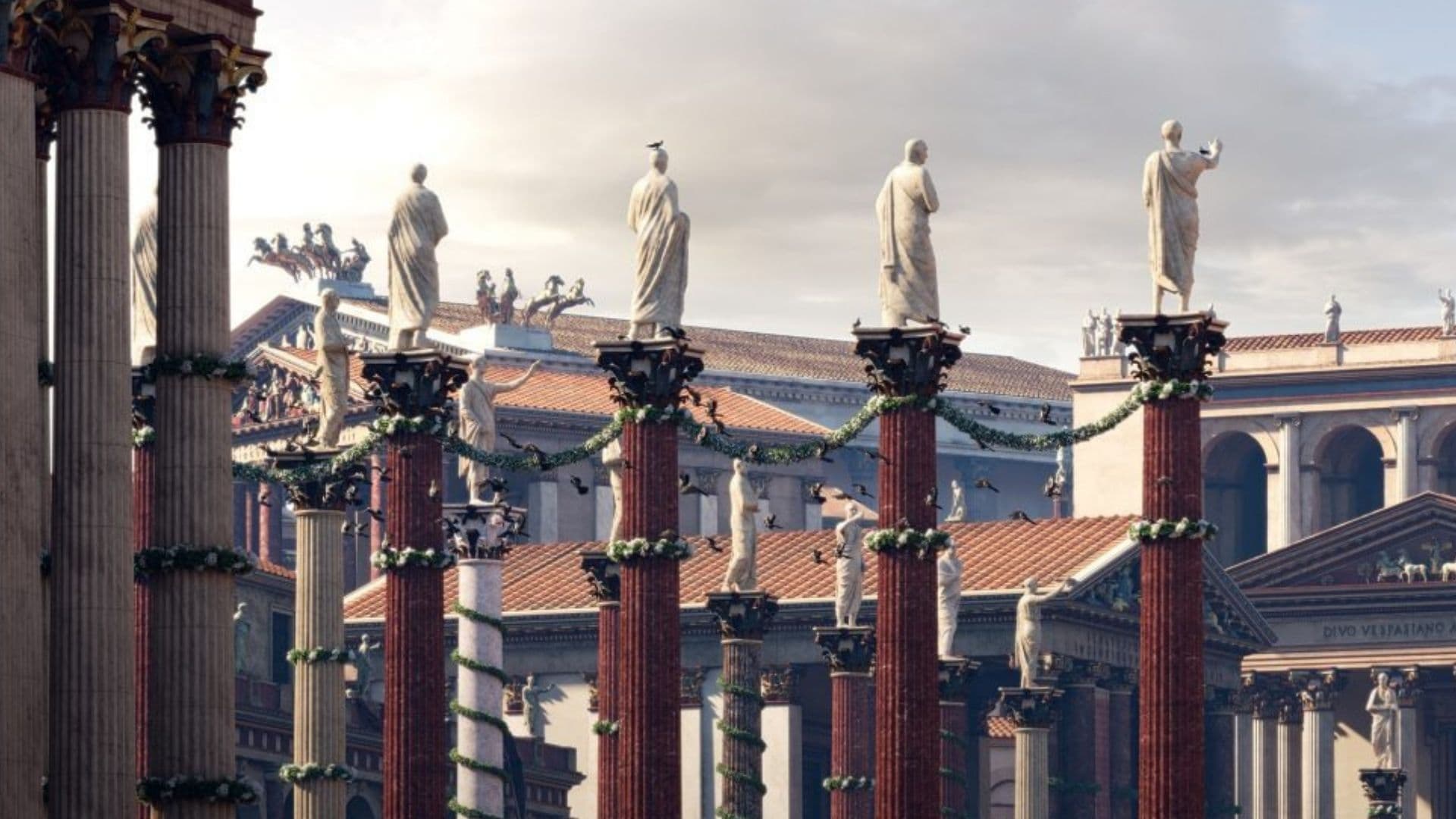
When Mario talks in the Roman Forum about the core of ancient Rome – the center of political power, home to the most important temples, vaults for the empire’s most precious treasures – his voice comes from exactly where he would be standing in the space.
As a tour guide, Mario leads you through the story acoustically and makes the experience feel particularly vivid. When he turns towards a temple, his sound moves with him. The audience senses: Something important is happening over there.
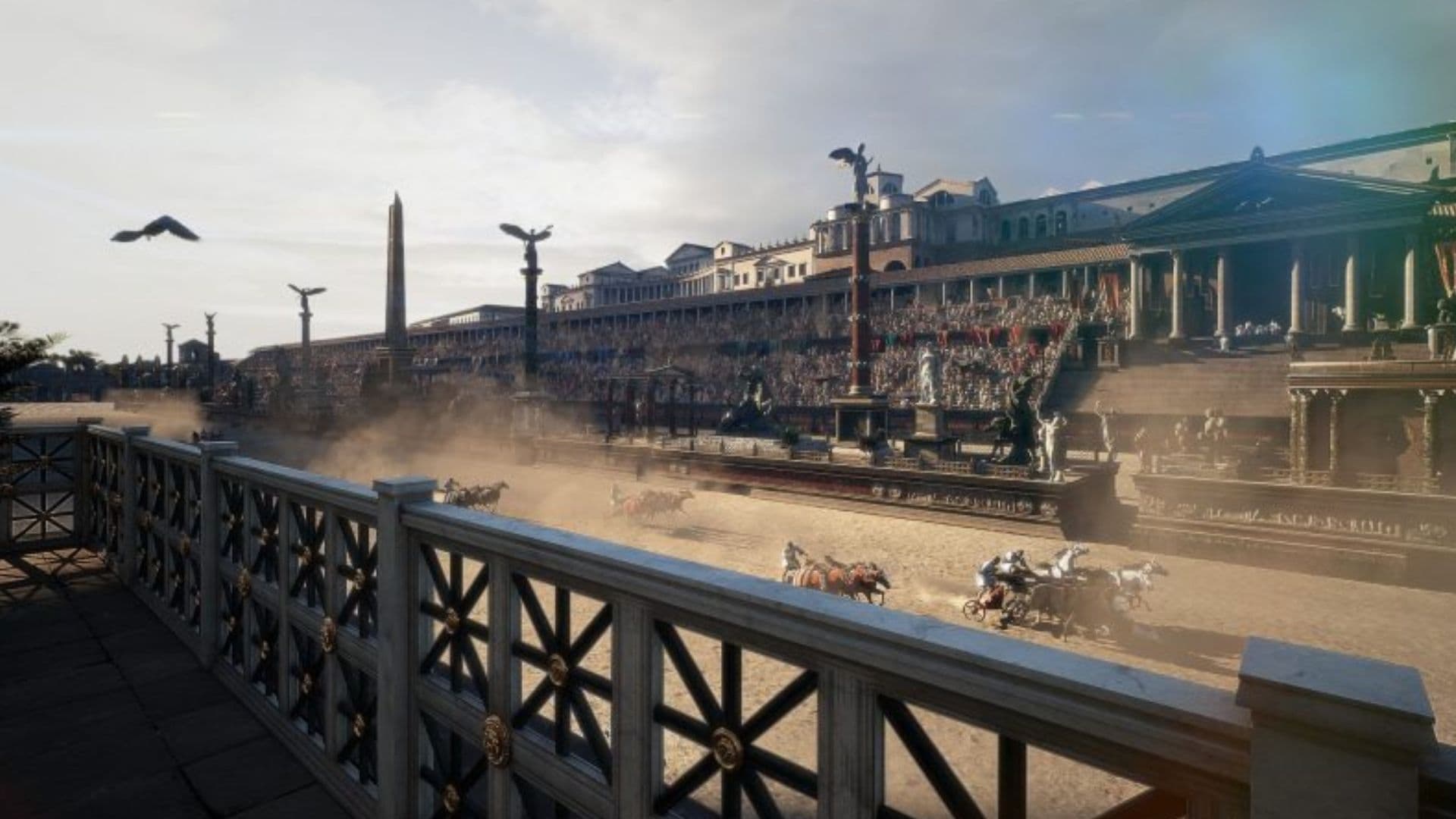
In the Circus Maximus, the acoustics shift. His voice is closer to the track, while broad layers of cheering suggest the vastness of the arena. Listeners don’t just hear that chariot races existed – they feel the direction in which the spectacle stretches across the arena.
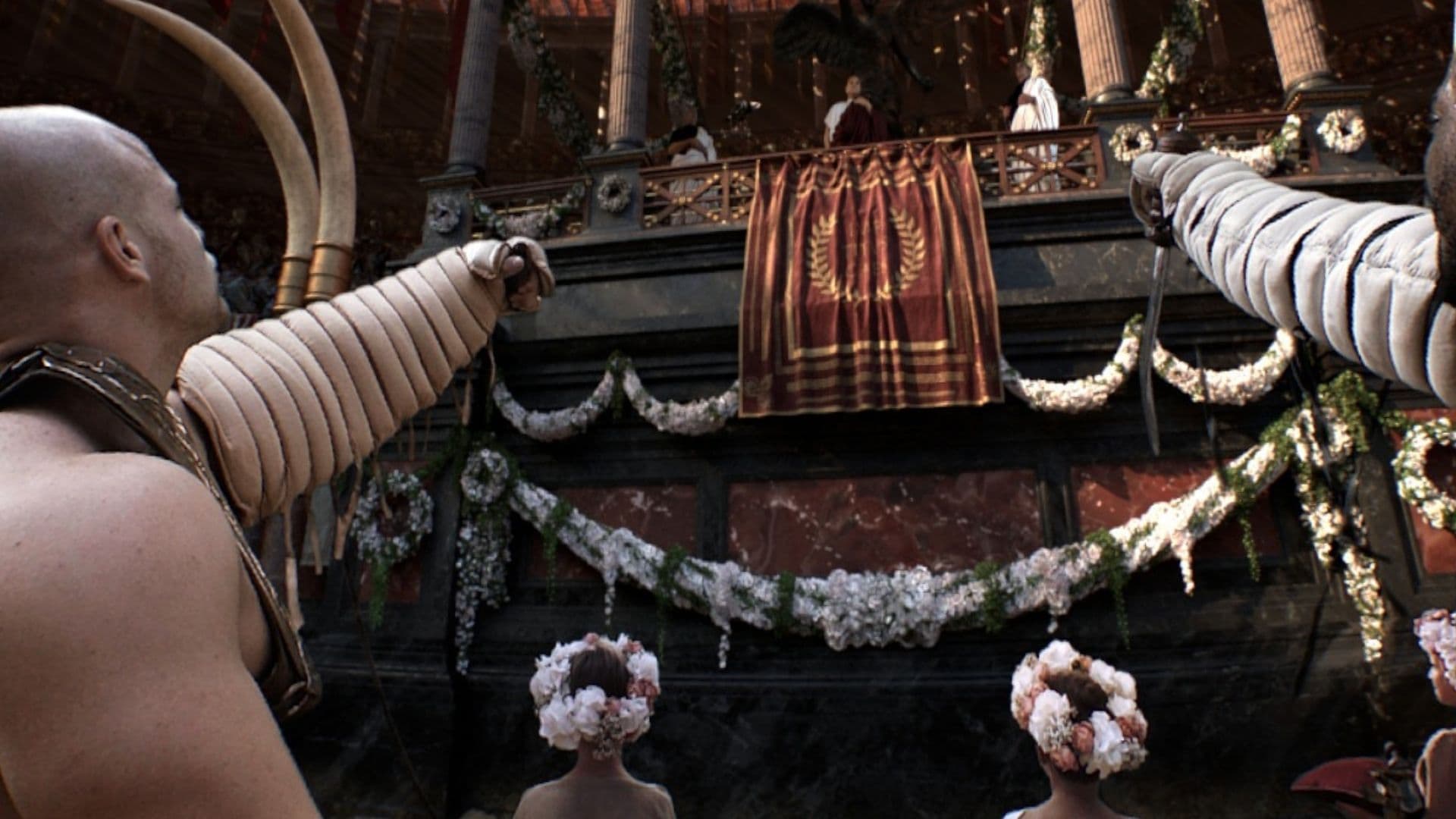
In the Colosseum, it becomes tighter, more direct, more brutal. Mario is sometimes right next to you, sometimes a bit further away, while beneath and around him the sounds of gates, weapons, animals, and the crowd unfold in 3D.
The moment when he describes the scene with Emperor Titus and 50,000 spectators is designed so that you feel the masses all around you – and him as a calm anchor in the noise. The tour is available in several languages.
Sound as a Director of Attention
Instead of “Please look to your left”, the voice itself acts as a compass. When Mario speaks slightly behind and to the side of the audience, you automatically turn that way. When he seems to be a few meters in front of you, your gaze follows forward. Spatial audio takes over a function that normally only physical guides or visual cues can provide.
That’s how presence is created: you are “on site” with him. Listeners report that they feel less like part of a group and more like in a personal conversation – only in the middle of ancient Rome.
Target Group and Requirements – Who Is This Acoustic Time Travel For?
Whether you’re visiting with your family, exploring the Eternal City as a history nerd, or just curious about a technical marvel – this virtual reality tour through ancient Rome is made for anyone who wants to not just see history, but experience it.
Families discover the splendor of the Roman Empire together: children and teenagers dive into ancient life thanks to 3D reconstructions and vivid sound sources all around them.
The virtual journey through the Colosseum, Circus Maximus, and the Domus Aurea makes history tangible and sparks wonder – without boring plaques or dry lectures.
History enthusiasts get their money’s worth: the tour combines solid expertise with impressive visualizations of the city’s key monuments. Whether it’s the Roman Forum, Palatine Hill, or the mysterious Domus Aurea – each site is brought to life by the combination of virtual reality and spatial sound. The history of the Roman Empire is not just explained, but made tangible.
Tech lovers experience how cutting-edge VR technology and precise localization of sound sources open up a new dimension of urban exploration. The VR headset, supported by a multilingual audio guide (German, English, French, Italian), turns the tour into an immersive experience that goes far beyond classic guided tours.
The requirements couldn’t be simpler: if you can wear a VR headset and have around two hours, you’re in. Most of the tour takes place seated or with short walking segments and is therefore also suitable for people with limited mobility.
The reviews speak for themselves: with 4.7 out of 5 stars and over 1,000 enthusiastic responses, visitors praise the unique experience, the knowledgeable guides, and the chance to discover Rome from completely new perspectives.
Whether you’re a family, history fan, or tech enthusiast – this virtual reality tour is the key to an unforgettable journey through the wonders of the Eternal City.

What – An Acoustic Time Journey Through Forum, Circus, and Colosseum
The Forum – Power at the Center
The path begins in the Roman Forum, the nerve center of the empire. Mario leads you acoustically through the layers of power: senate, temples, archives, treasure chambers.
In the sound design, subtle layers of voices, footsteps on stone, and distant shouts emerge – never dominant, but always present. The Forum is not explained as a ruin, but made audible as a living organism.
Circus Maximus – Speed and Risk
Then the space opens up. The Circus Maximus becomes an acoustic tunnel of speed. Hooves, chariots, metal, the rhythmic shouts of the crowd – everything moves in wide circles around the audience.
Mario comments from a position at the edge of the track. You sense how popular and at the same time dangerous these races were, how entertainment could turn into an existential risk – for drivers and horses.
Colosseum and Gladiators – Close to Brutality
The climax is the Colosseum. Here, the contrast is at its strongest. The cheering masses form a ring around the audience, while the events in the center of the arena feel almost intimately close.
Gladiators become audible as part of a gigantic entertainment industry: training, preparation, brief moments of silence before the fight.
In the decisive moment, the bloody final scene before Emperor Titus, the sound field tightens. The audience hears breathing, the clatter of armor, the murmur of 50,000 people.
Mario stands seemingly right next to you – not to celebrate the spectacle, but to interpret what this form of “entertainment” reveals about power, the value of human life, and control.
Conclusion – Spatial Audio as a Bridge to the Past
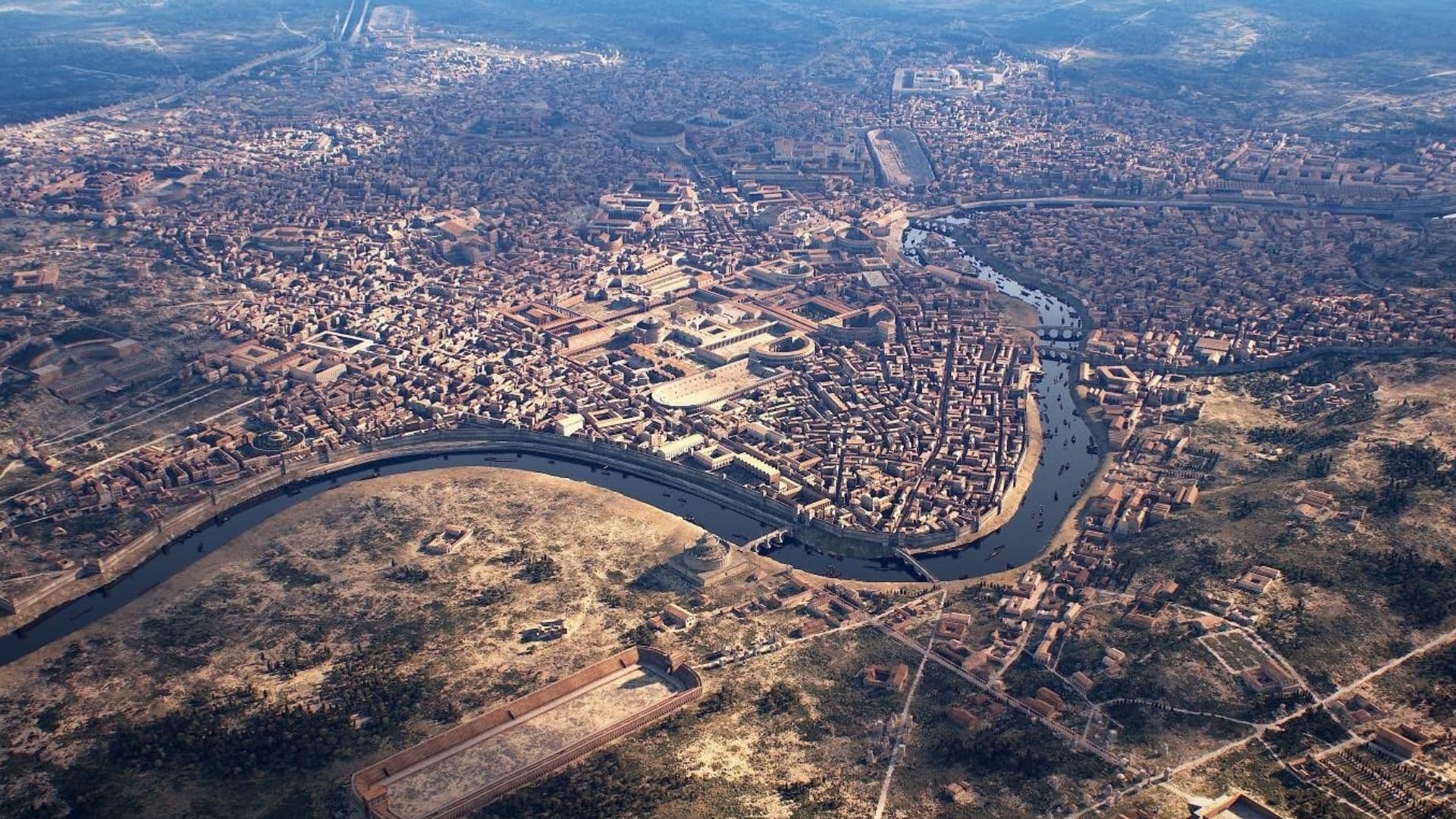
In the end, this project is more than a historical tour: it’s a prototype for how spatial audio can connect guidance, orientation, and emotion.
Because the voice moves around the listeners, they always know where to look – and at the same time feel deeply connected to the place.
With comparatively simple means, a powerful sense of presence is created: you don’t stand in front of a plaque about the Roman Forum – you stand in the Forum. You don’t just hear about the Circus Maximus – you stand at the edge of the racetrack.
You don’t read about gladiators – you find yourself with them in the Colosseum, at a safe distance, but with maximum closeness in sound.
Contact me for similar projects