Good for the Soul – Immersive Soundscape & Vision in the First “Fitness Center for the Soul”
When we think of fitness, we see dumbbells, treadmills, sweat. At Anima Mentis in Vienna, it’s about something else: the soul.
Instead of weights there is light, instead of machines there are nature visuals – and instead of loud pop music: delicate, high-resolution nature sounds and atmo, i.e. atmospheric natural ambience that is meant to clear your head.
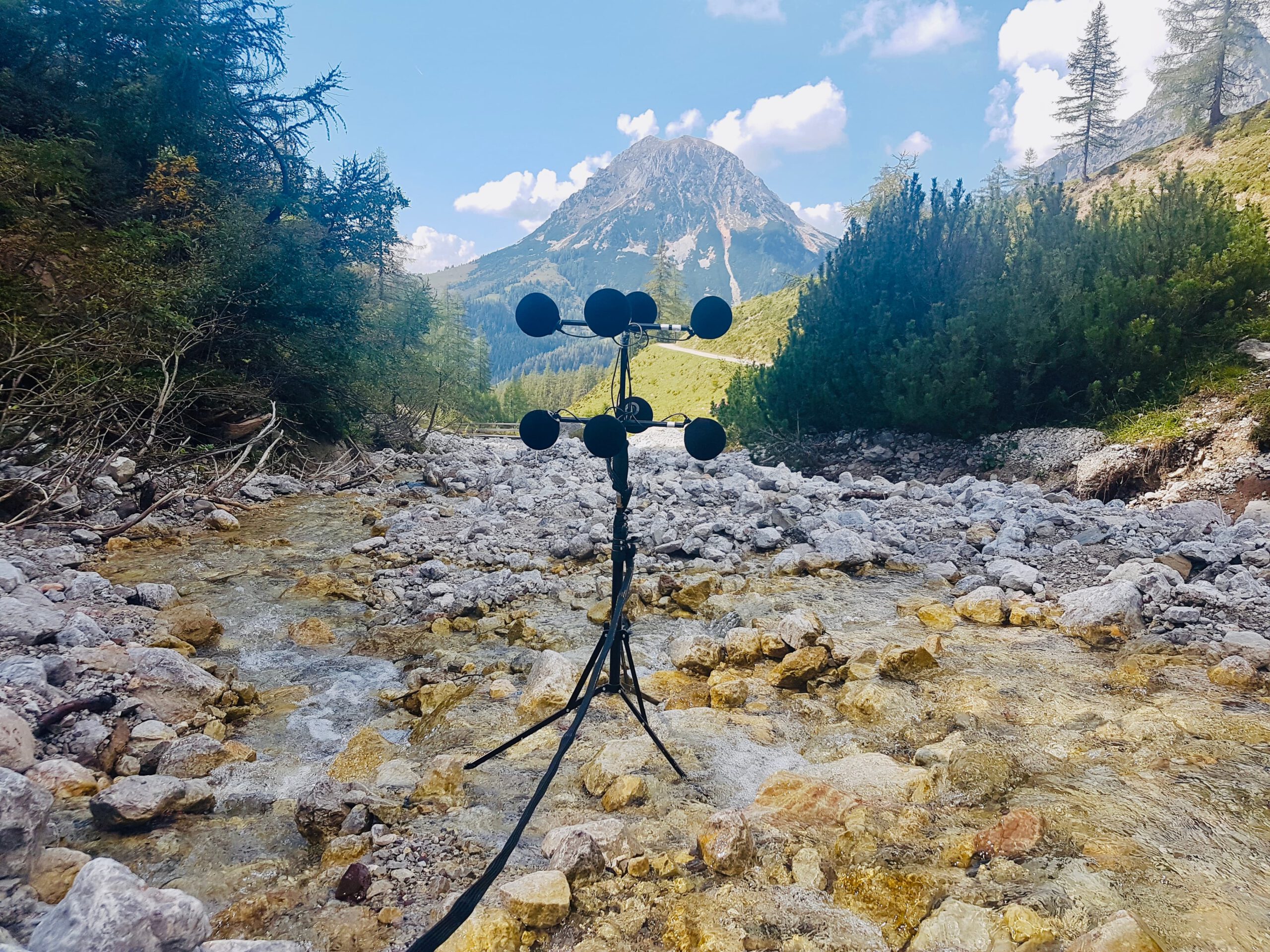
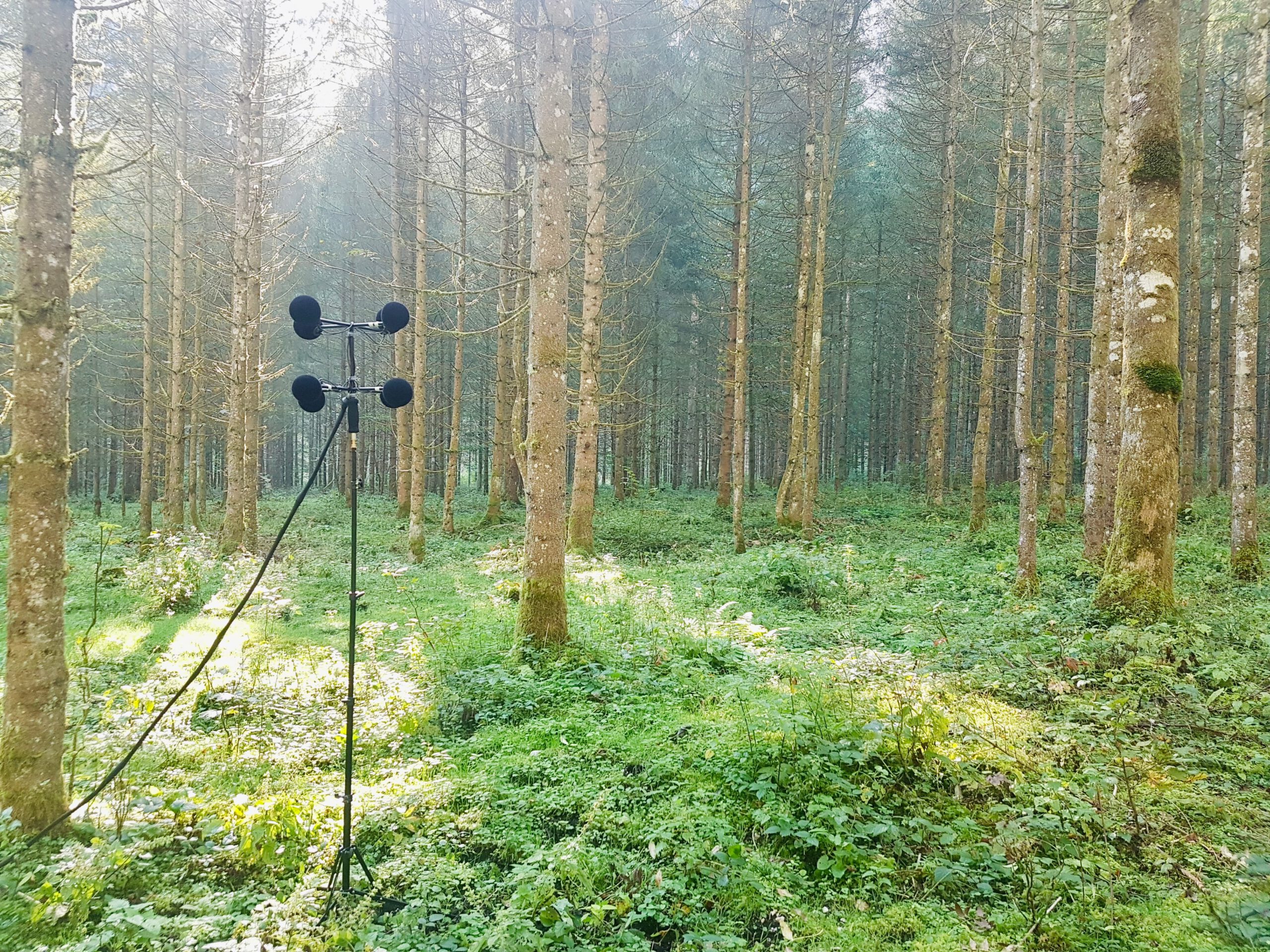
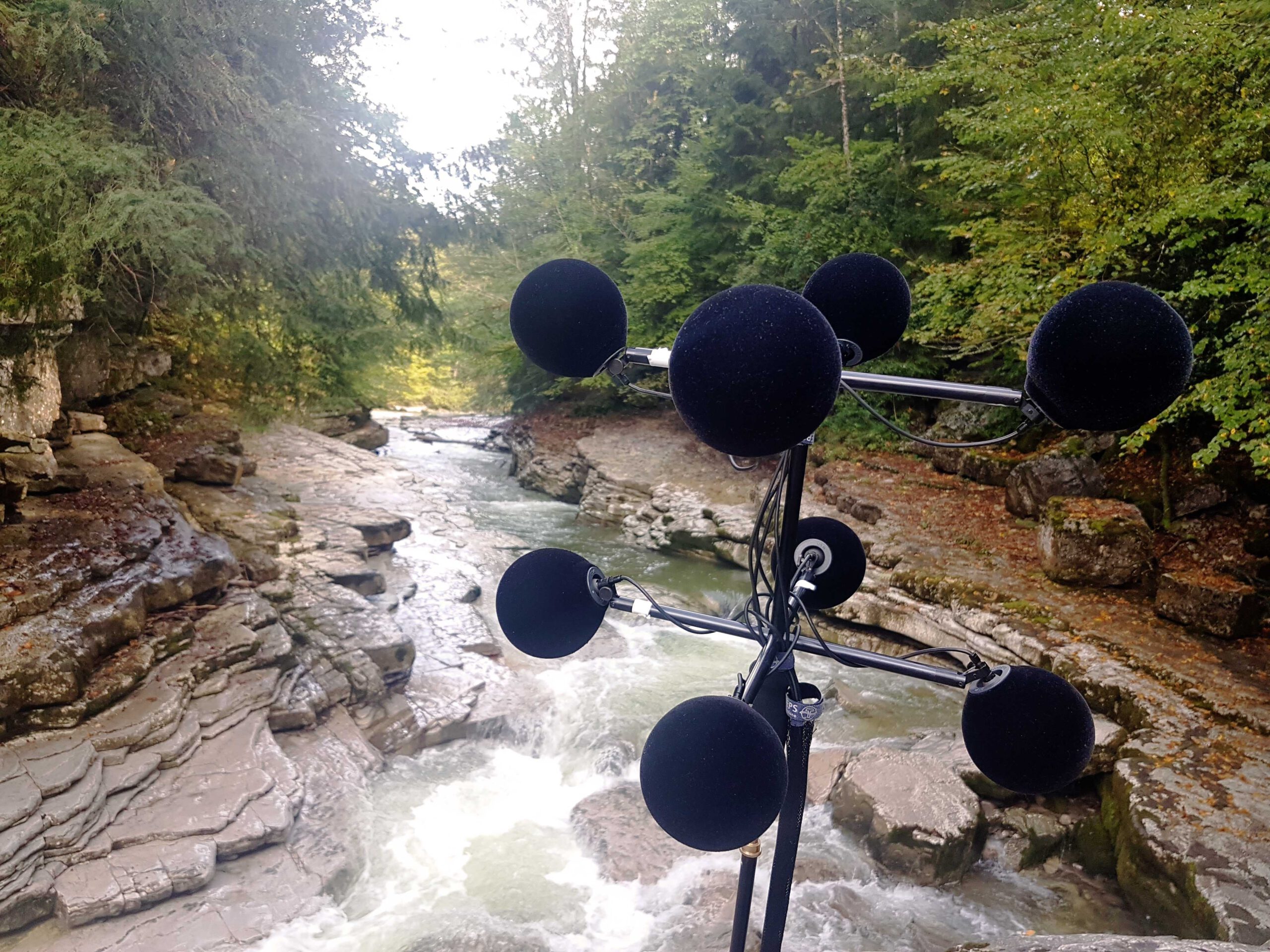
For this project I was able to take on a very special part: I was responsible for recording the natural sounds that would later be used as immersive soundscapes in the center – crickets on a summer night, gentle streams, wind in the trees, birds in the early morning light.
The large technical architecture of 360° projection, immersive audio in 5.1.4 and complex post-production was created by the team – but the foundation is always the same: a real, believable sound.
Why – Sound as a Tool for Mental Regeneration
Everyday life in the city is loud. Traffic, people, smartphones, notifications – our brain is under constant fire. This is exactly where Anima Mentis comes in: it is the first “fitness center for the soul” where people can actively work on their mental health.
The idea behind it: if we support our mind with the same tools that usually overwhelm it – sound, image, sensory input – but in high quality, consciously designed and carefully dosed, these stimuli can suddenly relieve instead of stress.
The goal of the sound recordings and the project is to create the most authentic and relaxing immersive soundscape possible, one that mentally regenerates the listener and transports them into a natural environment.
Nature sounds play a key role in this. For many people, they are intuitively associated with calm, safety and recovery.
The rustling of leaves, a gentle stream, crickets chirping at sunset – these are sound images that instantly trigger entire scenes in the brain: summer, freedom, being outdoors.
But why go to such lengths to record nature when libraries already exist? Because the concept of Anima Mentis is based on quality and credibility. No MP3 from an archive, no generic sea noise that has already been used hundreds of times in meditation apps. Guests should feel as if they are truly in a specific place – not “somewhere in a forest”, but in a very concrete, atmospherically coherent setting.
To achieve that, you need honest, detailed recordings – and those only happen outside, with a lot of patience and walking back and forth.
How – With a Microphone and Patience in Search of Silence
On paper, “recording nature” sounds romantic at first: you drive out, set up a mic, wait a bit – done. The reality: even in supposedly remote areas it is hard today to get truly clean sounds.
In the practice of field recording, it becomes clear that authentic immersive soundscapes only emerge through targeted preparation and experience in the field.
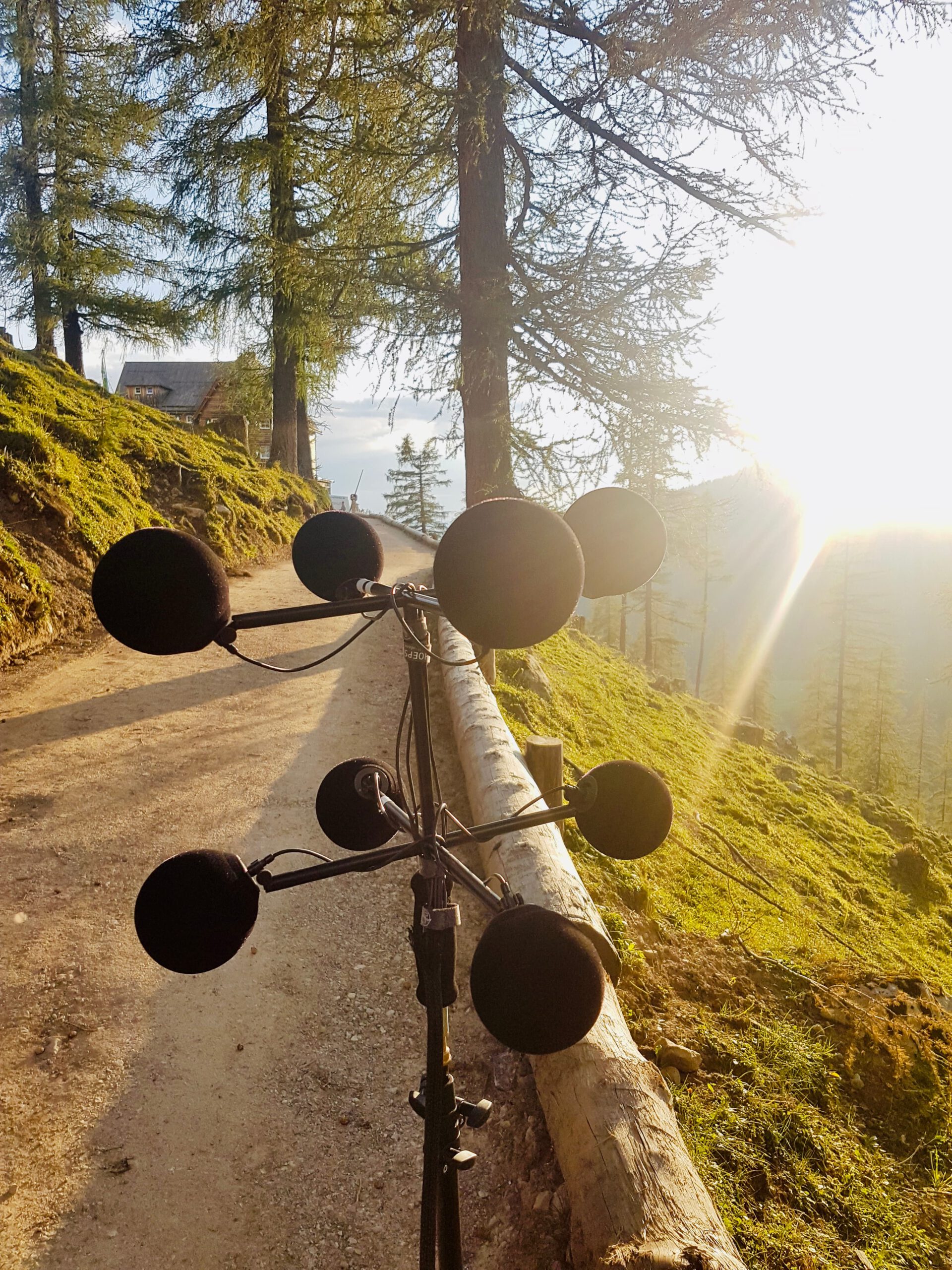
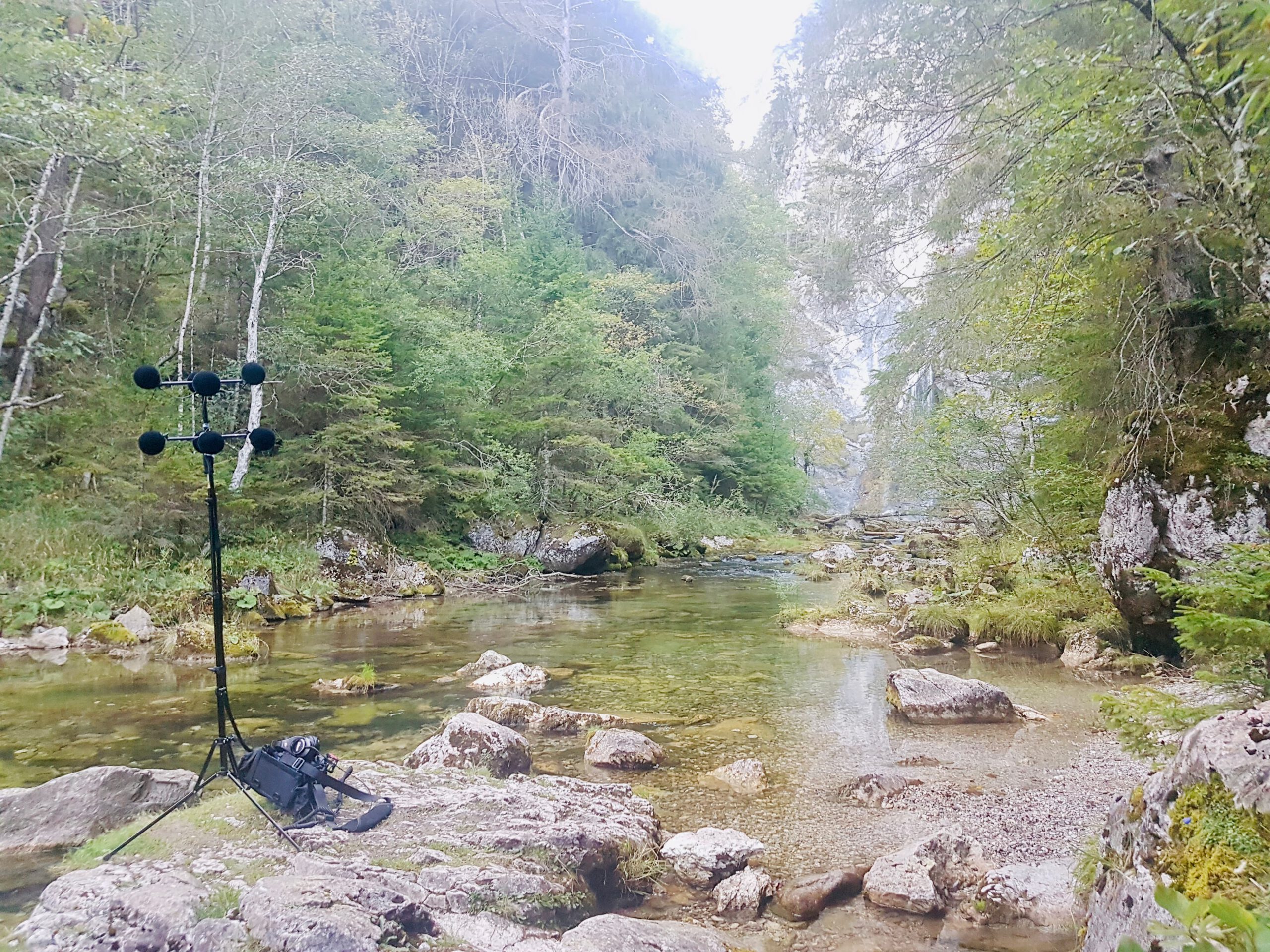
I recorded in different locations – forests, streams, meadows, remote paths. And everywhere the same pattern: as soon as it finally became nice and quiet, somewhere a plane, motorcycle, hiker, dog or tractor would appear. Nature itself was rarely the problem – it was people.
The Real Job: Finding Sounds, Not Just Recording Them
The “how” therefore came down mainly to three things:
-
Patience Many sequences needed time. Instead of “quickly recording something”, it was often 20–30 minutes at the same spot until a few minutes of really usable material emerged: no engine noise in the distance, no sudden shouting, no car doors slamming in the parking lot. If disturbances occurred during recording, the answer was either to adjust the equipment or change position to achieve the best possible results.
-
Going the Extra Mile Often it wasn’t enough to step just a few meters off the path. I followed small trails further on, climbed a bit up the slope, went further upstream along the creek until I was truly “out of everyday life”. You could hear every extra meter of distance to civilisation later in the recordings. When choosing spots, I always considered both the technical side of recording and the characteristics of the environment to make the most of different perspectives and technical possibilities.
-
Conscious Listening Before Recording Before the microphone was even switched on, I just listened first: What dominates here? Wind? Water? Insects? Birds? Is this a sound image that will later feel calming – or rather nervous? That’s how I decided which spots would actually be captured as a “scene” and which ones, despite beautiful surroundings, had to be discarded. In doing so, I deliberately explored different areas of the soundscape to capture the variety and depth of the acoustic environment.
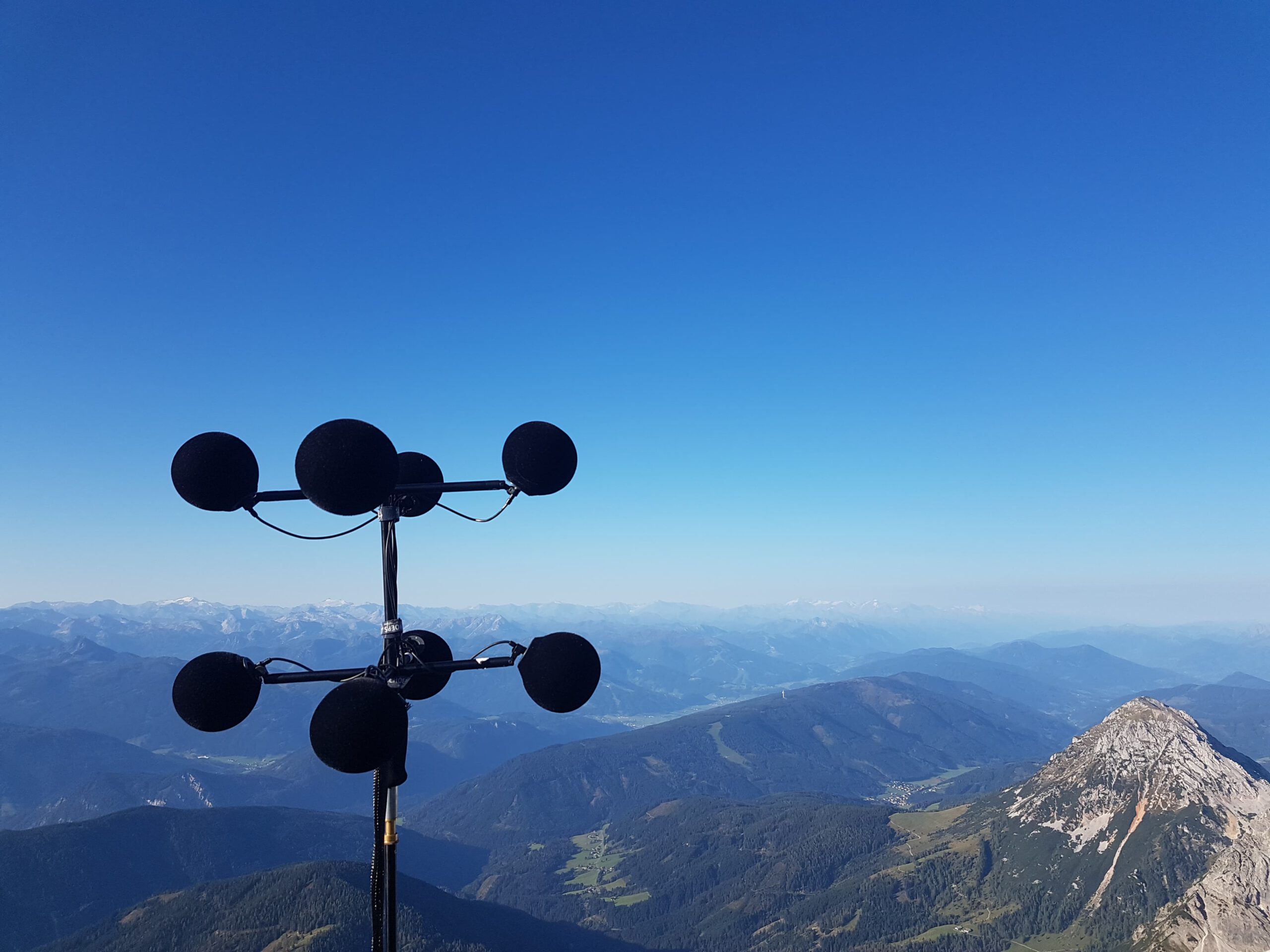
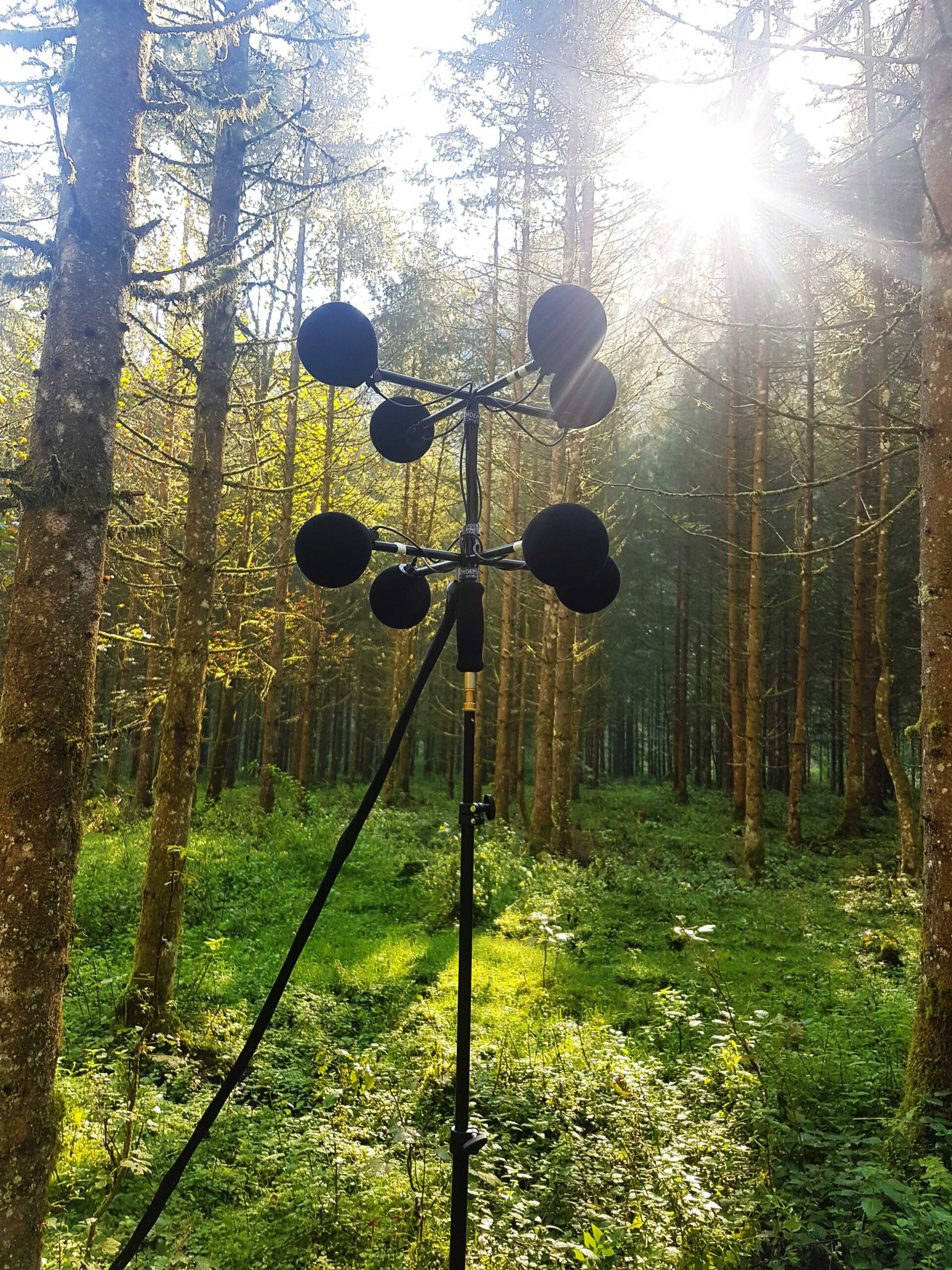
Technically, the setup was deliberately high quality, but I won’t get too nerdy here: the crucial point is that nature was recorded in high resolution (24 bit, 96 kHz) so that post-production would later have enough “headroom” to translate the sounds into 5.1.4 immersive audio.
From my stereo and multichannel recordings, spatial sound fields were then built in the studio, which in the 360° Nature Room and the Movement Room at Anima Mentis surround visitors like a “dome of sound”.
Media and Technology – The Invisible Helpers Behind the Immersive Experience
Behind every immersive experience that transports us into another world, media and technology work as quiet but indispensable helpers.
Only through the perfect interplay of music, images, natural sounds and video do soundscapes emerge that are not only heard but experienced with all the senses. In projects like this “fitness center for the soul”, it is this combination of artistic vision and technical precision that makes the difference.
What – From Chirping Crickets to Immersive Soundscapes
In the end, the project wasn’t about individual sounds, but about complete sonic worlds. The different textures of the recorded sounds were particularly important, as their variety and depth played a major role in shaping the immersive experience.
From Raw Sound to Immersive Experience
After recording, the material went into post-production. There:
-
disturbing noises were filtered out or cleanly cut away
-
individual layers of sound were combined
-
scenes were arranged so they made dramaturgical sense: build-up, calm, small changes
In this process, both the producer and the composer play a central role: the producer controls and shapes the individual layers of sound, while the composer is responsible for the creative realisation and arrangement of the immersive soundscape.
Perhaps the most exciting step was when the “flat” recordings became immersive sound fields. At Anima Mentis – especially in the 360° Nature Room – the speakers are not just in front of the visitors, but all around and partly above them.
The nature sounds were distributed in such a way that you don’t feel like you’re sitting in front of a “wall of sound”, but in the middle of a landscape:
-
birds slightly above head height
-
water to the sides or slightly in front
-
wind spread broadly around the entire room
Even though I personally “only” handled the recording part, it was precisely this step – from the real location to an artificially created but authentic-sounding world – that made the project so special.
Conclusion – Small Sounds, Big Impact
What I like about Anima Mentis: it’s not about technology for technology’s sake. Yes, there are impressive projectors, media servers, immersive sound systems – but in the end, what matters is how a person feels in that room.
My role was comparatively quiet – in the most literal sense. I went looking for nature, chased silence, dodged airplanes and walked many extra kilometres to capture a few minutes of really clean, clear and at the same time vivid natural sounds.
Today, these sounds are part of a place where people can strengthen their mental resilience, come down, recharge.
The immersive soundscape also opens up space for introspection – a meditative and reflective phase that encourages personal reflection and self-observation in order to build a deeper connection to oneself and one’s own emotional states.
And that, for me, is the most beautiful aspect of this project:
With a bit of patience, a microphone and attentive ears, you can collect building blocks that others then use – with VR, light and post-production – to create spaces that do people good. Good for the soul, in the truest sense of the word.
Contact me for more projects!