Immersive Technologies: The Future of Digital Experience
Content
Key Takeaways from Immersive Technologies
-
Immersive technologies include Virtual Reality (VR), Augmented Reality (AR), Mixed Reality (MR) and Extended Reality (XR) and are revolutionising the way we interact with digital content.
-
The global market for immersive technologies is estimated to exceed 300 billion US dollars by 2030, with applications in healthcare, education and Industry 4.0 leading the way.
-
Spatial computing and AI integration enable natural interactions in three-dimensional digital environments without traditional input devices.
-
The main challenges are data protection, hardware costs and motion sickness during longer use of VR systems.
-
Companies such as Meta, Apple and Microsoft are investing heavily in the development of accessible consumer hardware for the mass market.
The digital revolution has reached a new peak.
Immersive technologies are fundamentally transforming our interaction with digital content and creating experiences that seamlessly blend physical and virtual worlds.
What was once science fiction is now reality – and development is accelerating exponentially.
From surgical simulations to virtual product presentations, these technologies are revolutionising industries around the world.
The importance of immersive technologies lies not only in their technical sophistication, but in their ability to completely redefine human perception and interaction.
Definition of immersive technologies
Immersive technologies create experiences that allow users to fully immerse themselves in digital or extended environments.
The term “immersive” describes the ability of these systems to stimulate our senses in such a way that we forget the boundary between reality and the virtual world.
The historical development goes back to Ivan Sutherland’s groundbreaking head-mounted display from 1968, which is considered the first VR system.
But only in recent years have advances in computer graphics, sensor technology and miniaturisation made immersive technologies accessible to the mass market.
The core characteristics of modern immersive technologies include:
-
Multi-sensory experiences: Integration of visual, auditory and haptic feedback
-
Spatial perception: Natural movement and navigation in three-dimensional environments
-
Real-time interaction: Immediate response to user input without noticeable delay
-
Sense of presence: The subjective feeling of being physically present in the virtual environment
These characteristics fundamentally distinguish immersive technologies from traditional 2D interfaces.
While conventional media position us as external observers, immersive systems turn us into active participants in digital worlds.
Types of immersive technologies
Virtual Reality (VR)
Virtual Reality creates fully artificial 3D environments that isolate users from the real world.
The technology is based on high-resolution displays, precise head tracking and spatial audio playback to generate an authentic sense of presence. Virtual content is generated and displayed within these environments, allowing users to interact with digital elements as if they were real.
Modern VR hardware such as the Meta Quest 3, Apple Vision Pro or HTC Vive Pro 2 offers impressive technical specifications.
These devices achieve resolutions of up to 4K per eye and refresh rates of at least 90 Hz to avoid motion sickness. Advanced input devices such as haptic gloves provide tactile feedback and enhance immersion by enabling users to feel and manipulate virtual objects.
The applications of Virtual Reality VR extend across a wide range of fields:
-
Gaming and VR games: Titles like Half-Life: Alyx and Beat Saber demonstrate the potential of immersive gaming experiences. VR games are central to popularizing immersive experiences and are widely used in gaming, marketing, training, healthcare, education, and military training.
-
Training: Risk-free simulation of complex scenarios for pilots, surgeons and emergency responders. Flight simulation is a key example, improving skill-building and training in the aviation industry.
-
Therapy: Treatment of phobias, PTSD and pain management in controlled virtual environments.
Despite impressive progress, there are still limitations: high hardware costs, limited battery life and potential motion sickness during longer use are still restricting widespread adoption.
Augmented Reality (AR)
Augmented Reality (AR) overlays digital information onto our view of the real world.
In contrast to VR, AR does not replace reality but extends it with contextual, interactive elements.

Successful AR examples have already reached millions of users:
-
Pokémon GO: Brought AR to a broad audience in 2016 and demonstrated the potential of location-based AR applications.
-
IKEA Place: Allows customers to place and evaluate furniture virtually in their own rooms.
-
Snapchat filters: Make AR effects for social media everyday and accessible.
The hardware landscape for AR is diverse.
While smartphones have the widest reach, dedicated AR glasses such as Microsoft HoloLens 2 or Magic Leap 2 are developing into powerful tools for professional applications. AR headsets, including smart glasses like Viture Pro XR and Ray-Ban Meta smart glasses, deliver immersive digital overlays directly through wearable devices, enhancing the AR experience beyond what smartphones and tablets can offer.
Industrial AR implementations are revolutionising workflows:
-
Maintenance: Technicians receive real-time instructions directly in their field of view.
-
Navigation: Precise guidance with context-related information.
-
Product visualisation: Customers can test products in their own environment before buying.
AR devices also enable data collection from users and their environments, supporting improved workflows, analytics, and research applications.
Mixed Reality (MR) and Extended Reality (XR)
Mixed Reality (MR) represents the next stage of evolution, in which physical and digital objects can interact with each other in real time.
In contrast to AR, which merely overlays digital elements, MR enables bidirectional interactions between real and virtual objects.
Extended Reality (XR) serves as an umbrella term for all forms of extended realities.
This term reflects the increasing convergence of various immersive technologies, as the boundaries between AR, VR and MR are becoming more and more blurred.
The reality–virtuality continuum by Milgram and Kishino from 1994 remains an important theoretical foundation.
It describes the fluid transition between the purely physical world and fully virtual environments.
Spatial computing and AI integration
Spatial computing represents the next evolution of human–computer interaction. This technology makes it possible to integrate digital content seamlessly into our physical space and control it with natural gestures.
Modern input methods are revolutionising interaction:
-
Gaze control: Eye tracking enables control through eye movements alone.
-
Hand gestures: Precise recognition of finger movements without physical controllers.
-
Voice commands: Natural communication with AI assistants in immersive environments.
AI support amplifies these capabilities through intelligent object recognition and adaptive user interfaces. AI integration enables immersive technologies to handle complex tasks across multiple domains, allowing for advanced problem-solving and automation. Systems learn user preferences and automatically adapt to different contexts.
Apple’s visionOS and Meta’s Quest platform are leading examples of spatial computing systems. These platforms not only demonstrate how software and hardware must work together to create natural immersive experiences, but also provide robust tools for developers to create and develop applications for immersive environments.
Application areas of immersive technologies
Healthcare and medicine
Healthcare is undergoing a fundamental transformation through immersive technologies, with health care being one of the key sectors impacted.
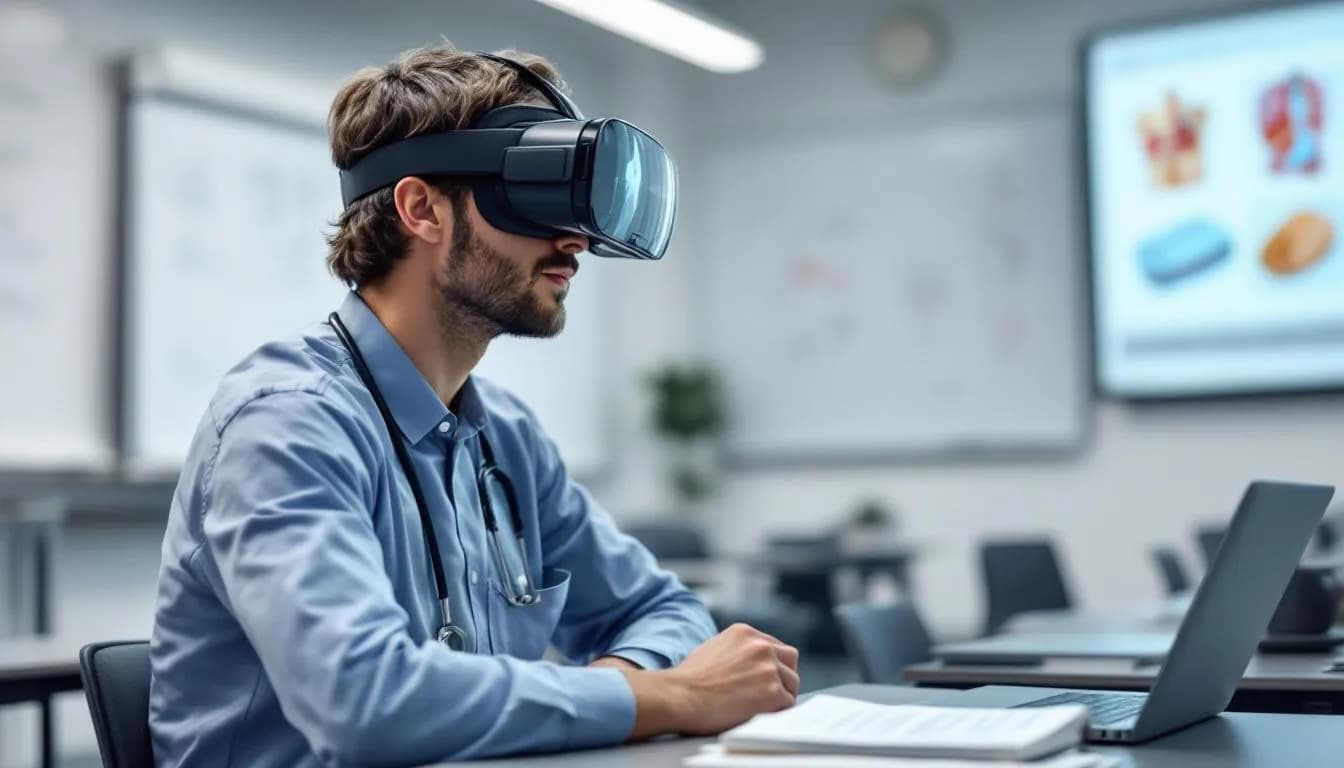
VR systems such as the Surgical Theater System enable surgeons to practise and perfect complex operations in risk-free virtual environments. Simulation-based training with VR helps medical students improve their surgical skills and gain practical experience in a safe setting.
Therapeutic applications show impressive results:
-
Treatment of phobias: Controlled exposure in virtual environments gradually reduces fears.
-
PTSD therapy: Veterans can process traumatic situations in safe VR environments.
-
Pain management: Distraction through immersive experiences measurably reduces the sensation of pain.
AR-assisted operations are revolutionising precision medicine. Surgeons can display X-rays, MRI scans or 3D models directly in their field of view while operating. The integration of diagnostic tools for surgical overlays enhances medical accuracy and improves patient outcomes. This technology improves accuracy and significantly reduces operating times.
Rehabilitation and physiotherapy benefit from gamified VR applications. Patients complete exercises in motivating virtual worlds, which increases adherence to therapy and leads to better outcomes. These immersive solutions also provide valuable training opportunities for medical students and professionals in health care, supporting more effective and engaging learning experiences.
Education and training
Immersive learning environments are fundamentally transforming traditional educational approaches. VR can simulate everyday tasks, allowing learners to practice skills such as navigating workspaces, shopping, or interacting in social settings. Complex historical events become tangible, scientific concepts become visually understandable and languages can be learned in authentic cultural contexts.
Practical training in dangerous environments is being revolutionised by VR, improving the training process by providing structured, risk-free environments that enhance skill development and reduce risks:
-
Mining: Safety training without real exposure to danger.
-
Aviation: Cost-effective pilot training with realistic scenarios.
-
Military: Tactical training and decision-making under stress.
Corporate training uses immersive technologies for soft skills development. These solutions deliver measurable training impact, including productivity gains and safety improvements. Presentation techniques, conflict resolution and team building are practised in virtual environments that realistically replicate real situations. Immersive training programs are built on a proven methodology that proves training impact and leads to significant productivity gains.
Successful educational platforms such as Engage VR, Mozilla Hubs and ClassVR demonstrate the potential. These tools enable teachers to create virtual classrooms in which students from all over the world can learn together.
Industry 4.0 and manufacturing
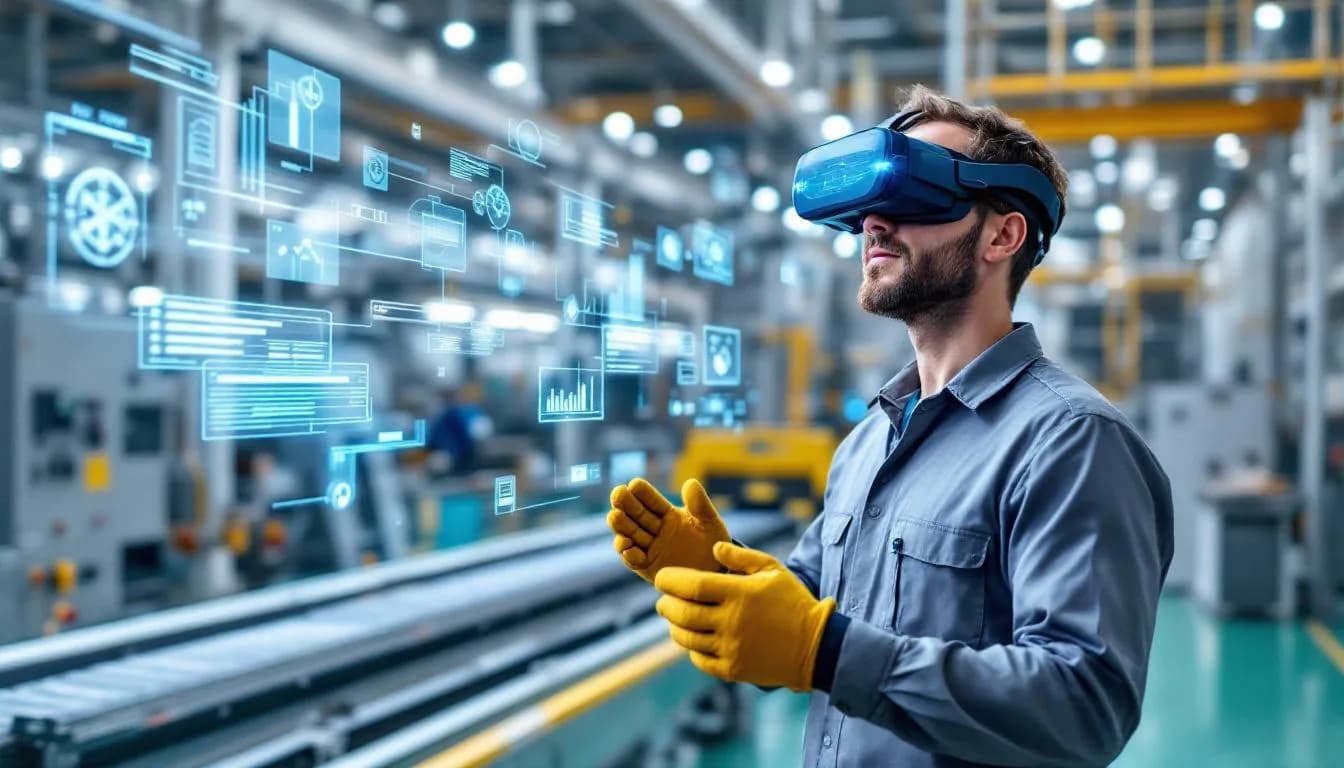
The industrial use of immersive technologies is driving the fourth industrial revolution. AR assistance systems support workers in maintenance and quality control by displaying real-time data and instructions directly in their field of view. Collaborations with equipment manufacturers enable the integration of immersive solutions directly with original equipment, enhancing safety and productivity.
Virtual prototyping with VR CAD systems dramatically accelerates product development. Engineers can walk through designs at full scale, evaluate proportions and make changes in real time before physical prototypes are built.

Remote support through AR expert systems is revolutionising service. Technicians on site can carry out complex repairs while experts guide them remotely via AR streaming. Immersive technologies also help manage reactive maintenance, reducing downtime and unscheduled repair costs.
Workforce training with immersive media is essential for operational efficiency. Developing skilled equipment operators through advanced simulation and training ensures higher productivity and safety standards.
Digital twins and virtual factory planning use immersive technologies to optimise production processes. Entire production lines are virtually simulated and optimised before being implemented in reality. These solutions directly contribute to increasing a site’s profitability by improving efficiency and reducing operational costs.
Examples of immersive technology applications include automotive assembly, mining operations, and pharmaceutical manufacturing, where simulation and AR/VR tools enhance safety, productivity, and sustainability.
As a worldwide equipment simulator supplier, VRTonung delivers these solutions globally, supporting clients across multiple industries with consistent, high-quality simulation technology.
Entertainment and gaming
The entertainment sector remains a main driver for the development of immersive technologies. The gaming industry, in particular, has been a major force in driving the adoption and advancement of immersive and virtual reality technologies across various sectors.
VR gaming has set new standards for immersive player experiences with titles such as Half-Life: Alyx, Beat Saber and Horizon Call of the Mountain. When comparing these VR games, it is important to consider experiences of the same type to ensure consistency in evaluating gameplay and hardware requirements.
Location-based entertainment and VR arcades are creating new business models. These venues offer high-end VR experiences that are not yet available or affordable for consumers at home.
Immersive films and 360-degree content open up new dimensions of storytelling. Viewers turn from passive consumers into active participants in narrative experiences.
Social VR platforms such as VRChat, Horizon Worlds and AltspaceVR are creating new forms of social interaction. Users meet in virtual spaces that transcend physical boundaries and enable new communities.
Retail and marketing
Immersive technology is rapidly transforming the retail and marketing sectors by creating engaging, interactive experiences that bridge the gap between the digital and physical worlds. Virtual reality (VR) and augmented reality (AR) are at the forefront of this shift, enabling brands to build immersive environments where customers can interact with products in entirely new ways. For example, augmented reality AR applications like IKEA Place let shoppers preview furniture in their own homes, helping them make confident purchasing decisions and reducing the likelihood of returns. Similarly, virtual reality VR is used to create virtual showrooms and product demonstrations, allowing customers to explore offerings in 3D from anywhere in the world.
In marketing, immersive storytelling is becoming a powerful tool for capturing attention and building brand loyalty. Brands are leveraging immersive technology to craft memorable campaigns that invite customers to step inside a story, interact with virtual objects, or experience products in a simulated environment. These innovations not only enhance the customer journey but also deliver valuable insights into consumer preferences and behaviors, ultimately driving sales and improving customer satisfaction. As immersive environments become more accessible, retailers and marketers are poised to benefit from increased engagement and a more personalized shopping experience.
Technical fundamentals and hardware
The technical foundations of immersive technologies are developing rapidly.
Display technologies form the heart of every immersive experience.
OLED, LCD and emerging MicroLED displays already achieve resolutions of 4K per eye in high-end devices.
Tracking systems enable precise position determination in space.
Inside-out tracking uses cameras on the headset for autonomous environment detection, while outside-in systems use external sensors.
SLAM algorithms (Simultaneous Localization and Mapping) map environments in real time and enable natural movement.
Haptic feedback and force-feedback systems create a sense of touch in virtual worlds.
The spectrum of available technologies ranges from simple controllers with vibration to advanced full-body suits.
Computing power and latency requirements are critical for convincing immersive experiences.
VR systems need at least 90 frames per second to avoid motion sickness.
Modern systems reach 120 Hz or more for even smoother display.
Network infrastructure is becoming increasingly important with cloud-based VR.
5G support enables low latency and high bandwidths that are required for streaming high-quality immersive content.
Eye tracking technology
Eye tracking technology is an essential component of modern immersive technology, particularly within virtual reality VR and augmented reality AR platforms. By using advanced sensors to monitor where a user is looking, eye tracking enables more intuitive and responsive interactions in both virtual and augmented environments. For instance, in a VR headset, eye tracking can be used to control the camera view, select menu items, or trigger specific actions simply by looking at them, making the experience more natural and immersive.
Beyond enhancing user interaction, eye tracking technology has significant applications in healthcare, such as supporting the diagnosis and treatment of conditions like autism and ADHD by analyzing gaze patterns and attention. In AR applications, eye tracking can personalize content delivery and improve accessibility for users with different needs. However, as with any emerging technology, there are important considerations regarding privacy concerns. The collection of detailed biometric data, such as eye movement and gaze direction, raises questions about data security and user consent. Additionally, prolonged use of eye tracking in immersive environments may contribute to eye strain, highlighting the need for responsible design and usage guidelines as the technology continues to evolve.
AR applications
Augmented reality (AR) is unlocking a wide array of innovative applications across multiple industries, enhancing how we learn, work, and play. In education, augmented reality AR is used to create interactive learning experiences, such as virtual science labs, historical reenactments, and immersive field trips that bring abstract concepts to life. These engaging tools help students visualize complex ideas and retain information more effectively.
In healthcare, AR is revolutionizing medical training by allowing students and professionals to practice procedures in a risk-free, simulated environment. Medical training modules powered by AR can overlay digital information onto real-world anatomy, improving understanding and precision. Patients also benefit from AR applications that help explain diagnoses and treatment plans in a more accessible way.
Entertainment is another area where AR shines, offering immersive gaming experiences and enhancing traditional media. Popular games like Pokémon Go and Harry Potter: Wizards Unite use AR to blend virtual creatures and magical elements with the physical world, encouraging exploration and social interaction. As augmented reality AR continues to advance, its applications are set to expand even further, making everyday experiences more interactive and engaging.
Other technologies
The landscape of immersive technology extends beyond virtual reality VR and augmented reality AR, encompassing a range of emerging technologies that are shaping the future of digital interaction. Mixed reality MR combines the best aspects of VR and AR, allowing users to interact with both virtual and real-world objects in real time, creating seamless and dynamic immersive experiences. This hybrid approach is particularly valuable in fields like design, training, and remote collaboration, where the integration of physical and digital elements enhances productivity and creativity.
Spatial computing is another transformative technology, enabling devices to understand and respond to the user’s physical environment. By leveraging sensors, voice commands, and gesture recognition, spatial computing allows for more natural and intuitive human computer interaction within virtual environments and the physical world. This technology is paving the way for hands-free control and more immersive experiences across industries.
Generative AI is also playing a pivotal role in the evolution of immersive media. By using artificial intelligence to create new digital content—such as personalized avatars, virtual environments, and interactive narratives—generative AI is expanding the creative possibilities for developers and users alike. These other technologies are not only enhancing the capabilities of immersive environments but are also driving innovation in gaming, education, healthcare, and beyond, ensuring that immersive technologies deliver ever more compelling and effective solutions.
Market development and future prospects
The market for immersive technologies is experiencing explosive growth.
From an estimated 14 billion US dollars in 2022, it is projected to grow to more than 300 billion by 2030.
These impressive figures reflect the transformative potential of these technologies.
The driving factors behind this development are diverse:
-
Falling hardware costs: Mass production is making immersive technologies more affordable.
-
Improved user experience: Higher resolutions, lower latency and more comfortable hardware.
-
5G expansion: Enables new cloud-based application scenarios.

Meta is investing heavily in the future of immersive technologies.
The company has invested over 13 billion US dollars in Reality Labs alone to advance the metaverse and immersive experiences.
Emerging technologies promise further breakthroughs:
-
Brain-computer interfaces: Direct control of immersive systems through thoughts.
-
Holographic displays: Glasses-free 3D display in mid-air.
-
Retinal projection: Direct image projection onto the retina.
The next few years will be crucial for mass adoption of immersive technologies.
Companies with a proven track record in delivering immersive technology solutions are leading the way, demonstrating consistent and reliable results across industries.
While enterprise applications are already showing clear ROI, organizations are increasingly adopting proven methodology that reduces risk and delivers measurable results.
Immersive technology effectively manages training, safety, and productivity, driving operational improvements and enhancing overall efficiency.
The consumer breakthrough depends on further improvements in comfort, content and price.
Challenges and limitations
Despite impressive progress, immersive technologies face significant challenges.
Technical hurdles still limit their spread and acceptance.
Motion sickness affects a significant proportion of users.
The discrepancy between visual movement and physical stillness confuses the balance system.
Although higher refresh rates and better tracking alleviate the problem, it remains a barrier for around 20–40% of users.
Hardware weight and limited battery life restrict usage scenarios.
Current VR headsets weigh between 400 and 800 grams and typically provide 2–4 hours of operation.
These limitations restrict longer immersive sessions.
Data protection and privacy become more critical as eye-tracking technology advances.
Biometric data such as gaze direction, pupil dilation and movement patterns can reveal sensitive information about users.
Companies must develop and implement transparent data protection policies.
Development costs for high-quality immersive content are still prohibitively high.
A AAA VR game can cost 50–100 million dollars to develop, while the market is still relatively small.
Standardisation and interoperability between different platforms are largely lacking.
Content developed for one platform rarely runs on other systems without adjustments.
Social acceptance and potential health risks with long-term use are still unclear.
Studies on the effects of regular VR use on children and adolescents are still pending.
Frequently asked questions (FAQ)
How do VR, AR and MR differ in practice?
VR completely isolates you from the real world and places you in a computer-generated environment.
You only see digital content and have no connection to the physical environment.
AR adds digital elements to your real environment – you see both the real world and overlaid digital information.
MR goes one step further and enables real interactions between physical and virtual objects – digital objects can be occluded by real objects or react to them.
What minimum hardware do I need for immersive technologies?
For VR you need a headset (from around €300 for entry-level devices like the Meta Quest 2) and either a powerful PC with at least a GTX 1060/RX 580 graphics card or a standalone headset.
For AR, a modern smartphone with ARCore (Android) or ARKit (iOS) support is often sufficient.
Standalone headsets such as the Meta Quest 3 work without additional hardware and offer the easiest entry into immersive technologies.
Can immersive technologies cause health problems?
With longer use, VR headsets can cause motion sickness, eye strain and neck problems.
Motion sickness occurs when visual movement does not match physical movement.
Experts recommend breaks every 20–30 minutes and appropriate IPD (interpupillary distance) settings for optimal comfort.
Children under 13 should only use VR in a limited way, as their eyes are still developing.
How safe is my data when using immersive technologies?
Immersive technologies collect extensive data such as movement patterns, gaze direction, reaction times and biometric information.
This data can reveal information about health, interests and behaviour.
Choose providers with transparent privacy policies, regularly check your privacy settings and be aware of which data is collected.
In the EU, the GDPR protects users, but international platforms have different standards.
Which industries benefit most from immersive technologies?
Leading sectors include healthcare (surgical training, therapy), education (immersive learning, hazard training), industry (maintenance support, prototyping), gaming/entertainment and real estate (virtual tours).
The return on investment is particularly high in dangerous or costly real-world training scenarios – a flight simulator costs millions less than real flight hours, while surgical VR simulations can save lives through better training.
Related Articles