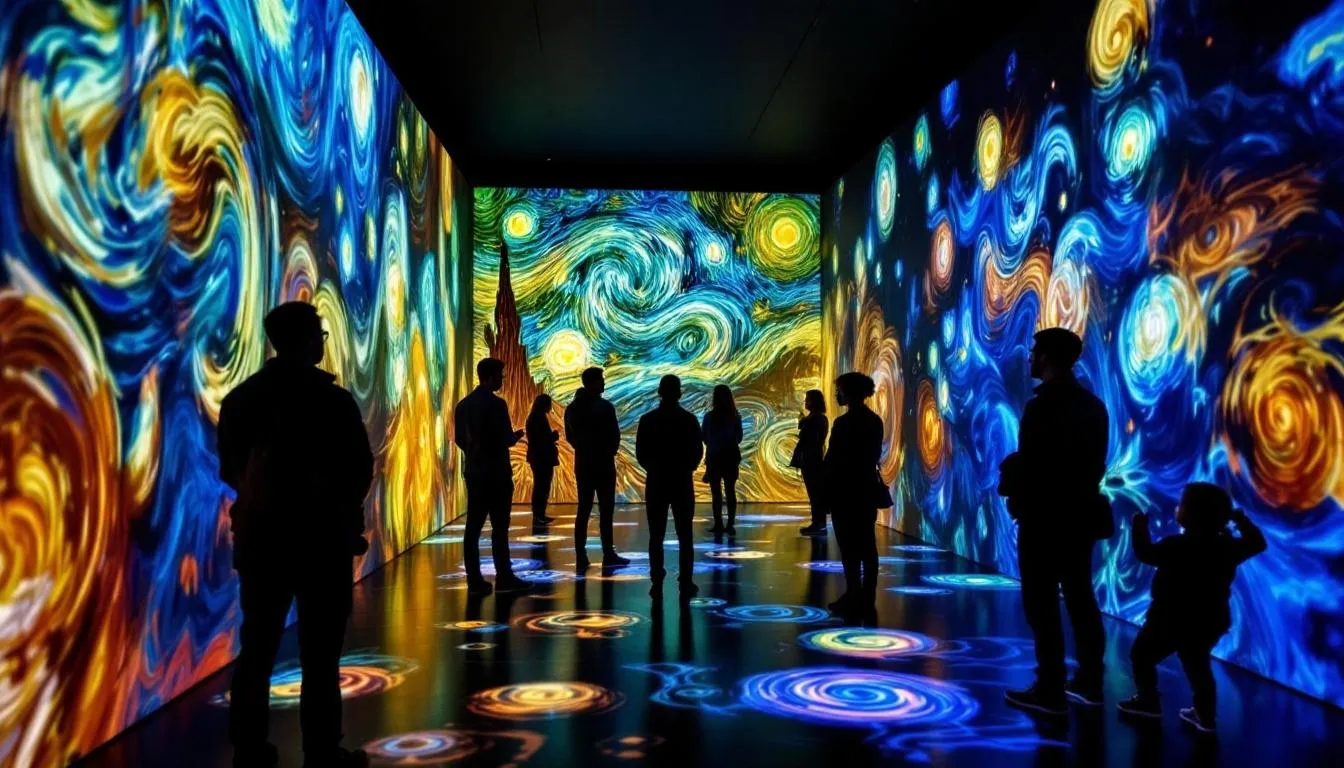
Immersive Experiences – Dive into Extraordinary Worlds of Art and Technology
Content
Experience Van Gogh, Frida Kahlo and Leonardo da Vinci like never before through state-of-the-art 3D mapping projection systems, cutting-edge technology, and virtual reality.
These exhibitions are among the best immersive experiences available today.
Experience art, history and culture like never before through cutting-edge 3D projection and virtual reality
No more passive viewing behind glass cases! Traditional museum visits often leave visitors emotionally untouched – static paintings on white walls that rarely create a real connection, leaving you as a passive spectator rather than an active participant.
Immersive experiences are revolutionizing the way we encounter art and culture. By creating these experiences through the combination of technology and art, visitors are transported into immersive art experiences that go far beyond traditional viewing. Instead of silent observers, you become an active part of the artworks themselves, exploring immersive museums that set a new standard for engagement.
Van Gogh’s masterpieces completely surround you, Frida Kahlo’s passion becomes tangible, and historical places like Machu Picchu feel within arm’s reach—these immersive experiences create memorable moments that last. They transport visitors into a different reality, offering sensory engagement that stimulates all your senses.
All of this is powered by modern technology, a powerful tool for engagement, with immersive technology enabling these transformative encounters. The environments become immersive worlds to explore, letting you step into a digital world and experience installations that transform the surrounding environment. You enter a virtual environment, and with VR, the VR experience leaves a lasting impact. Participation is easy—just that.
Why choose immersive experiences?
Discover the five revolutionary advantages that make The Immersive Experience an unforgettable multimedia spectacle:
-
360-degree art worlds – Van Gogh’s masterpieces completely surround you thanks to 3D-mapping projection on walls up to 34 meters long in special presentation spaces, with massive screens enhancing the visual impact.
-
Multisensory atmosphere – Original quotes, composed soundtracks and explosions of color appeal to all senses at once and create an emotional symbiosis between viewer and artwork. Immersive data visualization techniques are used to present complex information in an engaging way.
-
Interactive participation – Become part of the artworks yourself instead of remaining a passive observer – move through Van Gogh’s Bedroom in Arles or feel the vibrant colors of his sunflowers.
-
Unique accessibility – Experience Frida Kahlo’s Casa Azul or Machu Picchu without long-distance travel – cutting-edge VR and AR technology brings distant worlds directly to Berlin, enables new ways to experience art, and can provide directions to visitors. These immersive experiences are also available in different locations, making art accessible across cities and countries.
-
For all ages – No prior art history knowledge needed, intuitive experiences for children, families and culture enthusiasts thanks to accessible, easy-to-understand staging
Types of immersive experiences
Immersive experiences come in many forms, each offering a unique way to engage with art, culture, and technology. Virtual reality (VR) experiences transport users into a fully digital environment, where you can explore vibrant worlds, walk through historical sites, or even step inside a famous painting. With a VR headset, you’re no longer just a visitor—you become part of the scene, free to interact and discover at your own pace.
Augmented reality (AR) experiences blend digital content with the physical world, overlaying interactive elements onto your real surroundings. Imagine holding up your phone or wearing AR glasses to see digital brushstrokes animate across a real canvas, or receiving directions and information as you move through a museum or city.
Mixed reality (MR) takes things a step further by allowing users to interact with both physical and virtual objects at the same time. In these immersive environments, you might manipulate a digital sculpture that appears to rest on a real table, or collaborate with others in a space where the boundaries between digital and physical realms blur.
Interactive art experiences invite you to engage directly with art exhibits using touch screens, sensors, and haptic feedback. These installations encourage you to create your own story, manipulate digital environments, or even influence the outcome of the artwork itself. Immersive experiences can also simulate real world scenarios, from exploring ancient ruins to navigating theme parks, making every visit memorable and engaging for users of all ages.
How immersive experiences work
See in four simple steps how traditional art viewing turns into an unforgettable 360-degree experience:
Step 1: Enter the installation spaces Easy access to specially equipped locations like the New Media Art Center Berlin or the Reinbeckhallen – no complicated tech, just arrive and be amazed.
Step 2: Immerse yourself in the projection 3D-mapping systems project animations and videos onto three-dimensional walls and objects around you – Van Gogh’s brushstrokes become living movements that envelop you, transforming the surrounding environment into a dynamic canvas.
Step 3: Interaction and movement Move freely through the spaces as the artworks unfold around you – every perspective reveals new details and stories of the masters. Explore immersive worlds created by the installation, where art and technology blend seamlessly.
Step 4: Multisensory immersion A combination of visual effects, immersive technology, sound design, and partial VR elements creates a complete illusion – you don’t just see images, you experience the life and passion of the artists themselves. Enter a virtual environment or digital world through the VR experience, which further enhances your sense of immersion.
users to feel virtual textures and forces as they explore immersive art, entertainment, or educational content. By combining these immersive technologies, creators can simulate real world scenarios, transport users to imaginative new worlds, and offer innovative ways to engage with art, history, and culture.
What makes immersive experiences unique?
Three revolutionary technologies turn every visit into a journey through art and history:
-
State-of-the-art 3D mapping technology – Using cutting-edge technology and AR technology, this immersive technology transforms any room into a living canvas for art and history; walls, floors and objects become interactive screens for Van Gogh’s colors and forms. This powerful tool enables the creation of engaging, interactive experiences.
-
Faithful reconstructions – LiDAR scans and drone footage enable highly detailed recreations of historical locations; experience Titanic expeditions or Leonardo da Vinci’s workshops with photorealistic accuracy
-
Emotional connection – Original artist quotes and specially composed soundtracks create deep emotional resonance; feel Van Gogh’s melancholy or Frida Kahlo’s zest for life with all your senses
What visitors say
See for yourself why immersive exhibitions are redefining Berlin’s cultural highlights:
📢 “Experiencing Van Gogh’s Starry Night all around me was magical – I had tears in my eyes. The Magic Museum concept exceeds all expectations and created truly memorable moments for me.”— Anna M., Berlin
⭐️⭐️⭐️⭐️⭐️ “Going to a museum with kids has never been this relaxed. The 360-degree projections captivated everyone – from 6 to 66. A perfect family outing and a wonderful immersive art experience. It really is just that easy to enjoy art together!”— The Schmidt family, Hamburg
📢 “The 3D-mapping projection system transformed the space into Van Gogh’s world. You can almost touch his works – innovation and art in perfect symbiosis. This is truly one of the best immersive experiences among immersive museums in Berlin.”— Dr. Michael K., art lover
Prices & locations
Discover immersive art experiences in German cities at affordable prices:
🎨 Van Gogh Immersive (Berlin) – Adults €24, children €18 at the New Media Art Center Berlin 🌺 Frida Kahlo Viva – From €22 for the full multimedia spectacle in various German cities 🏔️ Machu Picchu VR Expedition – €28 for the complete virtual reality journey at the Kantgaragenpalast Berlin
These immersive museums are among the best immersive experiences in Germany, and similar immersive art experiences can be found in different locations worldwide, such as San Diego, Las Vegas, Meow Wolf, and Superblue Miami, where some venues even feature signature cocktails or welcome small dogs.
(Group rates and family tickets available – up to 20% discount with advance booking)
Frequently asked questions
Clear up any doubts before your first immersive experience:
🔹 How long do immersive experiences last? On average 60–90 minutes per exhibition – plenty of time to dive fully into Van Gogh’s world without feeling exhausted.
🔹 Do I need any technical knowledge? Not at all! The experiences are designed for all ages and tech levels – just walk in and enjoy.
🔹 Can I take photos? Yes! Special photo areas allow unique social media moments among the living artworks.
🔹 Is the venue accessible? All Berlin locations are wheelchair accessible and offer special support for visitors with specific needs. In addition, AR technology can provide directions within the venue to help guide visitors through the exhibition.
🔹 Where are these experiences available? These immersive experiences are available in different locations, making it easy to find an exhibition near you.
Discover immersive experiences now
Don’t miss the cultural highlights of this city – book now to experience one of the best immersive experiences or an unforgettable immersive art experience! Create memorable moments with each visit, available in different locations.
🔹 [Book tickets now] 🔹
💡 Limited-time exhibitions – secure your place in Van Gogh’s world in advance.
🔒 Secure online booking | Trusted by over 100,000 visitors | Group events & corporate bookings welcome
Contact for special events: info@immersive-berlin.de
Related Articles