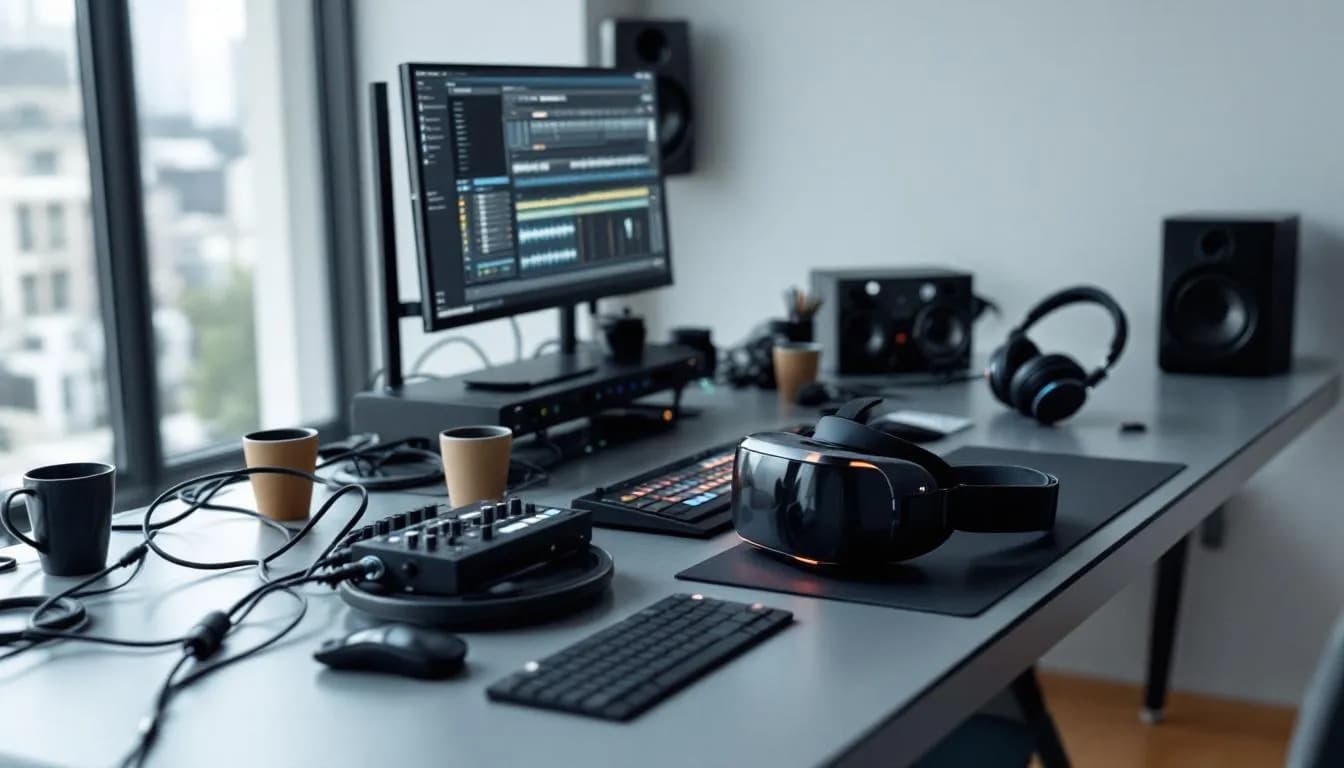
Audio Engineering: The Complete Guide for Beginners and Professionals
Content
Most important insights
-
Audio engineering includes the recording, editing and playback of audio signals using special devices such as microphones, mixing consoles and DAWs.
-
Audio engineers work in studios, at live events and in post-production, with a starting salary of 25,000–35,000 euros per year.
-
Training takes place through dual vocational training as a media designer for image and sound or through a degree in audio production/sound engineering.
-
Modern technologies such as AI, VR/AR and wireless transmission are currently revolutionising the audio engineering industry.
-
Practical experience through internships and project work is crucial for success in an audio engineering career.
Imagine you are sitting in a cinema and being surrounded by perfectly mixed surround sound, or you are listening to your favourite music through high-quality headphones – behind all these experiences lies the fascinating world of audio engineering. This technical discipline combines science with creativity and turns simple sound waves into emotional experiences that move and excite us.
In Germany, thousands of professionals work to ensure that sound is recorded, edited and reproduced in the best possible quality. From music production to film and television to live events – everywhere that audio plays a role, audio engineering experts are in demand. This comprehensive guide gives you a detailed insight into everything you need to know about this exciting field.
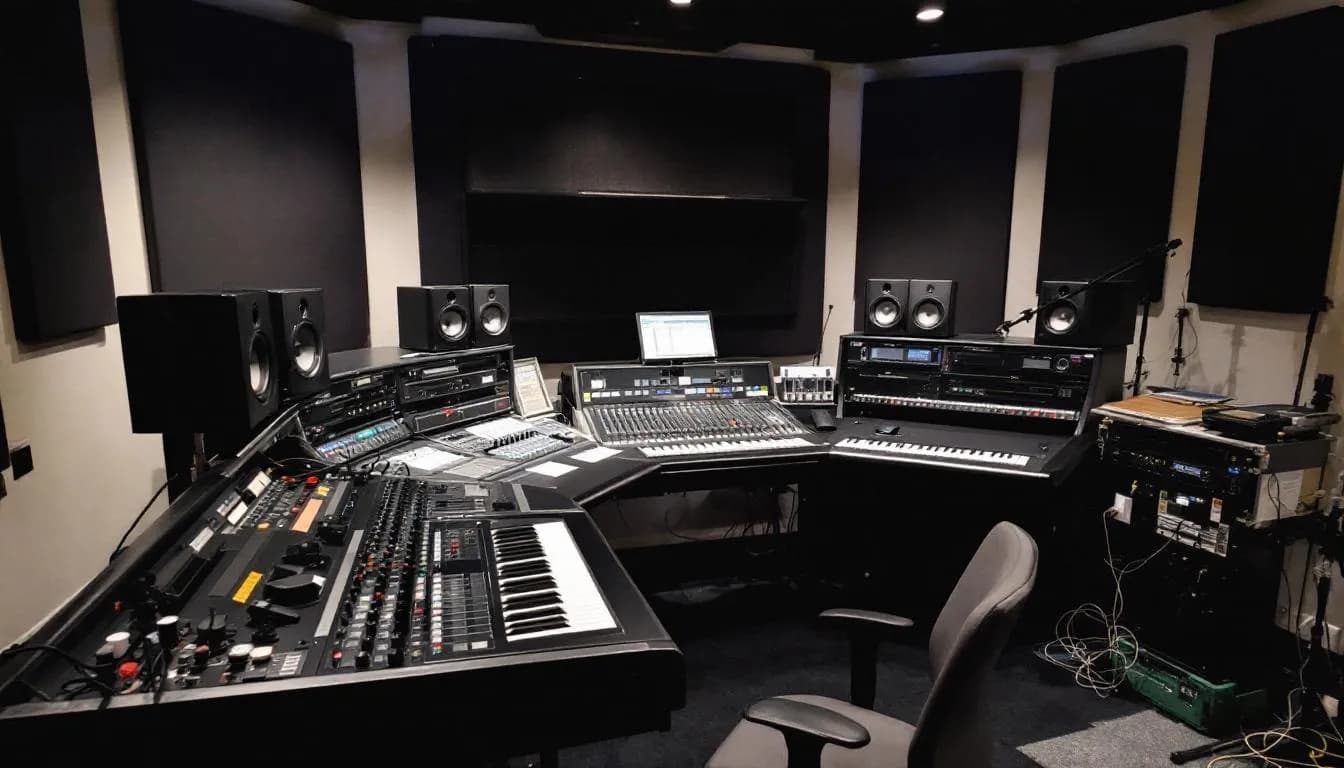
What is audio engineering?
Audio engineering refers to the technical and at the same time creative work with sound, especially the professional recording, editing, conversion, storage and playback of acoustic events using electronic tools. Its area of responsibility ranges from music recordings to film and television productions to live sound reinforcement and multimedia applications.
At the centre of audio engineering are basic physical concepts: by definition, sound is a mechanical wave that spreads in the frequency range from about 20 Hz to 20,000 Hz for the human ear in the form of fluctuations in air pressure. For technical processing, sound must first be converted into electrical signals by a transducer such as a microphone before it can be processed, stored or transmitted.
Core areas of audio engineering
Modern audio engineering is divided into different categories, each requiring specific demands and techniques:
Recording: This is about capturing sound waves with microphones and converting them into electrical signals. This area includes miking instruments, vocals and speech in professional recording studios or on location.
Mixing: In this phase, different audio tracks are combined into a final mix. Equalisers, compressors and effects units are used to achieve the desired sound.
Mastering: The final step in audio production, in which the finished mix is optimised for different playback media. Here the final loudness is set and the sound is adapted for CD, streaming or vinyl.
Live sound reinforcement: At concerts, events and shows, audio engineers ensure optimum playback via PA systems. This requires both technical understanding and quick reactions when problems arise.
Historical development
The history of audio engineering begins with Thomas Edison’s phonograph from 1877, which for the first time made the mechanical recording and playback of sound possible. These early devices worked purely mechanically with wax cylinders and later with records.
From the 20th century onwards, electronics took on the central role. The microphone became the key component: the first dynamic microphones were used from the 1920s onwards, followed later by condenser microphones for more demanding applications. In the 1940s and 1950s, magnetic tape revolutionised professional audio recording.
Since the 1980s, digitalisation has become established: digital audio workstations (DAWs), digital signal processors and computer plug-ins are now standard in every professional recording studio. This development has democratised audio engineering and also made home studios possible.
Fields of application
Today, audio engineering is used in numerous areas:
-
Music production: From studio recording of individual tracks to mastering
-
Film and television: Location sound, ADR (dubbing) and sound design
-
Live sound: Sound reinforcement at concerts, theatre and conferences
-
Broadcasting: Radio and television productions
-
Gaming: Interactive sound worlds and 3D sound
-
Corporate audio: Company presentations and advertising
Basic equipment in audio engineering
The technical equipment forms the foundation of every professional audio production. From recording to final playback, every part of the signal chain is crucial for sound quality.
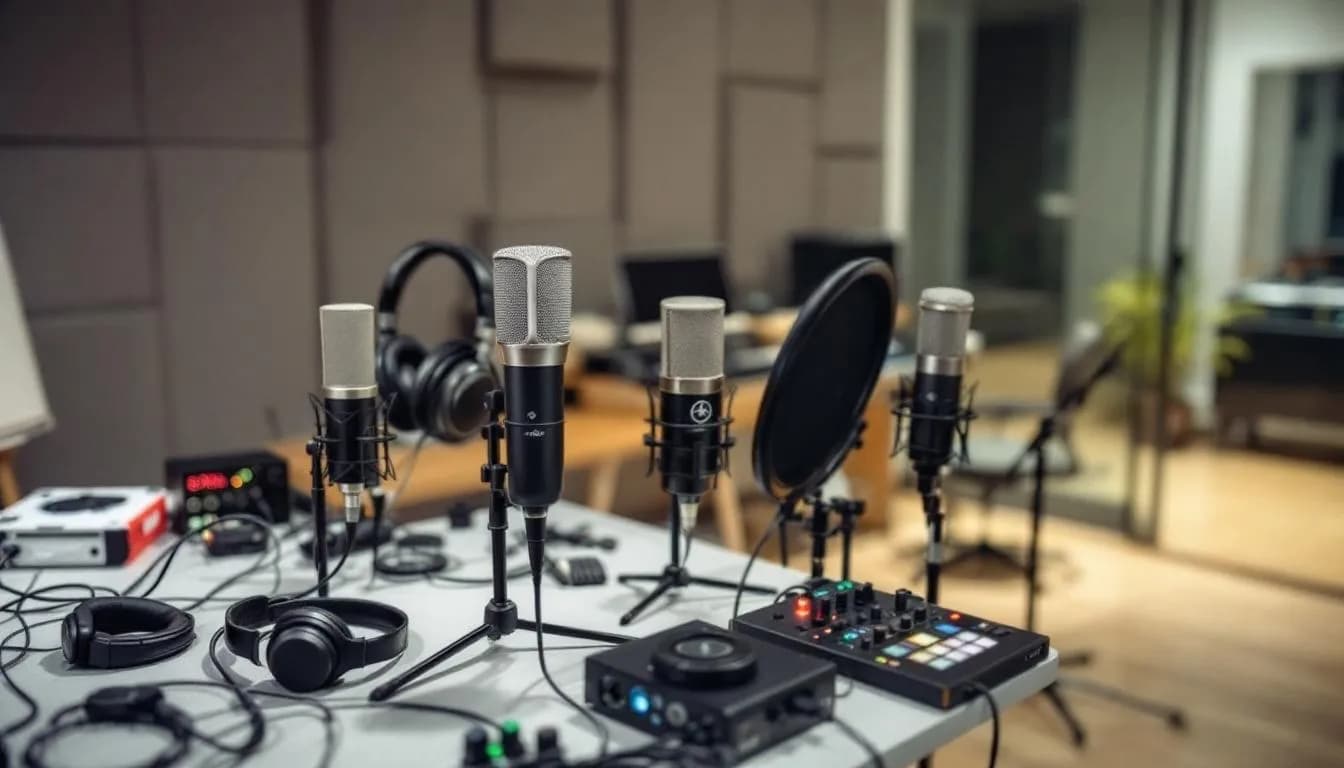
Microphones and recording devices
Microphones are the gateways to the audio world and convert sound waves into electrical signals. Choosing the right microphone largely determines the quality of the recording.
Condenser microphones are considered the most sensitive and precise transducers. They are particularly suitable for vocal recordings in the studio because they capture fine details and nuances. Well-known models are the Neumann U87 or the AKG C414, which are used in professional studios worldwide.
Dynamic microphones are more robust and less sensitive to high sound pressure levels. The legendary Shure SM57 is the standard for miking guitar amps and drums, while the SM58 is considered the best-selling vocal microphone in the world.
Ribbon microphones offer a warm, natural sound and are often used for brass instruments and guitar amps. However, they are more delicate and more expensive than other microphone types.
Audio interfaces form the bridge between the analogue and digital world. They convert the analogue microphone signals into digital data that the computer can process. Leading manufacturers such as Focusrite, Presonus and RME offer interfaces for every area of use – from simple 2-channel interfaces for home studios to 64-channel systems for professional productions.
Mixing consoles and signal processing
Mixing consoles are the heart of every audio production. They allow several audio signals to be controlled and processed at the same time and offer extensive routing options.
Analogue mixing consoles are still valued for their warm, musical sound. Legendary consoles such as the Neve 1073 or the SSL 4000 series have shaped countless hit productions. The advantage lies in the direct, tactile operation and the characteristic sound of analogue electronics.
Digital mixing consoles on the other hand offer almost unlimited routing options, automated functions and the integration of effects. Systems such as the Avid S6 or the SSL System T dominate modern production studios and live venues.
Signal processors expand creative possibilities considerably:
-
Compressors control dynamics and ensure more even volume
-
Equalisers allow targeted frequency processing for a clearer sound
-
Limiters protect against clipping and maximise loudness
-
Gates suppress unwanted background noise
Digital Audio Workstations (DAWs)
Modern music production is unthinkable without DAWs. These software environments offer all the tools for recording, editing and mixing in one system.
Pro Tools is considered the industry standard in professional studios and is particularly valued for recording and post-production. The software offers precise editing functions and excellent stability for large projects.
Logic Pro from Apple is especially popular with Mac users and offers an extensive collection of virtual instruments and effects. The intuitive user interface also makes it accessible for beginners.
Cubase from Steinberg is an all-rounder that is suitable for both music production and audio post-production. The software offers advanced MIDI functions and is particularly popular with electronic music producers.
Ableton Live has established itself as a standard for electronic music and live performance. The unique session view enables spontaneous music production and live looping.
The hardware requirements for professional DAW systems should not be underestimated. A powerful computer with at least 16 GB of RAM, a fast SSD and a multi-core processor is the basis for smooth work on complex productions.
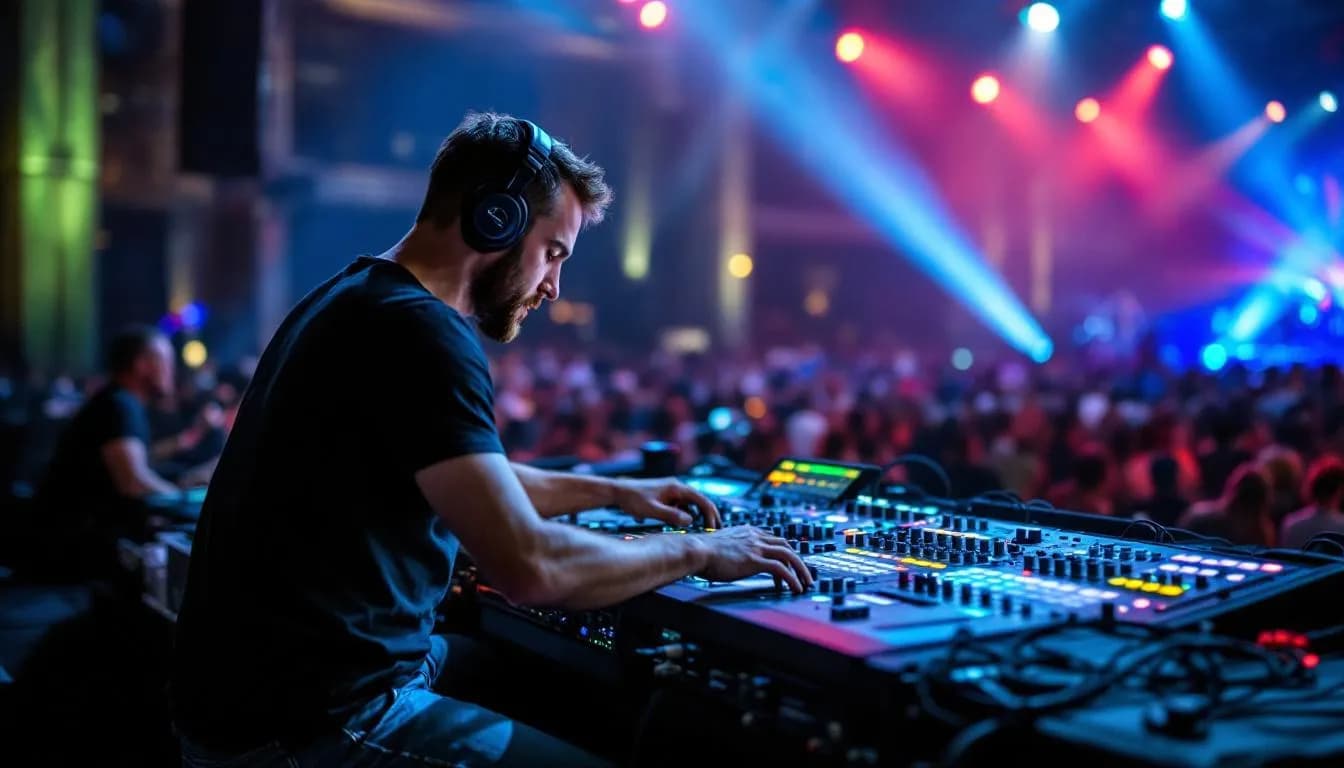
Job profile: audio engineer
The profession of audio engineer is varied and offers numerous opportunities for specialisation. From music production to film and television to live events – qualified professionals are needed everywhere.
Tasks and responsibilities
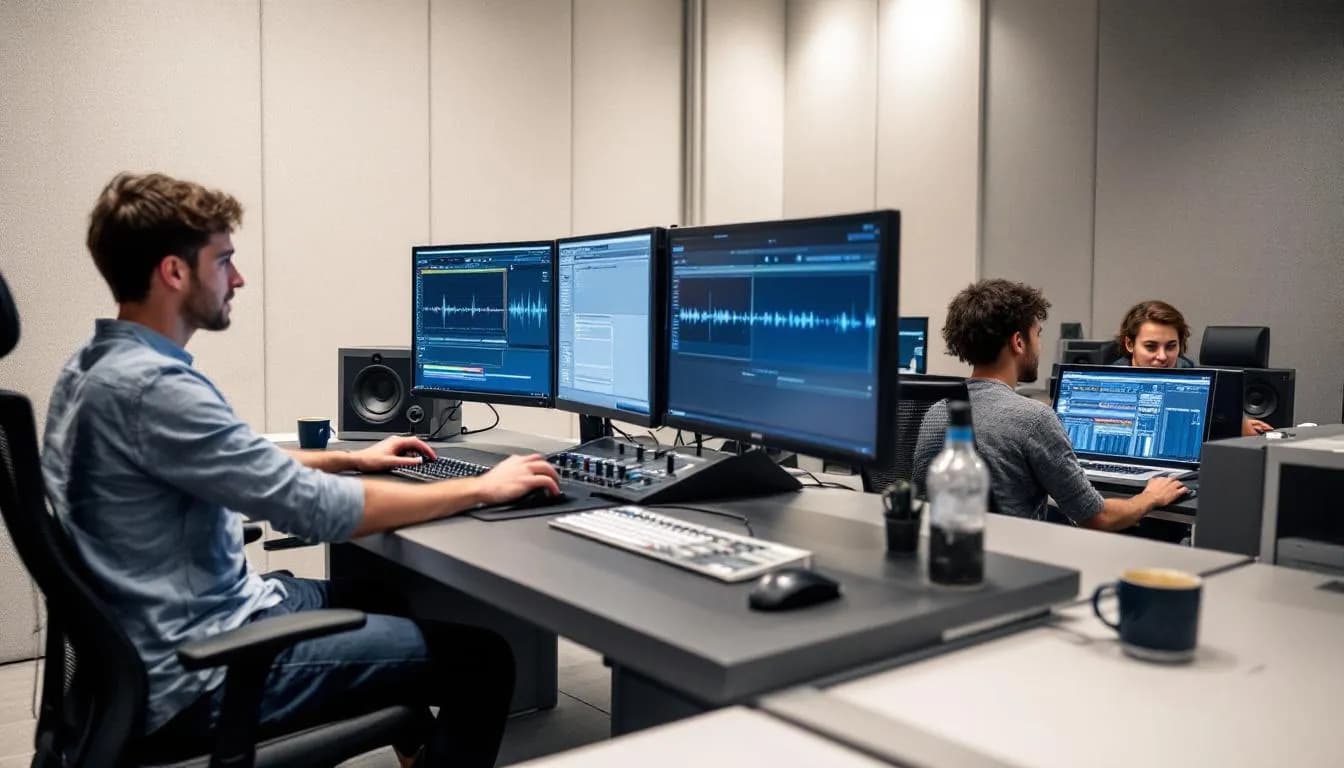
Studio work is a key part of the work in audio engineering. Here, audio engineers plan recordings, choose suitable microphones and position them optimally. During recording, they monitor signal quality and ensure optimal recording conditions. In subsequent post-production, the tracks are mixed and mastered.
A typical working day in the studio often begins with setting up equipment and preparing the session. Depending on the project, this can range from a simple voice recording to a complex orchestral recording. Technical understanding is just as important as a good feel for music and sound.
Live events place special demands on audio engineers. Here, PA systems must be planned and set up, soundchecks carried out and the event mixed in real time. The challenge lies in the unpredictability of live situations – an experienced live audio engineer must be able to react quickly to problems and find creative solutions.
At large festivals, several audio engineers often work together: the system technician is responsible for the PA system, the monitor engineer for the on-stage monitoring and the FOH engineer (front of house) for the sound for the audience.
Post-production for film and television requires specialised knowledge in areas such as synchronisation, sound design and surround mixing. Here, audio engineers work closely with directors and editors to achieve the best acoustic realisation of the creative vision.
Workplaces and industries
Recording studios offer classic workplaces for audio engineers. From small project studios to large recording complexes such as Abbey Road Studios in London or Triton Studios in Munich, there are different sizes. Many studios specialise in specific areas such as music production, audiobooks or advertising.
Event technology is a growing field that needs event technicians for concerts, festivals, corporate events and theatre productions. Large companies such as Neumann&Müller or Stageco offer a wide range of career opportunities, from regional events to world tours with international artists.
Media companies such as TV broadcasters, film production companies and streaming platforms employ audio engineers for the production and post-production of their content. Specialised knowledge in areas such as surround sound or audio restoration is often required here.
Self-employment is an attractive path for experienced audio engineers. As freelancers, they can offer their expertise to various clients and have greater flexibility in their choice of projects. However, self-employment also requires entrepreneurial skills and a willingness to continuously market oneself.
Specialisations and career paths
Audio engineering offers various opportunities for specialisation:
-
Recording engineer: Specialist for studio recordings
-
Mix engineer: Expert for mixing audio material
-
Mastering engineer: Finalisation of audio productions
-
Live sound engineer: Specialist for live sound reinforcement
-
Audio post engineer: Expert for film and TV audio
-
Sound designer: Creative design of sound worlds
-
Broadcast engineer: Specialist for radio and TV technology
Each specialisation requires specific knowledge and experience. A mastering engineer, for example, must have a particularly trained ear and use perfect monitoring speakers, while a live sound engineer must be resistant to stress and able to make quick decisions.
Training and career paths
The path into audio engineering leads through various training options. Depending on personal prerequisites and career goals, there are different options, each with its own advantages and disadvantages.
Dual vocational training
Media designer image and sound is the classic dual training course for entering media technology. The three-year training combines practical work in a company with theoretical lessons at a vocational school.
During the training, apprentices receive a monthly salary, which depending on the federal state and company is between 1,100 and 1,300 euros. This financial security is a major advantage compared to a university degree.
The training content includes not only audio engineering but also camera technology, lighting, post-production and media law. This provides a broad basic understanding of media production, even if the focus is on one area.
Event technician is another option that focuses on live events and sound reinforcement technology. This training is particularly interesting for those who enjoy working at concerts and events.
The final examination before the Chamber of Industry and Commerce (IHK) consists of practical and theoretical parts. Graduates have good chances of being taken on by their training company or can apply to other companies.
University studies
Bachelor’s programmes in audio production, sound engineering or music production offer an academic approach to the subject. The standard period of study is 3–4 years, depending on the university and course structure.
The course content is scientifically sound and includes areas such as:
-
Acoustics and psychoacoustics
-
Electrical engineering and signal processing
-
Music theory and ear training
-
Studio technology and equipment
-
Project management and business administration
Renowned universities for audio engineering and audio production include:
-
SAE Institute with locations in Munich, Hamburg, Berlin
-
Deutsche Pop with a focus on music production
-
University of Applied Sciences Düsseldorf with the course “Sound and Image”
-
Film Academy Baden-Württemberg for audio engineering
Master’s programmes allow further specialisation in areas such as:
-
Advanced audio engineering
-
Immersive audio and 3D sound
-
Audio for interactive media
-
Acoustic engineering
A university degree offers theoretical depth and access to state-of-the-art technology, but also requires a longer training period without income.
Further training and certificates
Manufacturer certificates are especially valuable for a career:
-
Avid Pro Tools Certification: Various levels from operator to expert
-
Steinberg Cubase Certification: Proof of competence for the popular DAW
-
Dolby Atmos Certification: Specialisation in immersive audio formats
Workshops and seminars offer practical further training:
-
Abbey Road Institute: Intensive courses in the legendary studios
-
Point Blank Music School: Online and in-person courses
-
SAE Institute: Various workshops and masterclasses
Online courses have gained great importance through digitalisation:
-
Coursera: Courses from universities such as Berklee College of Music
-
MasterClass: Courses from Grammy winners like Timbaland or deadmau5
-
LinkedIn Learning: Technical tutorials for DAWs and equipment
Trade fairs and conferences are important for networking and further education:
-
Musikmesse Frankfurt: Largest European music trade fair
-
AES Convention: International Audio Engineering Society conference
-
Prolight + Sound: Trade fair for event technology
Taking part in such events makes it possible to make contacts, get to know new technologies and learn about trends. Many employers support their employees in taking part in further training measures.
Audio engineering in practice
The practical application of audio engineering differs greatly between different fields. Each area has its own requirements, workflows and technical standards.
Recording processes in the studio
Pre-production is the planning phase before the actual recording. This is where songs are arranged, instruments selected and the recording plan drawn up. An experienced audio engineer discusses the creative goals with the artist or producer and then plans the technical implementation.
The choice of microphones and their positioning is crucial for the success of the recording. Large-diaphragm condenser microphones are usually used for vocals in an acoustically treated room. For drums, various miking techniques are used, from classic close miking to room microphones for ambience.
Recording requires maximum concentration and technical precision. The audio engineer continuously monitors the recording levels, watches out for distortion and documents all takes. Modern DAWs allow non-destructive editing, but the quality of the original recording cannot be replaced by anything.
Various miking techniques have become established:
-
AB technique: Two microphones spaced apart for a natural stereo width
-
XY technique: Two microphones at a 90-degree angle for precise localisation
-
ORTF: French technique with 17 cm spacing and 110-degree angle
-
MS technique: Mid-side recording for variable stereo width in post-production
Editing includes arranging the recorded takes. The best passages are selected (comping), timing corrections are made and pitch corrections applied if necessary. Modern software such as Melodyne or Auto-Tune allows detailed corrections but should always be used in a musically meaningful way.
Mixing is the creative high point of audio production. Here all individual tracks are brought together into a coherent whole. Various techniques are used:
-
Balance: Relative volume of the individual instruments
-
Panorama: Positioning in the stereo field
-
Equalising: Frequency processing for clarity and character
-
Dynamic processing: Compression and limiting for control
-
Space: Reverb and delay for depth and atmosphere
Live sound and sound reinforcement
PA system design is the basis for successful live sound. Modern line array systems from manufacturers such as d&b audiotechnik, L-Acoustics or Meyer Sound allow precise sound coverage even in difficult acoustic environments.
Planning begins with analysing the venue. Factors such as room size, acoustics, audience distribution and structural conditions determine the system configuration. Software such as d&b ArrayCalc or L-Acoustics Soundvision allows simulation and optimisation of the sound reinforcement already in the planning phase.
Subwoofer configuration requires special attention because bass behaves differently in the room than higher frequencies. Different setups such as cardioid arrays or end-fire setups help to direct bass energy in a targeted way and avoid feedback.
Miking at live events has special requirements. Wireless systems from Shure, Sennheiser or Audio-Technica allow freedom of movement on stage but must be carefully coordinated to avoid interference. Frequency planning is particularly challenging in densely populated areas.
Monitor mixing is a separate part of live audio engineering. Each musician needs an individual mix to be able to play optimally. In-ear monitoring systems have replaced traditional wedge speakers in many areas, as they offer better control and protection against hearing damage.
Troubleshooting is part of everyday life in live audio. Eliminating feedback through precise EQ settings, quickly identifying signal faults and dealing with equipment failures require experience and strong nerves. Redundant systems and backup devices are essential for professional productions.
A typical sequence at live events:
-
Load-in: Setting up the system and cabling
-
System check: Functional check of all components
-
Line check: Testing all input signals
-
Soundcheck: Rehearsal with the artists
-
Show: Live mixing during the event
-
Load-out: Dismantling and transporting the equipment
Modern trends and technologies
The audio engineering industry is developing rapidly. New technologies are fundamentally changing both the way production is done and the possibilities of sound design.
Digital innovation
AI-based tools are revolutionising many areas of audio production. iZotope RX uses machine learning for the automatic removal of noise and can even intelligently correct complex problems such as reverb or feedback. LANDR offers automatic mastering services that achieve professional results using AI algorithms.
Splice and BandLab enable cloud-based collaboration in music production. Musicians can work on the same project from different locations, which became particularly important during the coronavirus pandemic. These platforms also offer huge sample libraries and AI-based recommendations.
Immersive audio formats such as Dolby Atmos and 360-degree audio open up new creative possibilities. Apple Music and Tidal already support Atmos mixes, giving music producers new marketing opportunities. For VR and AR applications, spatial audio is a basic requirement for convincing user experiences.
Streaming optimisation is becoming increasingly important. Different platforms use different loudness standards:
-
Spotify: -14 LUFS
-
Apple Music: -16 LUFS
-
YouTube: -13 LUFS
-
Tidal: -14 LUFS
Mastering engineers must optimise their productions for different platforms so that they sound good everywhere.
Hardware developments
Wireless technology is making great progress. Systems with extremely low latency finally allow professional in-ear monitoring without noticeable delay. The AES67 standard promises cross-manufacturer compatibility for digital wireless systems.
Modelling technology is reaching new levels of quality. The Kemper Profiler and Neural DSP Quad Cortex can reproduce guitar amplifiers so precisely that even experts can no longer hear the difference. This opens up completely new possibilities for recording and live performance.
Portable recording devices from Zoom and Tascam are becoming more powerful. 32-bit float recording makes practically indestructible recordings possible without level adjustment. This technology is revolutionary, especially for documentary filmmakers and journalists.
Network audio via Dante, AVB or AES67 is transforming studio technology. IP-based audio transmission allows flexible routing options and significantly reduces cabling effort. Large studios now plan their entire infrastructure on a network basis.
Current developments and future topics
Blockchain technology could change the music industry. Smart contracts allow automatic licence accounting and fair distribution of royalties. NFTs create new marketing opportunities for audio content.
5G networks open up possibilities for latency-free remote collaboration. In theory, musicians could play together in real time over long distances, which would enable new forms of music production.
Quantum computing could revolutionise complex audio processing tasks in the future. Although still in the early stages of development, quantum algorithms promise exponentially faster processing of complex acoustic models.

Salary and career prospects
Earning opportunities in audio engineering vary greatly depending on specialisation, experience and place of work. A realistic overview helps with career planning and salary negotiations.
Starting salaries and development
Career starters can expect an annual salary between 25,000 and 35,000 euros gross. In larger cities such as Munich, Hamburg or Cologne, salaries are generally 10–20% higher than in rural areas. Graduates of vocational training usually start at the lower end of this range, while university graduates often start higher.
After 3–5 years of professional experience, salaries rise to 35,000–50,000 euros per year. In this phase, most audio engineers have specialised in one area and can show their first successes. Further training and certifications can also have a positive effect on salary.
Experienced professionals with more than 5 years of professional experience earn between 40,000 and 60,000 euros gross per year. Senior positions such as studio managers or lead audio engineers can reach 60,000–80,000 euros. Here, both technical expertise and leadership skills play an important role.
Regional differences
| Region | Average salary | Cost of living |
|---|---|---|
| Munich | €52,000 | Very high |
| Hamburg | €48,000 | High |
| Berlin | €45,000 | Medium |
| Cologne | €46,000 | Medium–high |
| Dresden | €38,000 | Low |
| Rural areas | €35,000 | Low |
Freelance work
Freelancers potentially have higher earning opportunities but also bear greater risks. Daily rates for experienced freelance audio engineers are between 200 and 800 euros, depending on expertise and project scope.
Music producers can earn significantly more on successful productions. Percentage shares of sales or streaming revenue can lead to six-figure annual incomes, but these are not predictable.
Specialised areas such as mastering or immersive audio can justify higher hourly rates. An experienced mastering engineer can charge 100–500 euros per song, depending on complexity and reputation.
Additional sources of income
Many audio engineers diversify their sources of income:
-
Teaching: Private lessons or workshops
-
Equipment rental: Renting out special equipment
-
Consulting: Acoustic consulting for studios or venues
-
Online content: YouTube channels or online courses
Career prospects
The digitalisation of the media landscape is creating new jobs but is also changing traditional job profiles. Streaming services need specialists for audio quality and new formats. Gaming and VR/AR open up completely new areas of application for 3D audio and interactive sound design.
Podcasting has experienced a boom and is creating demand for audio professionals. Many companies now produce their own podcasts and need the appropriate expertise.
Automation will take over simple tasks, but at the same time it increases the demand for creative and strategic skills. Audio engineers who continue to learn and master new technologies have excellent future prospects.
Tips for beginners
Entering audio engineering requires both technical understanding and practical experience. These tips help to avoid common beginner mistakes and to successfully start in the industry.
Important basics
Ear training is more fundamental than any technical equipment. Regularly train the recognition of frequencies, dynamic differences and spatial effects. Apps such as “Quiztones” or “SoundGym” offer structured exercises for ear training. A trained ear recognises problems faster and can develop more creative solutions.
Music theory may initially seem secondary for people interested in technology, but it is essential for understanding musical relationships. Basic knowledge of harmony, rhythm and song structure helps to justify technical decisions musically. Online courses or apps such as “Music Theory Helper” offer a good introduction.
Networking starts already during training. Visit local music events and make contacts with musicians and other audio engineers. Many careers arise through personal recommendations. Social media, especially LinkedIn and specialised forums, expand the professional network.
Building a portfolio should begin early. Document all projects, collect references and create a professional website. Even smaller projects for local bands or podcasts can become valuable references. Quality is more important than quantity – a few excellent examples are better than many average ones.
Practical recommendations for getting started
Start with the basics: A simple setup with a good audio interface (Focusrite Scarlett 2i2), a free DAW (Reaper offers 60 days for free) and basic studio monitors is enough for the first steps. Invest in knowledge and experience rather than expensive gear.
Gain practical experience: Offer yourself as a free assistant in local studios. Observe professional workflows and ask questions. Many studios value motivated helpers and offer learning opportunities in return. Smaller live venues are also happy about support at soundcheck.
Use online resources: YouTube channels like “Recording Revolution” or “Produce Like A Pro” offer free knowledge from professionals. Also use forums such as gearslutz.com (now prosoundnetwork.com) for technical questions and discussions.
Continuous learning: Audio engineering is constantly evolving. Subscribe to trade magazines such as “Sound on Sound” or “Mix Magazine”, follow industry blogs and attend trade fairs and workshops. Lifelong learning is essential in this industry.
Common beginner mistakes
Overloading with effects is a typical beginner mistake. Many beginners use too many plug-ins and effects at once. The principle “less is more” is especially true in audio engineering. A natural sound should always be the goal; effects should serve musical purposes, not technical showmanship.
Neglecting room acoustics is an expensive mistake. Expensive monitors in an untreated room sound worse than cheap speakers in an acoustically optimised environment. Simple acoustic treatment with absorber panels or foam improves monitoring significantly.
Lack of references leads to mixes that only sound good in your own studio. Test your mixes on different playback systems: car radio, smartphone speakers, hi-fi system. Regularly compare your work with professional productions in similar genres.
Unclean gain staging leads to distortion or poor signal-to-noise ratio. Pay attention to correct level structure from microphone to master output. Digital systems need enough headroom, while analogue systems tolerate higher levels better.
Ignoring ergonomics can lead to health problems. Hours in poorly set-up studios strain back, neck and ears. Invest in a good chair, proper monitor positioning and regular breaks.
Audio engineering is a fascinating profession that combines technical know-how with creative design. The path to success leads through continuous learning, practical experience and building a professional network. With the right attitude and perseverance, this industry offers a wide range of career opportunities and the chance to help create unique listening experiences.
Whether you are interested in music production, live sound or audio post-production – the basics remain the same: a trained ear, technical understanding and a passion for perfect sound. Modern audio engineering offers more possibilities today than ever before, and new technologies are constantly opening up new perspectives for creative audio professionals.
Start your journey into the world of audio engineering today – the perfect equipment is already waiting in your shopping cart, but even more important is the first step into a studio or to a live event near you. The world of professional audio production is waiting for you with everything that makes the heart of an aspiring audio engineer beat faster.
Frequently asked questions (FAQ)
Can I become an audio engineer without previous musical experience?
Yes, previous musical experience is helpful but not strictly necessary. Many successful audio engineers come from technical fields and have acquired their musical understanding during their careers. More important are technical interest, a good ear and a willingness to learn. You can acquire the basics of music theory in parallel with your technical training.
What physical requirements should I have?
A good sense of hearing is of course important, but it does not have to be above average. Much more important is the ability for critical listening, which can be trained. At live events, physical fitness and resilience are an advantage, as heavy equipment often has to be transported. For studio work, stamina and the ability to concentrate are more important, as mixing sessions can last many hours.
Is the market for audio engineers oversaturated?
The market must be viewed in a differentiated way. While there is competition in the traditional studio sector, streaming, podcasting and new media formats are constantly creating new jobs. Specialists in immersive audio formats and interactive media are particularly in demand. Live sound remains a stable market, as concerts and events cannot be digitised.
How important are programming skills for modern audio engineers?
Programming skills are becoming increasingly valuable but are not absolutely necessary. Basic knowledge of Python or JavaScript helps with automating workflows and understanding modern audio software. For specialised fields such as audio plug-in development or interactive media, however, programming skills are essential. Max/MSP or Pure Data offer a good introduction to audio-specific programming.
Is it worth specialising in certain music genres?
Specialising in a genre can be very useful, as different music styles have different technical requirements. Hip-hop producers need different skills than classical audio engineers. However, you should first acquire broad basic skills before specialising. Many successful audio engineers work across genres and adapt their techniques to the respective requirements.