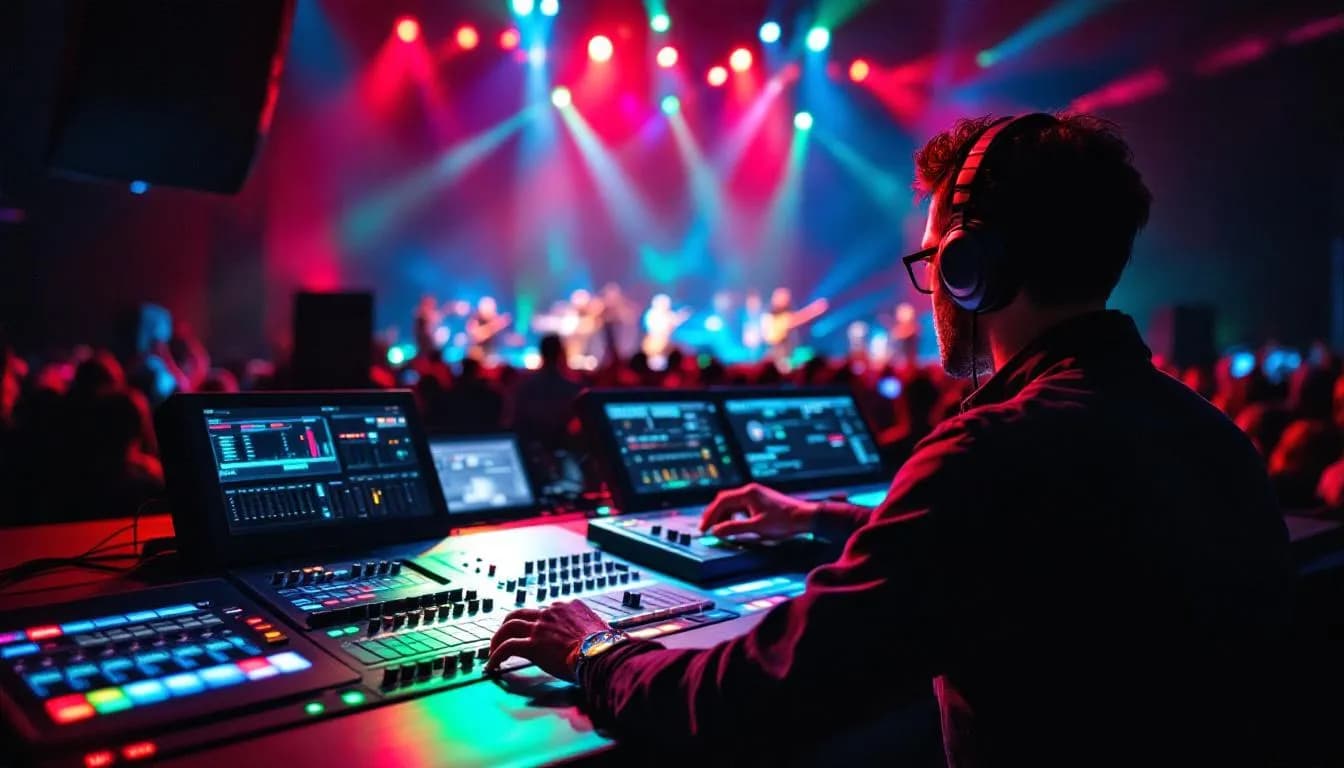
Audio Engineering Basics: Complete Guide for Beginners and Pros
Content
Most important insights
-
Audio engineering includes the recording, editing and playback of audio signals and combines technical know-how with creative expertise.
-
Modern audio engineers work with digital audio workstations (DAWs), such as Ableton Live, different microphone types and complex mixing consoles.
-
Solid training takes 3–4 years and can be completed at universities, specialist schools or in a self-taught way.
-
The industry offers diverse career paths from music production and live sound to film and gaming.
-
Future trends such as AI-based tools and immersive audio formats are creating new opportunities for audio engineers.
In a world where audio content is gaining importance every day, the fundamentals of audio engineering form the basis for anyone who wants to work professionally with sound. Whether podcasts, music production or live events – the know-how of experienced audio engineers is behind all of it. This comprehensive guide shows you everything you need to know about the fascinating world of audio technology.
What is audio engineering?
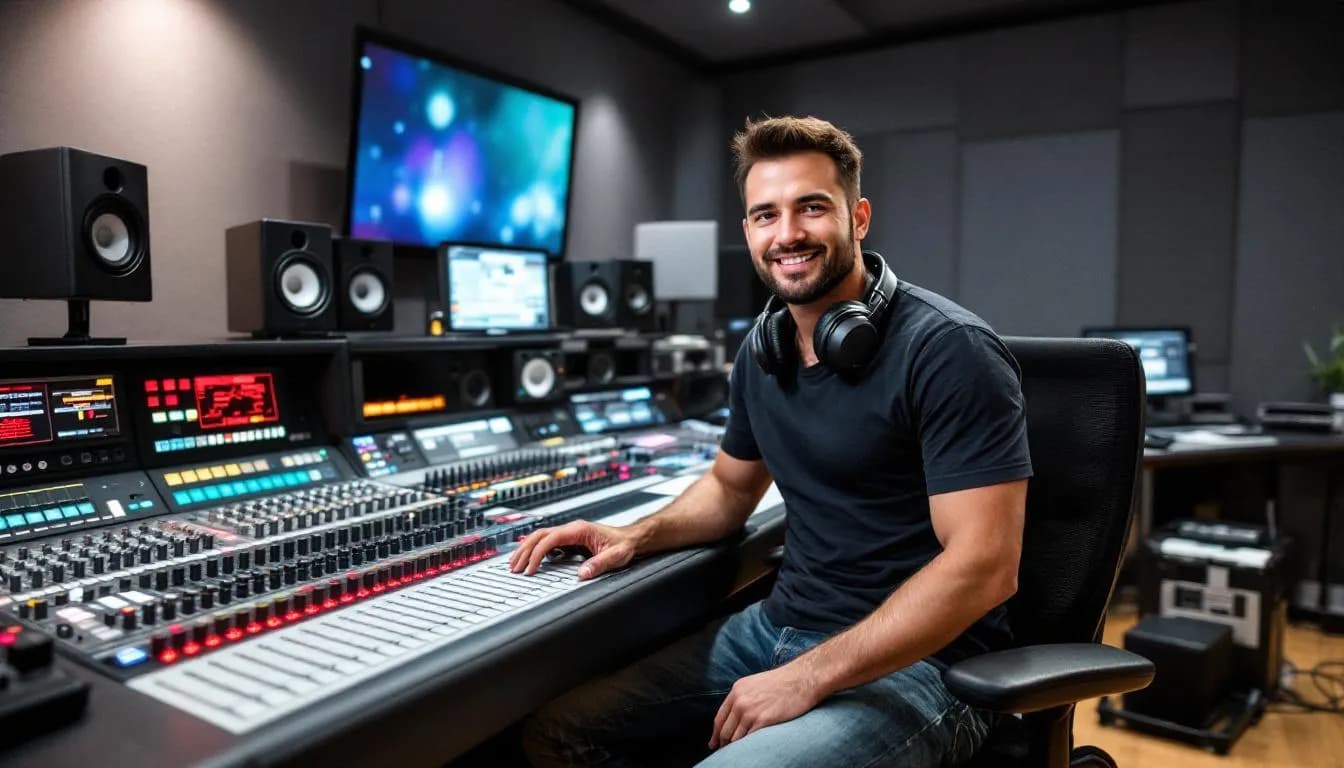
Audio engineering describes the entirety of all technical processes for recording, editing, storing and playing back sound. This definition includes both the scientific foundations and the artistic application in practice. An audio engineer combines technical understanding with creative intuition in order to process music, speech and sounds in the best possible way.
The areas of application of audio engineering are diverse and range from music production in recording studios and live sound reinforcement at concerts to film sound and podcast production. In each of these areas, audio engineers play a crucial role in the sound quality of the final product. Audio engineers are responsible for the entire audio production process, including recording, mixing, mastering, and refining sound to achieve professional results.
Historically, audio engineering developed from Edison’s phonograph in 1877, through the introduction of magnetic tape in the 1930s, to today’s digital workstations. This development not only revolutionised the music industry, but the entire media sector.
Physical fundamentals
Understanding sound waves forms the basis of all work in audio engineering. Sound is produced when an object vibrates, causing air particles to move and create pressure variations that generate a sound wave.
Sound moves as a mechanical wave through the air at a speed of about 343 metres per second. The sound wave moves through the air as a series of compressions and rarefactions of air particles. The speed of sound depends on the medium, temperature, and other physical properties.
Three parameters are crucial here:
Frequency and pitch: The human hearing range extends from 20 Hz to 20,000 Hz. Low tones such as a bass drum are in the range around 60–80 Hz, while highs such as cymbals lie between 8,000 and 15,000 Hz. Different frequencies, including fundamental tones and overtones, contribute to the complexity and timbre of sounds. High frequencies are more directional and are more easily absorbed by air.
Amplitude and loudness: Loudness is measured in decibels (dB), where 0 dB corresponds to the threshold of hearing and sound pressure levels above 120 dB are already painful. Louder sounds have higher amplitudes, while quieter sounds have lower amplitudes. In studio practice, levels typically range between -18 dB and 0 dB. The human ear is sensitive to a wide range of frequencies and can detect faint sounds around 0 dB.
Room acoustics and psychoacoustics: Reflections, reverb time and standing waves massively influence sound quality. At the same time, our brain does not process sound in a linear way – small changes in certain frequency ranges can have a big impact on perception. What is heard depends on both the physical properties of sound and the way the human ear perceives different frequencies.
In speech or singing, the vocal cords are the primary source of sound production in humans.
Basic concepts of audio engineering
Signal flow is the heart of every application in audio engineering. From the sound source via the microphone, through preamps and mixing console to playback over loudspeakers – every step influences the final sound quality. Capturing sound accurately with the right microphone and technique is crucial, as it ensures the original audio is faithfully recorded for further processing.
Modern audio engineering distinguishes between analogue and digital signals. While analogue technology works directly with electrical voltages, digital signals are converted into numerical values. Typical sample rates range from 44.1 kHz (CD quality) to 192 kHz for high-end productions, and bit depth varies between 16 bit (CD) and 32 bit (professional studios).
Technical knowledge is essential for managing signal flow and achieving professional results.
Signal processing and routing
The art of signal processing lies in understanding different level structures. Microphone signals are around -60 dB and must be raised to line level (+4 dBu professional, -10 dBV consumer) using preamps. This amplification requires precise gain settings – too little gain boosts the noise floor, too much leads to clipping.
A channel strip often includes equalization (EQ), where adjusting frequencies allows you to shape the sound and achieve a balanced mix by emphasizing or reducing specific frequency ranges.
Balanced signal transmission via XLR cables minimises noise caused by ground loops and electromagnetic interference. Impedance matching between devices (50 Ω to 10 kΩ) ensures optimal signal transfer without level loss.
Microphone techniques and recording methods
Choosing the right microphone is a decisive factor for recording quality. Selecting the appropriate mic for various situations is crucial for capturing the best sound.
Condenser microphones such as the Neumann U87 or AKG C414 provide detailed studio recordings thanks to their high sensitivity and wide frequency response. They require 48 V phantom power for their active electronics.
Dynamic microphones such as the legendary Shure SM57 are more robust and ideal for live applications and loud sound sources. Different types of mics, such as handheld, lavalier, and headset mics, are used depending on the production needs and performance mobility. Their use ranges from guitar amplifiers to drum miking.
The polar pattern determines from which direction the microphone picks up sound:
-
Omnidirectional: Picks up evenly from all directions
-
Cardioid: Focus on sound from the front, suppression from the rear
-
Supercardioid: Even tighter focus for precise recordings
Important equipment in audio engineering
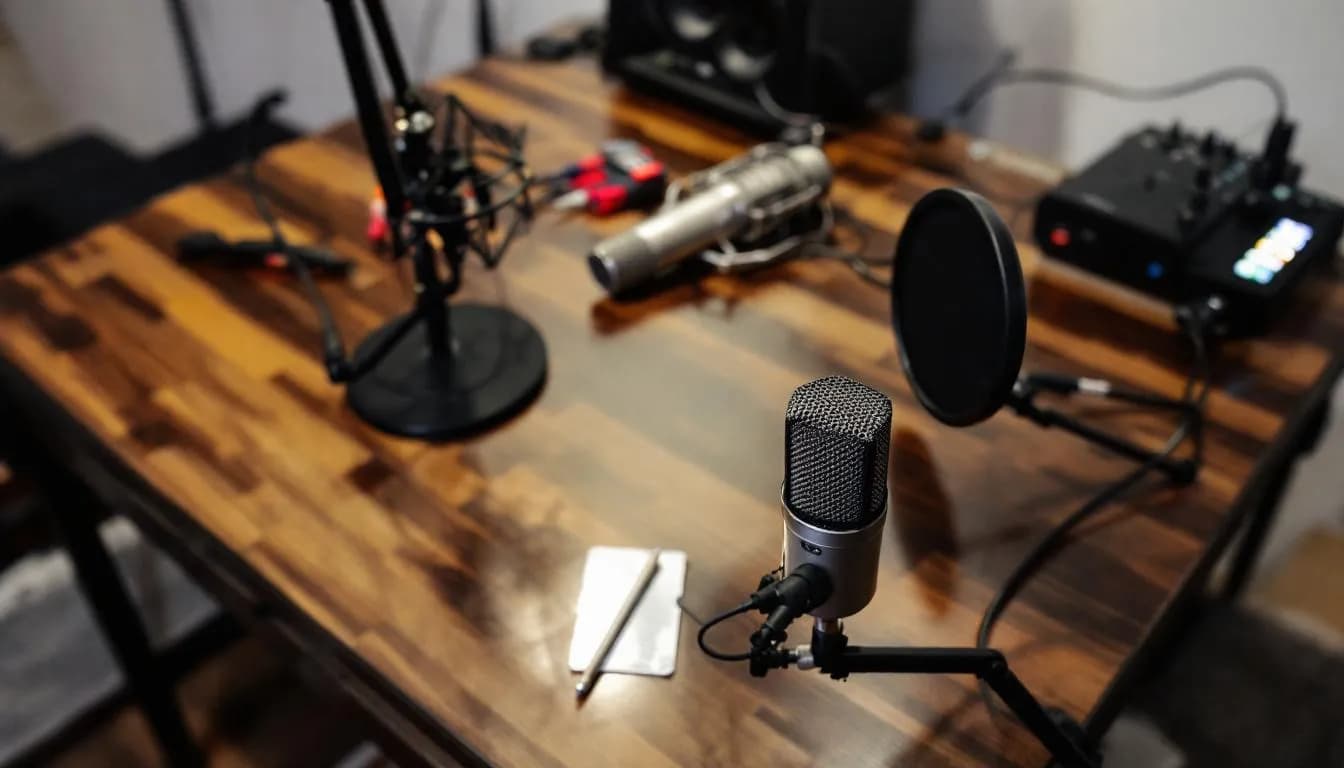
The basic equipment of an audio engineer includes various devices whose quality and functionality significantly shape everyday work.
The range extends from budget-friendly starter sets to high-end equipment for professional studios.
For beginners, a setup costing 1,500–3,000 euros is often sufficient, while professional studios use equipment worth 100,000 euros or more.
What matters is not only the price, but the optimal adaptation to the respective area of application.
Mixing consoles and audio interfaces
The mixing console acts as the heart of any sound system and connects all signal sources to each other.
Analogue mixing consoles such as the Yamaha MG series or models from Allen & Heath impress with their direct, warm sound and intuitive operation.
Digital mixing consoles offer extended functions such as presets, integrated effects and remote control.
The Behringer X32 has revolutionised the market as an affordable digital mixing console and makes professional technology possible even for smaller events.
Typical channel strip of a mixing console:
-
Preamp: Preamplification with gain control
-
High-pass filter: Removes unwanted low frequencies
-
EQ section: Usually 3–4 bands (high, high-mid, low-mid, low)
-
Aux sends: For monitoring and effects
-
Pan: Positioning in the stereo field
-
Fader: Volume control
Audio interfaces connect the computer with analogue equipment.
For home recording, devices such as the Focusrite Scarlett 2i2 (approx. 150 euros) or the PreSonus AudioBox (approx. 100 euros) are suitable.
Professional interfaces from RME or Universal Audio cost 1,000–5,000 euros but offer first-class converters and extremely low latency.
Loudspeakers and monitoring
Accurate monitoring is crucial for all work in audio engineering.
Active studio monitors such as the Yamaha HS series or KRK Rokit have established themselves as standards.
Genelec monitors are considered reference systems in high-end studios and therefore cost 1,000–3,000 euros per unit.
For live sound reinforcement, powerful PA loudspeakers are used.
JBL EON, Electro-Voice EKX or systems from d&b audiotechnik handle sound pressure levels of 110–130 dB and can cover audiences from a few hundred to 100,000 people.
Important loudspeaker specifications:
-
Frequency response: Should be as linear as possible from 40 Hz to 20 kHz
-
Maximum sound pressure level: 110+ dB for professional applications
-
Dispersion angle: 90° x 60° for optimal room coverage
-
Impedance: 4–8 ohms for passive systems, not relevant for active ones
Subwoofers extend the system in the low bass range from 20–80 Hz and are indispensable, especially for electronic music and film sound.
Line array systems allow even sound coverage of large areas and are standard at festivals and concerts.
Cables and connection technology
The quality of cable connections is often underestimated but significantly affects signal quality.
XLR cables for microphone signals should be balanced and use high-quality connectors.
Neutrik connectors are considered the industry standard.
Jack cables (6.3 mm) connect instruments and line-level devices.
For longer runs, balanced TRS cables (tip-ring-sleeve) are preferable.
Unbalanced TS cables are only suitable for short distances and instruments.
Speakon cables from Neutrik have become the standard for loudspeaker connections, as they safely transmit high currents and prevent accidental disconnection.
MIDI cables transmit digital control data between keyboards, computers and other MIDI devices.
Gain structure and headroom
Proper gain structure and headroom management are fundamental to achieving professional sound quality in any audio engineering scenario. Gain structure refers to the careful adjustment of gain levels at each stage of the audio signal path, from the initial sound source to the final output. By setting the right gain levels, a sound engineer ensures that the audio signal is strong enough to minimize unwanted noise, but not so high that it causes distortion or clipping.
Headroom is the safety margin between the highest level your audio signal reaches and the point where distortion begins. Maintaining adequate headroom is essential, especially in live sound mixing, where unexpected peaks—like a vocalist suddenly singing louder—can easily overload the system. Proper gain staging allows you to create a clean, balanced mix, giving each instrument and voice its place without introducing noise or distortion.
For example, when setting up a live sound mix, a sound engineer will start by adjusting the input gain on each channel so that the loudest expected sound stays well below the distortion threshold, leaving enough headroom for dynamic changes. This approach not only preserves sound quality but also prevents technical issues during a performance. Mastering gain structure and headroom is a key skill for any aspiring sound engineer, ensuring that every mix is clear, dynamic, and free from unwanted noise.
Acoustics and room treatment
Acoustics and room treatment are critical elements in sound engineering that can make or break the quality of your audio. The way sound waves travel and interact with a room affects everything from clarity to bass response. Poor room acoustics can lead to problems like excessive echo, muddiness, or uneven frequency response, making it difficult to achieve a professional-sounding recording or mix.
Room treatment involves strategically placing materials such as absorbers, diffusers, and bass traps to control how sound waves behave within a space. Absorbers help reduce unwanted reflections and reverberation, while diffusers scatter sound waves to create a more natural, balanced environment. Bass traps are essential for managing low-frequency build-up, which can cause boomy or muddy bass.
For sound engineers, understanding room acoustics is vital whether you’re recording music, mixing audio, or setting up live sound for an audience. For instance, in a recording studio, proper room treatment ensures that what you hear through your monitors accurately reflects the mix, allowing you to make precise adjustments. In live sound situations, such as corporate events, treating the room can help ensure that speech and music are clear and intelligible for everyone in the audience. By mastering acoustics and room treatment, sound engineers can create optimal audio environments that enhance sound quality and deliver a superior listening experience.
Audio equipment maintenance
Maintaining audio equipment is a cornerstone of professional sound engineering. Regular maintenance not only ensures reliable performance but also preserves sound quality and extends the lifespan of your gear. For sound engineers, this means routinely cleaning and inspecting equipment, checking cables and connectors for wear or damage, and keeping software and firmware up to date.
A well-maintained mixing console, for example, is less likely to develop noisy faders or intermittent channels during a critical live sound event. Similarly, regularly testing and organizing cables helps prevent signal loss and unwanted noise during recording or mixing sessions. Understanding the technical aspects of your audio equipment, such as signal flow and frequency response, allows you to quickly identify and address potential issues before they impact your work.
Live sound engineers, in particular, benefit from a proactive approach to equipment maintenance, as any failure during a performance can disrupt the entire event. By establishing a routine for checking and servicing audio equipment, sound engineers can ensure smooth operation, minimize downtime, and consistently deliver high-quality audio in any situation.
Fields of work in audio engineering
Audio engineering offers a wide variety of career paths in very different industries.
Each area places specific demands on technical know-how and creative skills. Audio engineers often collaborate with radio stations for sound recording and broadcasting.
Salary ranges vary greatly between beginners and experienced specialists.
Freelancers enjoy more flexibility but must master client acquisition and self-marketing.
Employed audio engineers benefit from a regular income and social benefits, but usually have less variety in their projects. A live sound engineer is a professional responsible for managing sound quality during live events to ensure an optimal audio experience.
Recording studio and music production
Recording studios are the classic field of work for audio engineers. This is where albums, singles and productions for streaming platforms are created. Musical instruments play a crucial role in shaping the sound and timbre of recordings, contributing unique qualities and tones to each project. Modern DAWs such as Pro Tools, Logic Pro or Cubase allow multitrack recording with up to 128 tracks at the same time.
The mixing process requires both technical precision and artistic intuition. Equalisers shape the sound of individual instruments, compressors control dynamics, and spatial effects create depth in the mix. An experienced mixing engineer needs years of practice to master the subtle interplay of all parameters.
Typical production workflow:
-
Pre-production: Song planning and arrangement
-
Recording: Multitrack recording of all instruments
-
Editing: Timing corrections and arrangement adjustments
-
Mixing: Balance, EQ, effects and spatial placement
-
Mastering: Final polish for release-ready tracks. Mastering audio is the process of finalizing and refining tracks to achieve optimal sound quality.
Mastering as a specialist discipline requires the highest-quality monitoring systems and acoustically optimised rooms. Mastering engineers earn 500–2,000 euros per album and often work with international artists.
Live sound and event technology
Live audio engineering differs fundamentally from studio work.
There is no second chance here – everything has to work perfectly the first time.
Audio engineers must react quickly to unforeseen situations and solve technical problems in real time.
The challenges range from the acoustics of different venues and feedback control to coordination with lighting and stage technology.
Outdoor festivals bring additional complexity due to weather conditions and noise regulations.
Monitoring systems for musicians:
-
In-ear monitoring: Precise and isolated, but expensive (1,000–5,000 euros per system)
-
Stage monitors: Flexible and cost-effective, but prone to feedback
-
Silent stage concept: Complete in-ear monitoring without stage loudspeakers
Live sound engineers on large tours earn 300–800 euros per day, but must cope with irregular working hours and frequent travelling.
Local event technicians usually earn 150–300 euros per day.
Film, TV and gaming
The film industry requires specialised know-how in areas such as dialogue recording, Foley sounds and sound design.
Surround formats such as 5.1 and 7.1 create immersive sound experiences that enhance the visual content.
Live broadcasts on television place the highest demands on reliability and quality.
A single technical error reaches millions of viewers.
Accordingly, the qualification requirements and salaries in this area are high.
Gaming audio as a growth market:
-
Interactive audio adapts dynamically to what is happening in the game
-
3D audio for VR games requires specialised techniques
-
Adaptive music changes depending on the game situation
-
Procedural audio generates sounds algorithmically
Sound designers for AAA games earn 50,000–100,000 euros per year, and the market continues to grow along with the gaming industry.

Training and career paths
Solid training forms the basis for a successful career in audio engineering.
Training costs range from 3,000 euros for online courses to 50,000 euros for a full university degree.
The decisive factor is the combination of theoretical knowledge and practical experience.
Different educational paths lead to the goal, each with specific advantages and disadvantages.
University graduates benefit from theoretical depth and networks, while self-taught engineers often develop more practical approaches.
University degree programmes
German universities offer specialised degree programmes in audio engineering and music production.
The Hochschule der Medien in Stuttgart is considered a leading institution with state-of-the-art equipment and industry contacts.
Important degree programmes and institutions:
-
Audio engineering (Bachelor, 3 years): HdM Stuttgart, Düsseldorf Institute for Music
-
Music production: Popakademie Baden-Württemberg, dBs Music Berlin
-
Media technology with audio focus: TH Köln, HAW Hamburg
-
Tonmeister (sound director) studies: University of the Arts Berlin (highly selective)
Admission requirements usually include a higher education entrance qualification, aptitude tests and portfolio presentations.
Tuition fees range from 300 euros (public) to 700 euros per month (private).
Graduates start with salaries of 35,000–45,000 euros and have excellent career prospects in technical leadership positions.
The network of fellow students and lecturers often opens doors to interesting projects.
Specialist schools and academies
Private academies focus on practical training with up-to-date technology.
The Deutsche POP academy offers 24-month audio engineering programmes for around 400 euros per month.
The Abbey Road Institute (London) enjoys a legendary reputation and offers one-year advanced diploma programmes for 25,000 euros.
Graduates benefit from the prestige and a worldwide alumni network.
Hofa College combines online learning with on-site phases and costs 3,000–8,000 euros depending on the scope.
The flexibility allows for continuing education alongside work.
Self-taught path and online learning
Modern online resources make effective self-study possible.
YouTube channels such as “In The Mix” or “Recording Revolution” offer free basic knowledge.
Structured online courses on Udemy or Coursera cost 50–200 euros.
Recommended learning steps for self-taught learners:
-
Basic theory: Acoustics, signal flow, knowledge of equipment
-
DAW software: Tutorials for Logic, Pro Tools or Reaper
-
Practical projects: Your own recordings, mixes and experiments
-
Community participation: Forums, local groups, online feedback
-
Portfolio building: Documentation of the best work
Setting up a home studio for 2,000–5,000 euros enables practical experience without studio rental.
Many successful audio engineers started out as self-taught and developed their individual style through experimentation.
Practical tips for beginners
Starting out in audio engineering can seem overwhelming – the variety of technology and methods requires a structured approach.
Successful beginners first focus on the fundamentals and gradually expand their knowledge.
Common beginner mistakes can be avoided through conscious preparation.
More important than perfect equipment is understanding the basic concepts and practising continuously.
First steps in the home studio
A functional home studio for 1,500 euros can deliver professional results.
Room acoustics influence sound quality often more than expensive equipment – simple absorbers made of mineral wool and fabric cost less than 200 euros and greatly improve monitoring.
Recommended starter setup:
-
Audio interface: Focusrite Scarlett Solo (120 euros) or Scarlett 2i2 (170 euros)
-
Microphone: Audio-Technica AT2020 (100 euros) or Rode PodMic (200 euros)
-
Headphones: Beyerdynamic DT 770 Pro (150 euros) or Audio-Technica ATH-M50x (130 euros)
-
DAW software: Reaper (60 euros) or free: GarageBand (Mac), Audacity
-
Studio monitors: PreSonus Eris E3.5 (100 euros) or Yamaha HS5 (350 euros per pair)
The monitoring position forms an equilateral triangle between listener and loudspeakers.
A distance of 1–2 metres and tweeters at ear height optimise stereo reproduction.
Room acoustics basics:
-
Bass traps in the room corners reduce standing waves
-
Absorbers at first reflection points (side walls, ceiling)
-
Diffusers on the rear wall for natural room acoustics
-
Monitoring position: 38% of the room length from the front wall
Avoiding common mistakes
Clipping irreversibly destroys recordings and sounds harsh and distorted.
Digital clipping is particularly unpleasant – input levels should never reach 0 dB.
A headroom of 12–18 dB prevents accidental overloading.
The most common mixing mistakes:
-
Excessive EQing: Drastic 10+ dB boosts or cuts sound unnatural.
Subtle 2–3 dB changes are more musical.
-
Compressor misuse: Extreme ratios above 8:1 squeeze the life out of the signal.
Ratios of 2:1 to 4:1 sound more natural.
-
Ignoring mono compatibility: Many playback systems sum to mono – the mix must also work then.
-
Loudness bias: Louder mixes initially sound better.
A/B comparisons at the same loudness are more objective.
Hearing protection and health: Working for long periods at high levels irreversibly damages hearing.
Breaks every 20–30 minutes relax the ears and improve judgement.
Reference listening at 85 dB SPL protects hearing and enables precise decisions.
Professional audio engineers use calibrated monitoring systems and check mixes at different levels (65, 75, 85 dB SPL).
Smartphone apps such as “SPL Meter” measure levels with reasonable accuracy.
Troubleshooting common audio engineering issues
Troubleshooting is an essential skill for every sound engineer, enabling quick identification and resolution of issues that can arise during recording, mixing, or live sound sessions. Common problems include unwanted noise, distortion, and frequency imbalances, which may result from poor gain staging, incorrect microphone placement, or faulty audio equipment.
Effective troubleshooting starts with a systematic approach. Analyzing the signal flow—tracing the audio path from the source through analog consoles or digital audio workstations—can help pinpoint where a problem originates. For example, if you encounter noise in a recording, checking each connection and component in the signal chain can reveal whether the issue is caused by a bad cable, a malfunctioning preamp, or interference from other equipment.
Frequency response analysis is another valuable tool, allowing sound engineers to identify and correct imbalances that make a mix sound harsh or muddy. Adjusting microphone placement or using EQ can often resolve these issues. In live sound situations, being able to quickly diagnose and fix problems ensures that the show goes on without interruption.
By mastering troubleshooting techniques and understanding the technical aspects of audio engineering, sound engineers can confidently handle challenges in any environment, from the studio to the stage.
Audio engineering best practices
Adhering to audio engineering best practices is key to consistently achieving high-quality sound in any project. These guidelines help sound engineers optimize signal flow, maintain proper gain staging, and ensure accurate microphone placement for both recording and live sound applications.
One of the most important best practices is to always start with proper gain staging, setting input levels to maximize signal quality while avoiding distortion. Careful microphone placement is equally crucial, as it affects the clarity and character of the recorded sound. Using digital audio workstations and effects processing tools like EQ and compression allows sound engineers to shape and enhance audio, creating polished mixes that translate well across different playback systems.
Understanding room acoustics and applying appropriate treatment further improves the accuracy of monitoring and the overall sound quality. Staying current with the latest audio equipment, software updates, and industry techniques ensures that sound engineers remain competitive and capable of handling a wide range of technical aspects.
For example, a sound engineer might use a digital audio workstation to record and mix a track, applying compression to control dynamics and effects processing to add depth and character. By following these best practices, sound engineers can create professional-quality audio for music, film, live events, and immersive media, meeting the demands of clients and audiences alike.
The future of audio engineering
The audio engineering industry is undergoing revolutionary change due to digitalisation and new technologies.
Artificial intelligence, immersive audio formats and cloud-based workflows are fundamentally changing traditional ways of working.
Streaming services have transformed the music industry and created new demands on loudness standards and format diversity.
Podcasts and audio content are growing by around 25% per year and require specialised audio engineers.
Artificial intelligence and automation
AI-based tools are revolutionising time-consuming tasks such as mastering and mixing.
Landr and eMastered offer automatic mastering for 10–20 euros per track – a potential threat to basic mastering services.
Current AI applications:
-
iZotope Ozone 10: AI-assisted mastering suggestions based on reference tracks
-
Waves Clarity Vx: Real-time vocal enhancement using neural networks
-
LANDR: Fully automatic mastering with millions of analysed songs
-
Descript: AI-based audio editing by editing text
Despite impressive progress, creative decisions and artistic vision remain human.
AI can take over repetitive tasks but does not replace the experience and musical intuition of an audio engineer.
Immersive audio and new formats
Dolby Atmos is establishing itself as a standard for streaming services such as Apple Music, Amazon Music and Tidal.
This object-based audio technology positions sounds three-dimensionally in space and requires specialised mixing skills.
Spatial audio trends:
-
Binaural audio: 3D sound over normal headphones for VR/AR applications
-
Ambisonics: 360° audio for immersive media and VR productions
-
Interactive audio: Adaptive soundscapes for gaming and interactive media
-
Personalised audio: AI-adapted sound characteristics for individual listening habits
Apple’s AirPods Pro and Sony WH-1000XM4 support spatial audio and make immersive formats accessible to the mass market.
Audio engineers must familiarise themselves with these new playback systems.
Sustainability in audio technology
Environmental awareness is reaching the audio industry – energy-efficient class-D amplifiers reduce power consumption by 50–80% compared to conventional technology.
Festivals are increasingly relying on solar power and hiring local crews.
Green audio initiatives:
-
Remote recording reduces travel and CO₂ emissions
-
Recycling programmes for old audio equipment
-
Energy-efficient amplifiers and LED-based equipment lighting
-
Digital workflows reduce physical media and transport
The coronavirus pandemic has accelerated the use of remote collaboration tools.
Audio engineers can now work together from different locations without any problems and at the same time minimise environmental impact.
FAQ – Frequently asked questions
How long does it take to learn audio engineering?
The fundamentals of audio engineering can be learned in 6–12 months through regular practice and structured learning.
However, it takes 2–3 years of intensive practice to reach a professional level.
The learning curve is steep at the beginning – simple recordings and mixes are successful after a few weeks, but the subtleties and ear for fine details develop over years.
It is important to work continuously on real projects, because theoretical knowledge alone is not enough.
What equipment do I need to get started?
To get started, a setup costing around 500–800 euros is sufficient: audio interface (Focusrite Scarlett Solo for 120 euros), condenser microphone (Audio-Technica AT2020 for 100 euros), closed-back headphones (Beyerdynamic DT 770 Pro for 150 euros) and DAW software (Reaper for 60 euros or free alternatives such as GarageBand or Audacity).
Studio monitors can be added later.
More important than expensive equipment is understanding the basics – with this budget you can already achieve professional results.
Can you earn good money as an audio engineer?
The salary range varies greatly depending on experience and specialisation.
Beginners earn 25,000–35,000 euros gross per year as assistants, while experienced audio engineers in permanent positions reach 40,000–70,000 euros.
Freelancers with an established reputation can charge daily rates of 200–800 euros.
Top mixing engineers earn 2,000–10,000 euros per song.
Live sound engineers on large tours receive 300–800 euros per day.
Successful self-employed engineers with their own studio and regular clients can achieve six-figure annual incomes.
Is audio engineering a future-proof profession?
Yes, audio engineering offers excellent future prospects.
The streaming boom is increasing the demand for audio content by around 20% per year.
The podcast industry is growing by 25% per year and needs qualified audio engineers.
Live events are returning strongly after the coronavirus pandemic, and new technologies such as VR/AR are creating additional fields of work.
Gaming audio, interactive media and immersive formats are opening up completely new markets. While AI takes over simple tasks, the demand for creative and technical specialists is increasing at the same time.
Do you need musical knowledge for audio engineering?
Basic musical understanding is helpful but not absolutely necessary.
Reading music is unnecessary for most tasks in audio engineering, but a good sense of rhythm is an advantage.
More important are technical understanding, analytical listening and the ability to communicate with musicians.
Many successful audio engineers come from technical backgrounds and develop their musical understanding through practice.
Basic knowledge of song structures, instrumentation and musical styles helps when working with artists, but can be learned.
Related Articles
Audio Engineering Basics: Complete Guide for Beginners and Pros