The Ultimate Guide to the Metaverse Concert Experience
Content
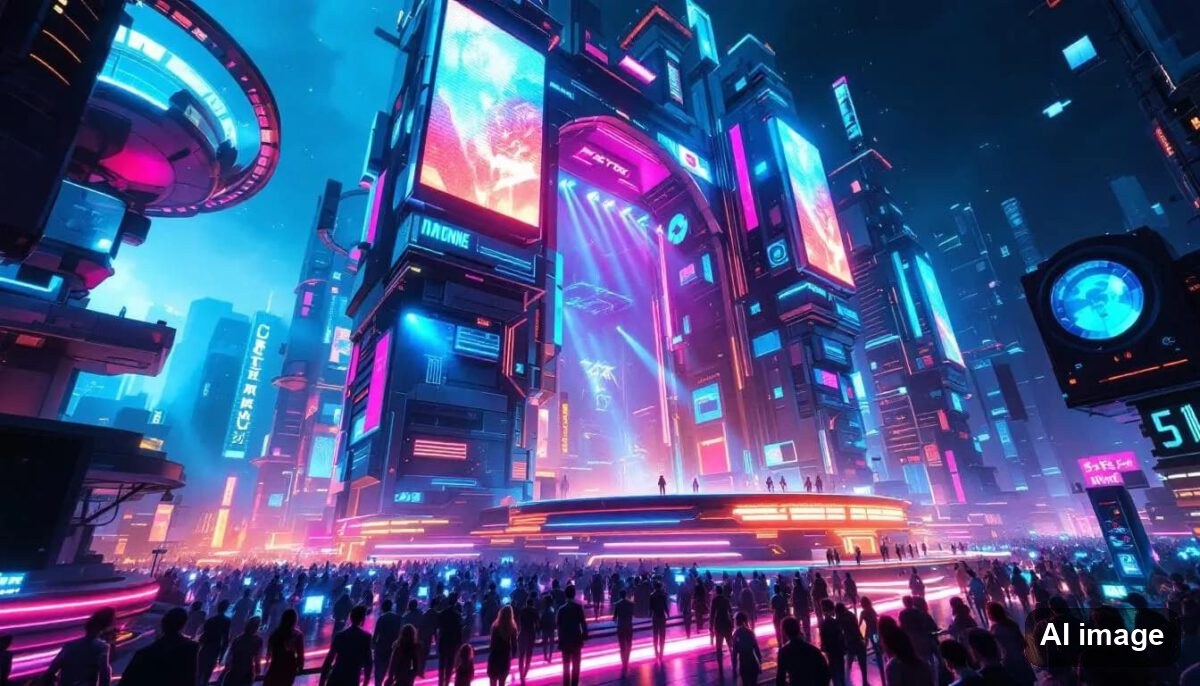
A metaverse concert brings live music into shared virtual worlds and lets artists perform in fully digital environments. But what exactly happens at a metaverse show, and how does it all work? This guide walks you through everything you need to know about virtual music performances – especially what makes a metaverse concert so unique.
Metaverse concerts represent a new frontier in live music experiences, transforming how artists and audiences connect in the digital age.
In a metaverse concert, fans don’t just listen to music – they step into a virtual realm for an interactive performance that engages all the senses and opens up an entirely new dimension of live entertainment.
Key Takeaways
-
Metaverse concerts create immersive experiences that are global in scope, removing geographical barriers and enabling completely new ways for artists and fans to interact.
-
Using technologies like VR, real-time 3D, and spatial audio, metaverse concerts deliver spectacular, interactive shows that go far beyond traditional live gigs. How a room like that actually gets recorded on the sound side is shown in the case on 360° Concert.
-
The future of metaverse concerts promises personalized fan journeys, new revenue models, and innovative formats that could transform the entire music industry.
What Is a Metaverse Concert?
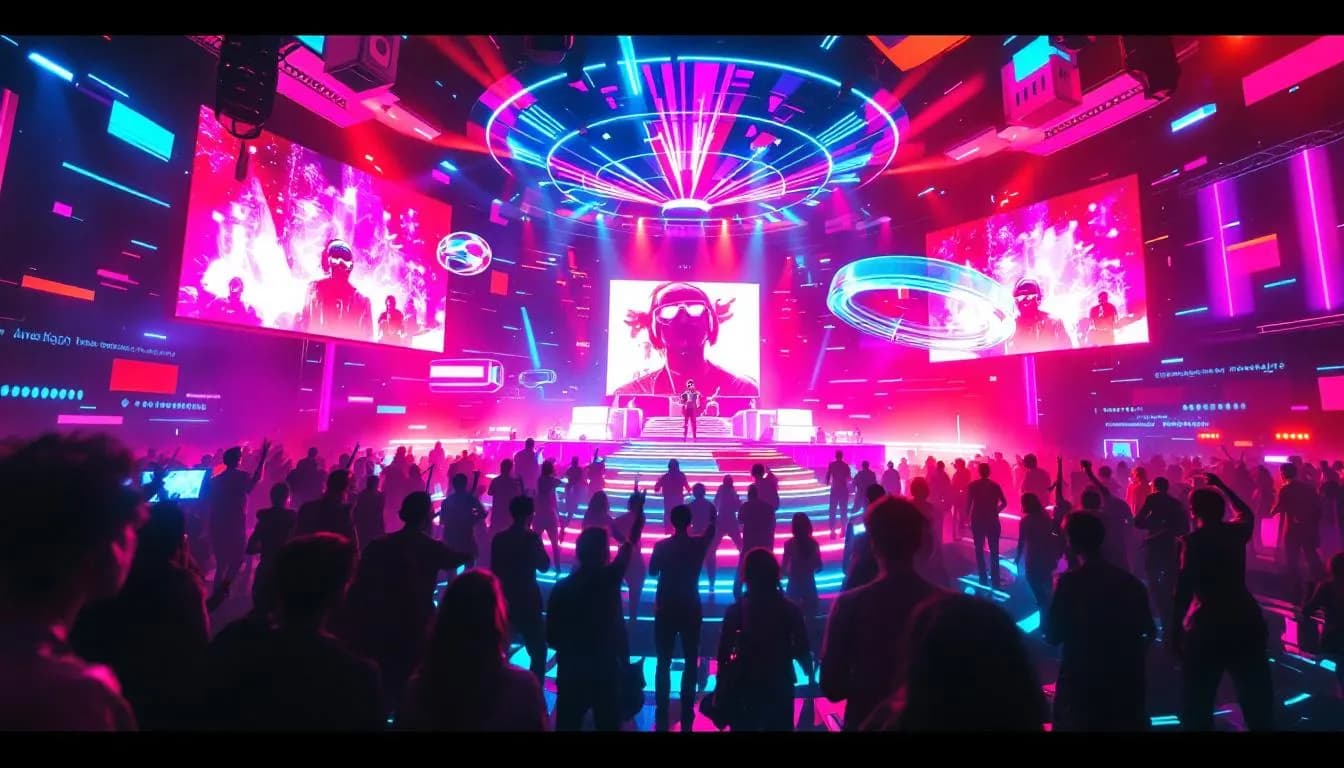
A metaverse concert is a live or pre-recorded music performance that takes place inside a virtual world. These shows:
-
Create a fully immersive experience that’s impossible to replicate in the physical world
-
Let artists perform on fantastical stages – think floating arenas, underwater venues or cities in the sky
-
Turn a standard gig into a virtual concert where the laws of physics no longer apply
Unlike a traditional live concert, where audiences gather in a physical venue to experience the performance in person, metaverse shows offer a digital alternative that transforms how fans engage with music events.
Unlike traditional concerts, metaverse shows:
-
Are accessible worldwide at the same time – no travel, no venue limitations
-
Allow fans to appear as custom avatars and interact with each other and the artist
-
Blend music with interactive visuals, effects, and game-like elements
Two design pillars define a great metaverse concert:
-
Surreality – oversized artists, gravity-defying stages, exploding colors, shifting worlds
-
Humanized avatars – expressive faces, body language and gestures that keep the performance emotionally relatable
This mix of the surreal and the human is what makes metaverse concerts feel both otherworldly and emotionally engaging.
How Do Metaverse Concerts Work?
Metaverse concerts rely on a stack of advanced technologies to turn a digital event into something that feels live. These events can attract large numbers of users, allowing thousands or even millions to participate and interact in real time.
Popular platforms hosting metaverse concerts include:
-
Fortnite
-
Roblox
-
Dedicated virtual worlds and custom-built metaverse venues
Key technologies behind the scenes:
Virtual Reality & 3D Environments
-
VR headsets and 3D engines create explorable virtual worlds
-
Fans can move around, change viewpoints, or even fly through the scene depending on the platform
Motion Capture
-
Artists perform in mocap suits in a studio
-
Their real movements and gestures are transferred in real time to digital avatars
-
This keeps the performance expressive and in sync with the music
Cloud Infrastructure
-
Cloud servers handle millions of parallel connections
-
They synchronize visuals, audio and interactions across the globe
-
This makes it possible to host huge audiences in a shared experience
3D / Spatial Audio
-
Sound sources are placed in 3D space
-
What you hear changes with your position and viewing direction
-
The result: a concert-like sound field instead of flat stereo
Interactive features – like emotes, chat, mini-games, quests or virtual meet & greets – turn metaverse concerts into events you participate in, not just watch.
Iconic Artists and Their Metaverse Performances
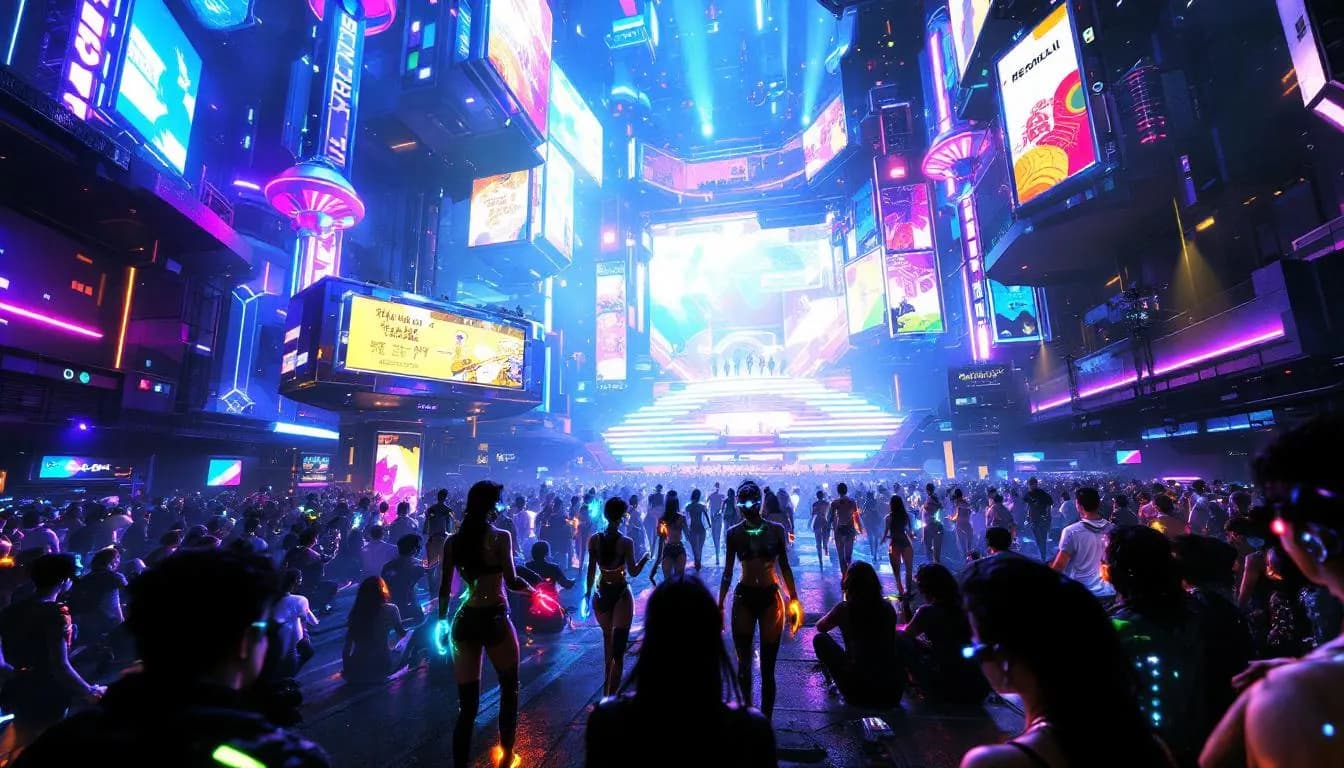
Several global stars have already shaped what metaverse concerts can be, including major artists and popular artists who have helped define the space:
-
Snoop Dogg
-
The Weeknd
-
Travis Scott
-
Ariana Grande
-
Justin Bieber
In addition to these icons, other artists have also participated in virtual performances, making the metaverse concert scene diverse and inclusive.
Let’s look at a few standout examples.
Snoop Dogg
Snoop Dogg partnered with The Sandbox to build his own virtual “Snoopverse”:
-
A digital mansion for parties and concerts
-
Exclusive non fungible tokens (NFT) drops and collectibles
-
Special events for fans who own his virtual land or assets
His presence in the metaverse shows how artists can:
-
Build persistent digital worlds
-
Monetize through NFTs, virtual merchandise, and virtual goods
-
Blend lifestyle, branding and music in a single environment
Travis Scott
Travis Scott’s “Astronomical” concert in Fortnite (April 2020):
-
Attracted over 12 million concurrent players
-
Featured a skyscraper-sized Travis avatar, walking through and transforming the world
-
Used surreal transitions – underwater scenes, outer space, floating in space, collapsing worlds
It set a new benchmark for:
-
The scale of virtual concerts
-
The fusion of gaming, storytelling and live music
Ariana Grande
Ariana Grande’s Fortnite “Rift Tour”:
-
Reached tens of millions of participants across multiple showings
-
Combined hit songs with fantasy landscapes, flying sequences, interactive segments, and virtual backup dancers as part of the visual spectacle
Fans didn’t just watch a show – they:
-
Floated through dreamlike scenes
-
Rode on rainbow paths
-
Joined synchronized events with other players
This event showcased how metaverse concerts can feel like playable music videos.
Benefits of Metaverse Concerts
Metaverse concerts offer advantages for both artists and audiences. They open up new avenues for engagement and creativity, allowing artists and fans to connect in innovative ways within virtual environments.
For Fans
-
Global access – attend concerts from anywhere, no flights, hotels or ticket scalping
-
Inclusive experiences – people with disabilities or limited mobility can finally attend “front-row” shows
-
Lower overall cost – no travel or accommodation, often cheaper tickets
-
New ways to express yourself – custom avatars, emotes, outfits
For Artists
-
Massive reach – reach millions in one event, not just a single venue
-
Creative freedom – stage designs and effects that are impossible IRL
-
New revenue streams, including:
-
Virtual merch and skins
-
NFTs and digital collectibles
-
VIP areas, exclusive experiences, virtual meet & greets
-
Sponsorship integrations inside the world
-
For the Experience Itself
-
Live chat, in-world voice, emotes and virtual merch stands deepen engagement
-
Fans feel like part of a shared community, not just an audience, as these events help fans and artists connect in new and meaningful ways
-
Events can be re-run, remixed and extended, unlike one-off physical shows
Overall, metaverse concerts don’t just replicate live events – they reinvent them.
Challenges and Risks
Despite all the promise, metaverse concerts also face some serious challenges.
Technical & Experience Issues
-
Spatial audio is hard to get right – poor implementation can ruin immersion
-
Browser-based experiences can suffer from:
-
Low-quality streams
-
Latency
-
Weak 3D and audio capabilities
-
-
Lack of true interactivity can make some events feel like flat video in a 3D wrapper
Social & Safety Concerns
-
Harassment and toxic behavior can be amplified in virtual spaces
-
Lack of clear moderation tools or identity controls can lead to abuse
-
Younger audiences in particular need safe, well-moderated environments
Privacy & Data
-
Metaverse platforms can collect biometric and behavioral data
-
Head movements
-
Gestures
-
Interaction patterns
-
-
This raises new privacy issues beyond traditional web tracking
-
Existing data protection frameworks often need adapting for immersive environments
Communication Barriers
-
Without real facial expressions and body language (or with limited avatar expression),\ misunderstandings can occur more easily
-
Not everyone is comfortable in 3D spaces or with game-like controls
These issues highlight the need for:
-
Better tools
-
Clearer rules
-
Thoughtful design focused on safety, accessibility and user well-being
The Future of Metaverse Concerts
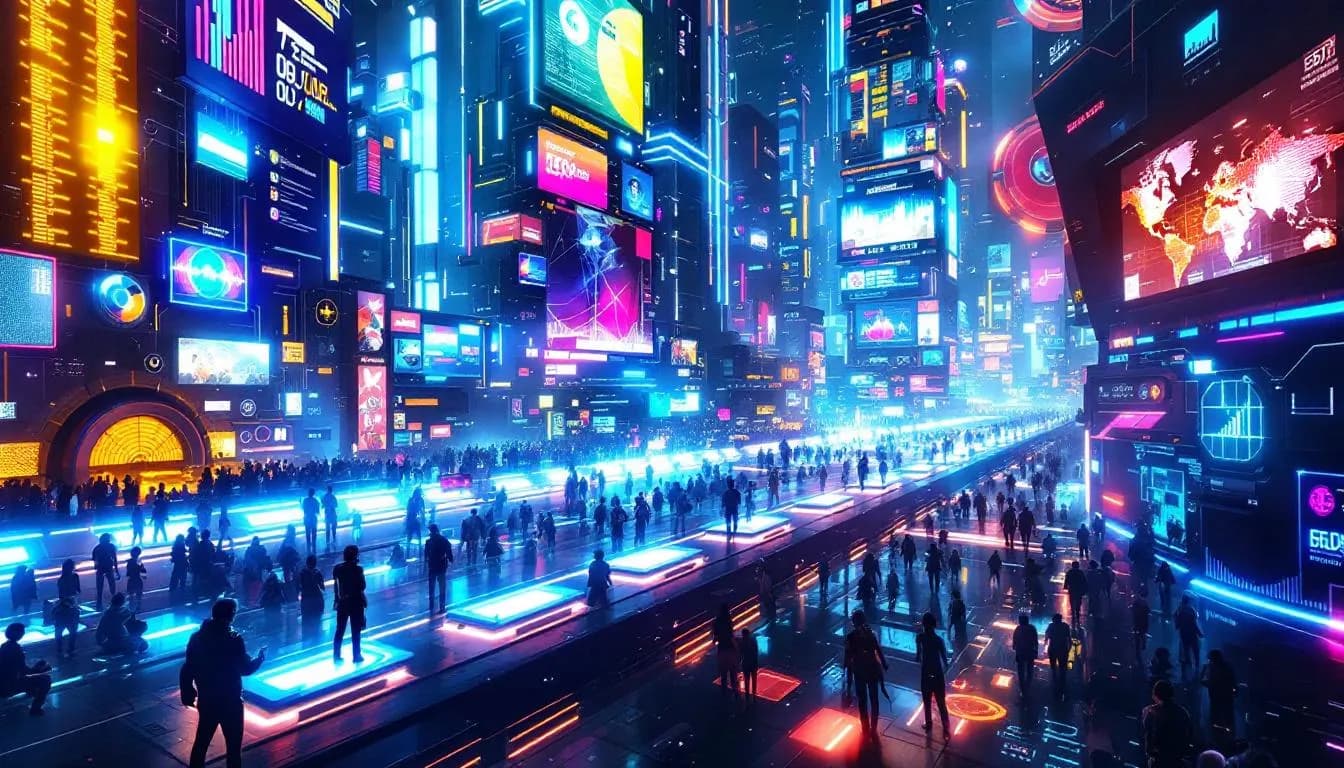
The future looks bright – and wild. In recent years, the landscape of metaverse concerts has rapidly evolved, with digital live music experiences becoming increasingly popular and sophisticated. As technology continues to advance, we can expect even more immersive and interactive virtual events.
7.1. New technologies will shape the experience
The next generation of metaverse concerts will be driven by cutting-edge technologies such as spatial audio, real-time 3D rendering, and augmented reality. These innovations will enable artists and fans to interact in ways that were previously impossible, blurring the lines between physical and digital performances.
7.2. Artists and fans will connect in new ways
Virtual concerts will allow for deeper engagement between artists and their audiences. Expect more personalized experiences, interactive setlists, and opportunities for fans to influence the show in real time.
7.3. Incentives and rewards will drive participation
To encourage fan participation, future metaverse concerts may offer limited time rewards—exclusive digital items or experiences available only during the event. These time-sensitive incentives will motivate fans to attend and engage, making each concert a unique and memorable occasion.
Emerging Technologies
-
VR and AR will get lighter, sharper and more affordable
-
Haptic feedback (vests, controllers, wearables) could let you feel bass, crowd surges or environmental effects
-
Real-time translation could make global concerts feel native in any language
Personalization
Data-driven features could enable:
-
Personalized camera angles and paths
-
Custom setlists or “chapters” based on your tastes
-
Tailored visuals, skins and interactions
Fandom & Community
The “fandom effect” gets supercharged:
-
Persistent fan hubs and worlds
-
Exclusive drops and quests
-
Ongoing events between big concerts
Metaverse concerts will likely evolve into long-term ecosystems, not one-off shows.
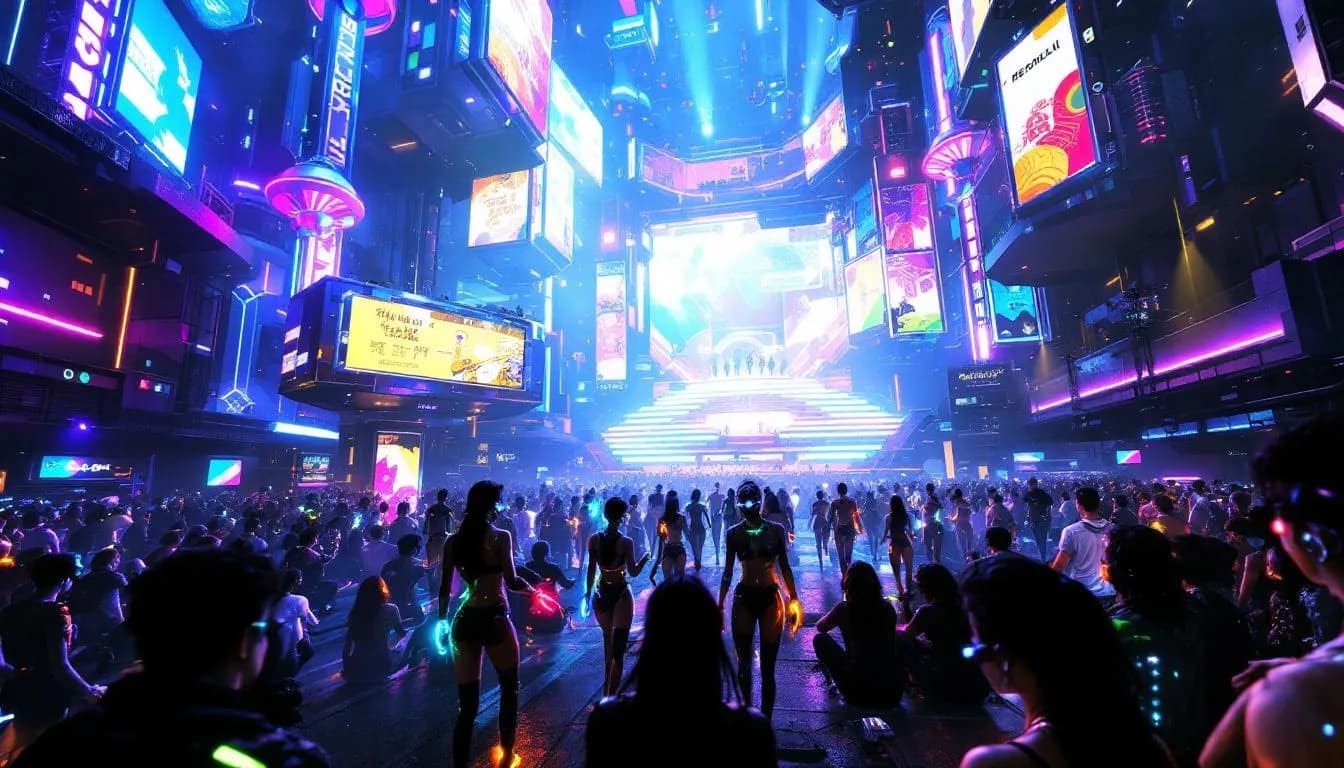
Successful Examples of Virtual Concerts
Some standout milestones:
-
Travis Scott – “Astronomical” (Fortnite)
-
12M+ concurrent players
-
Iconic moment in music–gaming crossover
-
Epic Games – Virtual Concerts
-
Hosted groundbreaking virtual concerts in the digital realm, including Travis Scott and Lil Nas X, revolutionizing live music engagement on platforms like Fortnite.
-
Lil Nas X – Metaverse Performances
-
Lil Nas and Lil Nas X delivered innovative, interactive virtual performances, such as the Roblox and Fortnite concerts, attracting massive online audiences and setting new standards for digital entertainment experiences.
-
The Weeknd – Virtual Concerts
-
Performed the song “Blinding Lights” in a visually stunning, interactive digital realm, engaging fans with dramatic effects and immersive experiences.
-
Björk – VR performances
-
Uses VR to create avant-garde, immersive musical art pieces
-
Shows how VR can be more than just a stage – it’s a medium
-
ABBA Voyage
-
Digital avatars (“ABBAtars”) perform alongside a real band
-
Blends physical venue with hyper-real virtual performers
These projects show how different the approaches can be – from full in-game events to hybrid physical/virtual shows – but all push the boundaries of what a concert can be.
How to Put On a Metaverse Concert: Key Steps
Launching a metaverse concert requires careful planning in three main phases.
First, content creation involves designing the virtual stage, developing immersive audio and visual assets, and preparing interactive elements for the audience. This phase ensures that the digital environment is engaging and accessible across devices.
Second, technical setup covers platform selection, streaming infrastructure, and integration of spatial audio technologies to deliver high-quality virtual performances. These virtual performances allow artists to reach global audiences, enhance interactivity, and connect with fans in new ways beyond traditional concerts.
Finally, promotion and audience engagement strategies are essential for building anticipation and maximizing participation. Notably, genres like K-pop have successfully leveraged metaverse concerts to engage their worldwide fanbase and showcase innovative digital experiences.
1. Define Concept and Goals
Clarify:
-
What kind of event is it?
- Intimate club show? Massive spectacle? Festival?
-
Who is your target audience?
-
What’s the core experience you want them to have?
- Visual journey, narrative, fan interaction, exclusive content?
Clear goals might include:
-
Reach new regions or demographics
-
Launch a new album or single
-
Sell digital merch / NFTs
-
Build long-term presence in a specific platform
The stronger your concept, the easier every other decision becomes.
2. Choose the Right Metaverse Platform
Consider:
-
Audience size & profile – Fortnite, Roblox, VRChat, Horizon metaverse, custom worlds, etc.
-
Technical capabilities – graphics, audio, concurrency, VR support
-
Interactivity tools – emotes, voice chat, mini-games, quests, commerce
Each platform has its own strengths. The best choice depends on:
-
Where your fans already are
-
How interactive and complex your show should be
3. Content Creation & Technical Setup
This is where the magic happens:
-
Design virtual stages, worlds and visual effects
-
Create artist avatars and animations
-
Integrate motion capture if doing real-time performance
-
Build interactive elements – mini-games, fan zones, collectibles
K-pop virtual concerts are a leading example of immersive content creation, bringing together top K-pop artists, passionate K-pop stans, and innovative features like the K-pop companion experience. For instance, NCT Dream‘s virtual concert, ‘The Dream Show 3 in VR,’ offered fans a replay period from November 14 to December 4, complete with avatar customization, exclusive rewards, and interactive fan engagement zones.
On the technical side:
-
Test streaming pipelines and server load
-
Fine-tune spatial audio and mix levels
-
Prepare backups and contingencies
Close collaboration between:
-
Artists
-
Creative directors
-
Game/3D developers
-
Audio engineers
…is essential to deliver a smooth, impactful experience.
Conclusion
Metaverse concerts are redefining how we experience live music.
They:
-
Remove geographical and physical barriers
-
Unlock new forms of creativity and storytelling
-
Offer artists powerful new revenue streams and fan touchpoints
From Travis Scott and Ariana Grande in Fortnite to Snoop Dogg in The Sandbox and ABBA’s digital avatars, we’ve only seen the first wave of what’s possible.
Yes, there are challenges – technical hurdles, privacy concerns, safety and audio quality. But as VR, AR and metaverse platforms mature, these concerts are likely to become a core pillar of the future music ecosystem, alongside traditional tours and festivals.
The bottom line: Metaverse concerts don’t replace real-life shows – they expand what concerts can be. While digital events offer new possibilities, the unique atmosphere, energy, and interaction of a real concert remain unmatched.
Frequently Asked Questions
What is a metaverse concert?
A metaverse concert is a music performance that takes place in a virtual world, where fans join as avatars and experience an immersive, interactive show rather than just watching a video or standing in a physical crowd.
How do metaverse concerts work?
They use technologies like game engines, VR, motion capture, cloud streaming and 3D audio to create a shared digital space where an artist’s avatar performs live (or pre-recorded) for a global audience.
Which artists have already done metaverse concerts?
Notable examples include Travis Scott, Ariana Grande, Snoop Dogg, Justin Bieber, and ABBA (via ABBA Voyage), as well as experimental VR work from artists like Björk.
What are the main benefits of metaverse concerts?
They allow worldwide participation, offer new creative possibilities and open up fresh revenue streams through digital merch, NFTs, sponsorships and virtual VIP experiences – all while being more accessible for many fans.
What challenges and risks exist?
Key issues include:
-
Technical problems (latency, audio quality, device limits)
-
Privacy concerns around data collection
-
Harassment and safety in virtual spaces
-
The difficulty of reproducing real-world sound and emotional nuance
Good design, strong moderation and privacy-aware technology are essential to address these challenges.